Human Rights Protection and the FIFA World Cup: A Never-Ending Match? - By Daniela Heerdt

Editor’s note: Daniela Heerdt is a PhD candidate at Tilburg Law School in the Netherlands. Her PhD research deals with the establishment of responsibility and accountability for adverse human rights impacts of mega-sporting events, with a focus on FIFA World Cups and Olympic Games. She recently published an article in the International Sports Law Journal that discusses to what extent the revised bidding and hosting regulations by FIFA, the IOC and UEFA strengthen access to remedy for mega-sporting events-related human rights violations.


The 21st FIFA World Cup is currently underway. Billions of people around the world follow the matches with much enthusiasm and support. For the time being, it almost seems forgotten that in the final weeks leading up to the events, critical reports on human rights issues related to the event piled up. This blog explains why addressing these issues has to start well in advance of the first ball being kicked and cannot end when the final match has been played. More...


Doing Business Right – Monthly Report – May 2018 - By Abdurrahman Erol

Introduction

This report compiles all relevant news, events and materials on Doing Business Right based on the coverage provided on our twitter feed @DoinBizRight and on various websites. You are invited to contribute to this compilation via the comments section below, feel free to add links to important cases, documents and articles we might have overlooked.

Highlights

OECD Due Diligence Guidance released

On 31 May, the OECD published “OECD Due Diligence Guidance for Responsible Business Conduct”. Issued after a multi-stakeholder process with OECD and non-OECD countries and representatives from business, trade unions and civil society, the guidance provides practical knowledge to businesses on due diligence recommendations and related provisions of the Guidelines for Multinational Enterprises. The guidance also aims at aligning different approaches of governments and stakeholders to due diligence for responsible business conduct by promoting a common understanding.More...

New Policy Brief - The Case for a Court of Arbitration for Business and Human Rights - By Antoine Duval & Catherine Dunmore

Two members of the Doing Business Right team, Antoine Duval and Catherine Dunmore have just published a policy brief feeding into the current debates on the use (and usefulness) of arbitration in the business and human rights context. More precisely, the brief makes the case for the creation of a single Court of Arbitration for Business and Human Rights. 

Here is the abstract: 

This policy brief makes the case for a single Court of Arbitration for Business and Human Rights (CABHR). It first highlights the challenges faced by victims of human rights violations caused or directly linked to the activities of transnational corporations (TNCs) in accessing effective remedy. It then discusses the opportunities and challenges in using arbitration to provide a remedy in the business and human rights context. If arbitration is to be used, we argue that it should be in the framework of a single CABHR, which could draw some inspiration from the structure and operation of the Court of Arbitration for Sport (CAS). The policy brief concludes by highlighting four core issues which stakeholders should focus on in the process of setting up a CABHR.

You can download the paper for free on SSRN.

Doing Business Right – Monthly Report – March & April 2018 - By Abdurrahman Erol

Introduction

This report compiles all relevant news, events and materials on Doing Business Right based on the daily coverage provided on our twitter feed @DoinBizRight and on various websites. You are invited to complete this compilation via the comments section below. Feel free to add links to important cases, documents and articles we might have overlooked.


The Headlines

Shell-Eni Bribery Case: On 5 March, the corporate bribery trial against oil companies Shell and Eni was postponed to 14 May by a court in Milan, Italy.  The charges against the companies are bribery and corruption in the 2011 purchase of a Nigerian offshore oilfield, one of the most valuable oilfields in Africa. Although both firms denied the charges, the corruption watchdog Global Witness claimed that hundreds of millions of dollars had been paid to Nigeria’s former president and his former oil minister as pocket bribes. Global Witness calls the case one of the biggest corruption scandals in the history of the oil sector. The trial in the Milan court is expected to last 12-18 months.

Jesner v. Arab Bank: On 24 April, in a 5-4 vote, the US Supreme Court ruled in the Jesner v. Arab Bank case that foreign corporations cannot be brought before US courts under the Alien Tort Statute (ATS). Between 2004 and 2010, thousands of foreign nationals sued Arab Bank under the ATS, claiming that the Bank’s officials allowed money transfers through the New York branch of the Bank to Hamas who committed violent acts in Israel and Occupied Palestinian Territories. The Supreme Court held that foreign corporations cannot be sued under the ATS. Furthermore, the Court claimed that international law today does not recognize “a specific, universal, and obligatory norm of corporate [tort] liability”, which is a prerequisite to bringing a lawsuit under the ATS. In the Court’s lead opinion, Justice Kennedy stated that "Courts are not well suited to make the required policy judgments that are implicated by corporate liability in cases like this one.” In her dissenting opinion joined by three other justices, Justice Sotomayor claimed that the decision "absolves corporations from responsibility under the ATS for conscience-shocking behavior."

Fifth Anniversary of Rana Plaza: April 24th also marked the fifth anniversary of the deadly collapse of Rana Plaza in Dhaka, Bangladesh. Rana Plaza was a five-story commercial building which housed several garment factories employing around 5000 people. The global outcry after the disaster which claimed at least 1134 lives led to numerous initiatives to change business-as-usual in the garment and textile supply chains in Bangladesh and beyond. Despite these initiatives which employed various approaches to the issue of worker safety in the supply chains, it is widely acknowledged that there is still a long way to go to create a safe working environment for workers in the garment and textile supply chains. On 12 April, the Asser Institute hosted a one-day conference on Rana Plaza to take stock of the regulatory and policy initiatives aimed at improving workers’ safety in the garment supply chain (You will find our background paper here).

 Okpabi v. Royal Dutch Shell - Episode. 3? On 27 April, more than 40 UK and international human rights, development and environment NGOs, later supported by academics from different states, urged the UK Supreme Court to allow two Nigerian fishing communities to appeal against the Okpabi v Royal Dutch Shell ruling of the Court of Appeal in February which denied responsibility for UK-based Royal Dutch Shell for the pipeline spills, dating back as far as 1989, which affected approximately 40000 Nigerian farmers and fishermen. The NGOs claimed that the Court of Appeal’s decision erred in many ways as it seriously restricts parent company liability and limits the options available to victims of corporate human rights violations seeking remedy in the UK.More...


New Event! The Jesner ruling of the U.S. Supreme Court: The ‘end of the beginning’ for corporate liability under the Alien Tort Statute - 24 May at the Asser Institute in The Hague

The headline of the New York Times on 24 April summed it up: ‘Supreme Court Bars Human Rights Suits Against Foreign Corporations’. The Jesner decision, released earlier that day by the U.S. Supreme Court, triggered a tremor of indignation in the human rights movement given the immunity it conferred to foreign corporations violating human rights against suits under the Alien Tort Statute, and led to a flood of legal and academic commentaries online. This panel discussion, organised with the support of the Netherlands Network of Human Rights Research, will address various aspects of the judgment. Its aim is to better understand the road travelled by American courts leading up to the decision with regard to the application of the Alien Tort Statute to corporations, to compare the decision with the position taken in other jurisdictions, and to discuss the ruling's potential broader impact on the direction taken by the business and human rights movement.


Where: T.M.C. Asser Instituut in The Hague

When: Thursday 24 May at 2:30 pm


Speakers:

  • Phillip Paiement (Tilburg University) - The Jesner case and the ATS: An American perspective
  • Lucas Roorda (Utrecht University) - A comparative perspective on Jesner and corporate liability for human rights violations
  • Nadia Bernaz (Wageningen University) - Lessons for the business and human rights movement after Jesner


Register here!

Five Years Later: Evaluating the French and Dutch responses to Rana Plaza - By Abdurrahman Erol

Editor’s note: Abdurrahman is currently working for Doing Business Right project at the Asser Institute as an intern. He received his LL.M. International and European Law from Tilburg University and currently he is a Research Master student at the same university.


The collapse of the Rana Plaza attracted public attention from various parts of the world. As a result, the demand to ensure that businesses do not contribute to or commit human rights violations, particularly multinational enterprises (MNEs) which can easily engage in forum shopping between states with lax regulations, started to make itself heard. This increased public interest drove national governments to start addressing this issue in an attempt to prevent MNEs from getting involved in human rights abuses along their supply chains.  In this respect, to deal with the human rights abuses committed by MNEs in the ready-made garment (RMG) sector and beyond, numerous transnational and national initiatives have emerged in different forms since the Rana Plaza disaster. These initiatives include agreements (e.g. the Bangladesh Accord on Fire and Building Safety)  with binding commitments, traditional voluntary CSR-based multi-stakeholder initiatives (e.g. the Alliance for Bangladesh Worker Safety), domestic legal (e.g. the UK Modern Slavery Act and the French law on the duty of vigilance), administrative measures (e.g. the reform of the Department of Inspections for Factories and Establishments in Bangladesh for better factory and labour inspections) or agreements between governmental bodies, businesses and some other stakeholders (e.g. the German Partnership for Sustainable Textiles and the Dutch Agreement on Sustainable Garment and Textile).

These concerted efforts, to ensure responsible business conduct show an extreme variety in terms of their scope, approaches and parties involved.  In particular, the French law on the duty of vigilance and the Dutch agreement on sustainable garment will be the focus on this blog since while the adoption of the former was accelerated by the disaster, the latter was an indirect response to it. It is crucial to scrutinise the implementation of these initiatives and whether or not they positively transform the business-as-usual in the RMG sector. In this blog, after brief explanations of the French and Dutch initiatives, some of the concerns and problems, which may be encountered in their implementation process, will be presented. More...

FIve Years Later: Why do the Accord, the Alliance and the National Initiative perform differently in terms of remediations? - By Abdurrahman Erol

Editor’s note: Abdurrahman is currently working for Doing Business Right project at the Asser Institute as an intern. He received his LL.M. International and European Law from Tilburg University and currently he is a Research Master student at the same university.

After the collapse of Rana Plaza which claimed the lives of 1,138 mostly garment workers and left thousands more injured, the global outcry for improved worker safety in the ready-made garment (RMG) industry of Bangladesh caused by global public interest, media attention and harrowing stories of workers has led to the emergence of various international and national initiatives to address the issue. Three of these initiatives are the Accord on Fire and Building Safety in Bangladesh (the Accord), the Alliance for Bangladesh Worker Safety (the Alliance) and the National Tripartite Plan of Action on Fire Safety and Structural Integrity in the Garment Sector of Bangladesh (the National Initiative).

Although on the surface, these initiatives appear to be quite similar and have the primary objective of improving worker safety in the RMG sector of Bangladesh through inspections and identification of fire, structural and electrical remediations for garment factories, they show considerable differences when looked more carefully. These differences influence the outcomes of the three initiatives on factory remediation for fire, structural and electrical safety in the RMG sector in Bangladesh. In this blog, after a brief description of each initiative (for a broader description, see here), I will discuss the effectiveness of the remediation processes introduced by the Accord, the Alliance and the National Tripartite Plan.More...


Five Years Later: Locating justice, seeking responsibility for Rana Plaza - By Raam Dutia

Editor's Note: Raam is currently an intern with the Doing Business Right team at the Asser Institute. He recently received his LL.M. Advanced Studies in Public International Law (cum laude) from Leiden University and has worked at an international law firm in London on a range of debt capital markets transactions

The collapse of the Rana Plaza building on 24 April 2013 in Bangladesh left at least 1,134 people dead and over 2,500 others wounded, while survivors and the families of the dead continue to suffer trauma in the aftermath of the disaster. This first blog of our special series assesses the extent to which litigation and particular "soft" mechanisms have secured justice and compensation for victims and brought the relevant actors – whether global brands or individuals – to account for their alleged culpability for the collapse. To do this, it firstly examines the avenues that have been taken to hold corporations legally accountable in their home jurisdictions for their putative contributions to the collapse on the one hand, and individuals (particularly local actors) legally accountable before the courts in Bangladesh on the other. It then considers the effects of softer mechanisms aimed at compensating victims and their dependants. More...


Five Years Later: What have we learned from the Rana Plaza disaster?

Five years ago, the Rana Plaza building collapsed, taking with it at least 1134 innocent lives and injuring more than 2000 others. This industrial tragedy of incomparable scale constitutes a milestone in the business and human rights discussion. There will always be a 'before' and an 'after' Rana Plaza. Its aftershock triggered potentially seismic changes in the regulation of transnational corporations, such as the much-discussed French law on the ‘devoir de vigilance’. It is, therefore, essential to scrutinize with great care the aftermath of the tragedy: the innovations it triggered in the transnational regulation of the garment supply chain, the different processes initiated to compensate the victims, and in general the various hard and soft, private and public, legal and non-legal initiatives stemming from the urge to tackle a fundamental injustice. Thus, in the days to come we will feature a series of blogs on Rana Plaza and its consequences prepared by our outstanding interns: Raam Dutia and Abdurrahman Erol.More...

Background paper - Rana Plaza: Legal and regulatory responses - By Raam Dutia & Abdurrahman Erol

Editor’s note: You will find attached to this blog the background paper to the event Five Years Later: Rana Plaza and the Pursuit of a Responsible Garment Supply Chain hosted by the Asser Institute in The Hague on 12 April. 


Background paper: executive summary

Raam Dutia & Abdurrahman Erol (Asser Institute)

The collapse of the Rana Plaza building on 24 April 2013 in Savar, Bangladesh, left at least 1,134 people dead and over 2,500 others wounded, while survivors and the families of the dead continue to suffer trauma in the aftermath of the disaster. The tragedy triggered a wave of compassion and widespread feelings of guilt throughout the world as consumers, policy makers and some of the most well-known companies in Europe and North America were confronted with the mistreatment and abject danger that distant workers face in service of a cheaper wardrobe.

Partly in order to assuage this guilt, a number of public and private regulatory initiatives and legal responses have been instituted at the national, international and transnational levels. These legal and regulatory responses have variously aimed to provide compensation and redress to victims as well as to improve the working conditions of garment workers in Bangladesh. Mapping and reviewing how these responses operate in practice is essential to assessing whether they have been successful in remedying (at least partially) the shortcomings that led to the deaths of so many and the injury and loss suffered by scores more.

This briefing paper outlines and provides some critical reflections on the steps taken to provide redress and remedy for the harm suffered by the victims of the catastrophe and on the regulatory mechanisms introduced to prevent its recurrence. It broadly traces the structure of the panels of the event. 

In line with Panel 1 (Seeking Justice, Locating Responsibility), the paper begins by focusing on litigation that has been conducted to secure justice and compensation for the victims, as well as to bring the relevant actors to account for their alleged culpability for the collapse. To this end, the paper examines the avenues that have been taken to hold corporations legally accountable in their home jurisdictions for their putative contributions to the collapse on the one hand, and individuals (particularly local actors) legally accountable before the courts in Bangladesh on the other; it then considers softer mechanisms aimed at compensating victims and their dependants. 

In keeping with Panel 2 (Never again! Multi-level regulation of the garment supply chain after Rana Plaza: Transnational Responses), the paper then considers the transnational (public and private) regulatory responses following the tragedy, enacted by stakeholders including NGOs, industry associations, trade unions and governments and largely connected to issues surrounding labour standards and health and safety.

Finally, in line with Panel 3 (Never again! Multi-level regulation of the garment supply chain after Rana Plaza: National Responses), the paper looks at numerous (soft and hard) regulatory developments at the national level in response to the Rana Plaza collapse. It charts the legislative response by the government of Bangladesh to attempt to shore up safety, working conditions and labour rights in garment factories. It also focuses on legislative and other arrangements instituted by certain national governments in the EU, and how these arrangements relate to the United Nations Guiding Principles on Business and Human Rights and the OECD Guidelines on Multinational Enterprises.
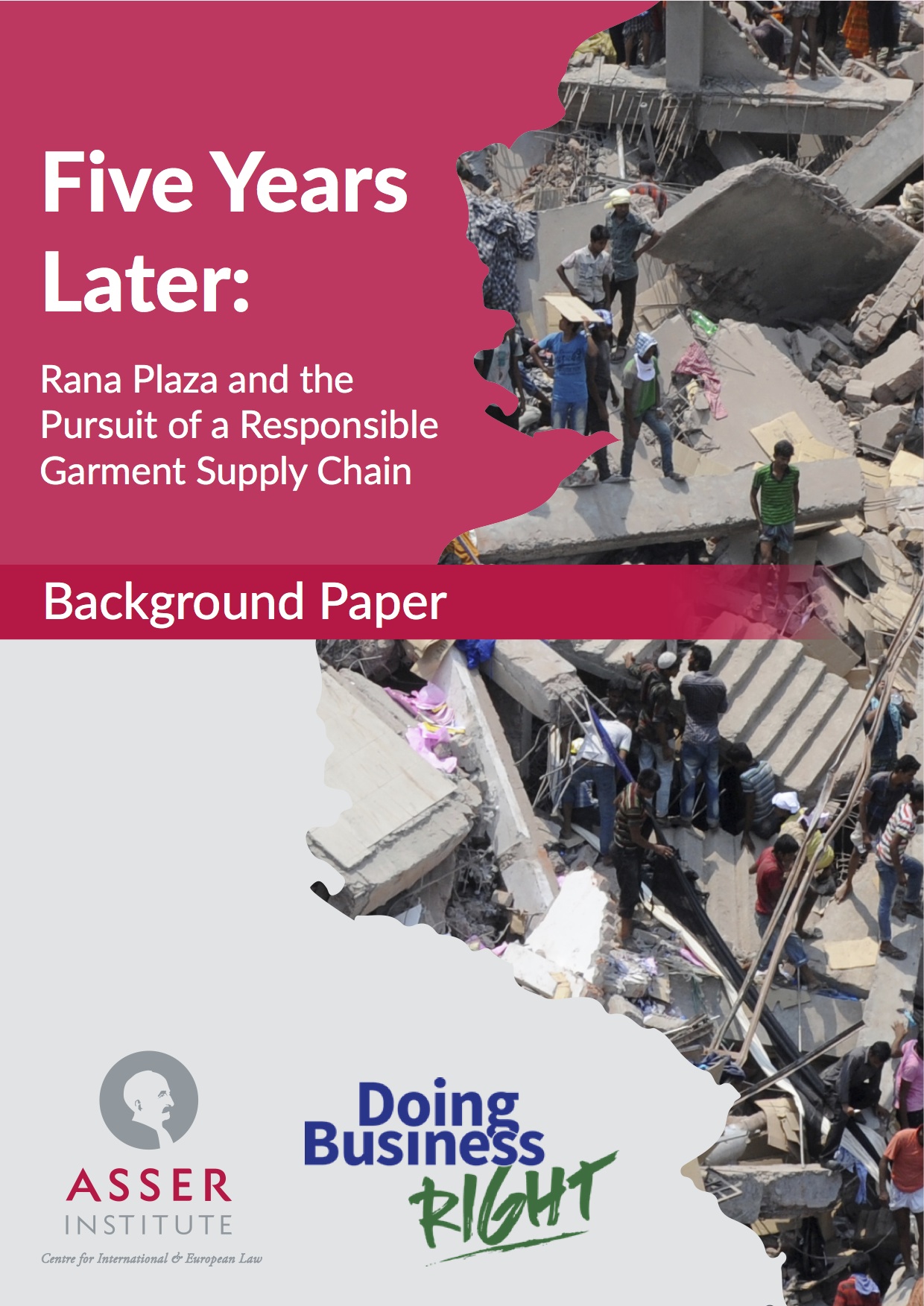

Download the full paper: RanaPlazaBackgroundPaper.pdf (3.5MB)
Doing Business Right Blog | <a href="https://www.asser.nl/" target="_blank"><img src="/doingbusinessright/blog/pics/AsserLogo.PNG" style="vertical-align: bottom; margin-left: 7px; float:right;" alt="T.M.C. Asser Instituut" /></a>

Doing Business Right – Monthly Report – May & June 2019 - By Shamistha Selvaratnam & Maisie Biggs

Doing Business Right – Monthly Report – May & June 2019


Editor’s note: Shamistha Selvaratnam is a LLM Candidate of the Advanced Masters of European and International Human Rights Law at Leiden University in the Netherlands. Prior to commencing the LLM, she worked as a business and human rights solicitor in Australia where she specialised in promoting business respect for human rights through engagement with policy, law and practice. Maisie Biggs graduated with a MSc in Global Crime, Justice and Security from the University of Edinburgh and holds a LLB from University College London. She is currently working with the Asser Institute in The Hague. She has previously worked for International Justice Mission in South Asia and the Centre for Research on Multinational Corporations (SOMO) in Amsterdam.


Introduction

This report compiles all relevant news, events and materials on Doing Business Right based on the coverage provided on our twitter feed @DoinBizRight and on various websites. You are invited to contribute to this compilation via the comments section below, feel free to add links to important cases, documents and articles we may have overlooked.


The Headlines

Dutch Court allows Case against Shell to Proceed

On 1 May the Hague District Court rules that it has jurisdiction to hear a suit brought against the Royal Dutch Shell by four Nigerian widows. The widows are still seeking redress for the killing of their husbands in 1995 in Nigeria. They claim the defendants are accomplices in the execution of their husbands by the Abasha regime. Allegedly, Shell and related companies provided material support, which led to the arrests and deaths of the activists. Although Shell denies wrongdoing in this case, the Court has allowed the suit to proceed. The judgment is accessible in Dutch here. An English translation is yet to be provided.

The Netherlands Adopts Child Labour Due Diligence Law

On 14 May the Dutch Government passed legislation requiring certain companies to carry out due diligence related to child labour in their supply chains. The law applies to companies that are either registered in the Netherlands that sell or deliver goods or services to Dutch consumers or that are registered overseas but sell or deliver goods or services to Dutch consumers. These companies will have to submit a statement declaring that they have due diligence procedures in place to prevent child labour from being used in the production of their goods or services.

While it is not yet clear when the law will come into force, it is unlikely to do so before 1 January 2020. The Dutch law is part of the growing movement to embed human rights due diligence into national legislative frameworks. The law is accessible in Dutch here.

First case under the French Due Diligence law initiated against Total

French NGOs Amis de la Terre FR and Survie have initiated civil proceedings against French energy company Total for the planned Tilenga mining project in Uganda. These organisations and CRED, Friends of the Earth Uganda and NAVODA have sent a formal notice to Total in relation to concerns over the potential expropriation of people in proximity to the site of the Tilenga project and threats to the environment. Information on the case from the initiating civil society organisations can be found here. This is the first initiated case under the new French Due Diligence law, and may act as a test case for future litigation.

In a similar vein, civil society organisations CCFD-Terre Solidaire and Sherpa have launched Le Radar du Devoir de Vigilance [The Vigilance Duty Radar], a resource to track the compliance of French companies to the law. The site lists potentially subjected companies, and their published vigilance plans (or lack thereof).

Bolstering the UK Modern Slavery Act

During a speech at the International Labour Organisation’s centenary conference on 11 June 2019, Theresa May outlined the UK Government’s further commitments to strengthen the Modern Slavery Act 2015; these included a central public registry of modern slavery transparency statements by businesses (in a similar vein to the Gender Pay Gap Service), and the extension of reporting requirements to the public sector. Individual ministerial departments will be obliged to publish modern slavery statements from 2021, while central Government has committed to publish voluntarily this year. The focus on public sector procurement will apparently also include a “new programme that will improve responsible recruitment in parts of our public sector supply chains that pass through Asia.”

The Final Report of the Independent Review of the Modern Slavery Act 2015 was released in May, and considered in Westminster Hall on 19th June. More...

The Rise of Human Rights Due Diligence (Part V): Does it Foster Respect for Human Rights by Business?

Editor’s note: Shamistha Selvaratnam is a LLM Candidate of the Advanced Masters of European and International Human Rights Law at Leiden University in the Netherlands. Prior to commencing the LLM, she worked as a business and human rights solicitor in Australia where she specialised in promoting business respect for human rights through engagement with policy, law and practice.


Human rights due diligence (HRDD) has emerged as a dominant paradigm for doing business with respect for human rights. It is a central concept to the UNGPs and describes what ‘steps a company must take to become aware of, prevent and address adverse human rights impacts’ in order to discharge the responsibility to respect.[1] The case studies examining Adidas’ and Unilever’s HRDD practices (the Case Studies) have demonstrated how businesses are working with the concept of HRDD and translating it into practice. They provide an opportunity to consider the adaptable nature of HRDD and whether it has the potential to transform business internal frameworks in order to generate greater corporate respect for human rights. This will be reflected on in this final blog of our series of articles dedicated to HRDD. It will also reflect on the role that hard law initiatives play in incentivising substantive human rights compliance by business (in addition to soft law initiatives such as the UNGPs).


The Adaptable Nature of HRDD

There is no ‘one-size-fits-all’ approach that can be taken by businesses when implementing HRDD. Although the elements and parameters of HRDD are defined in the UNGPs (discussed in detail in a previous blog in this series), it is, by its very nature, an open-ended concept that has been ‘articulated at a certain level of abstraction’. Indeed, this level of abstraction was arguably intentional given the use of the term ‘due’ in HRDD, which ‘implies variation of effort and resources necessary to address effectively adverse impacts in a particular context’.[2]

The flexibility built into the concept of HRDD acknowledges that there are more than ‘80,000 multinational corporations, ten times as many subsidiaries and countless national firms’ globally that differ in many respects.[3] Accordingly, the shape of HRDD within one business cannot be the same as that of another business – it should be ‘determined by the context in which a company is operating, its activities, and the relationships associated with those activities’.[4] As Ruggie acknowledged in 2010, his aim was to ‘provide companies with universally applicable guiding principles for … conducting due diligence’, rather than prescriptive guidance. Therefore, the ‘complexity of tools and the magnitude of processes’ employed by businesses will vary depending on the circumstances. As such, businesses can exercise a great deal of discretion as to how to translate HRDD into practice.

However, this adaptable nature of HRDD has been critiqued for lacking clarity, embodying a ‘high degree of fragility and flexibility’ and for containing an ‘inbuilt looseness’.[5] These complexities arise due to the absence of ‘sufficient specificity of expected action’.[6] Bijlmakers argues that the ‘ambiguity and openness’ of HRDD can ‘lead to uncertainty about what conduct is required from companies for the effective implementation of their responsibilities’.[7] This can result in a lack of compliance by businesses or differing levels of compliance, which ultimately means that HRDD ‘may or may not achieve the desired outcome – i.e. non-violation of human rights – in all cases’.[8] Indeed from the Case Studies it is clear that despite the extensive efforts made by Adidas and Unilever to put HRDD into practice, there are still gaps between the paper-based processes and practices of both businesses, e.g. there are human rights abuses present within their supply chains that are not being identified by their current HRDD practices and therefore not being addressed. Mares also argues that the looseness surrounding HRDD as a concept can also result in ineffective implementation, whereby businesses take action that is ‘largely symbolic, generates limited improvements, and fails to address underlying issues’.[9] As a result, businesses are not addressing the root causes of human rights issues within their business, but rather ‘applying bandaids to symptoms’. [10]

The flexibility of HRDD as a concept also allows businesses to employ various tools and processes in order to ‘create plausible deniability’, instead of discovering and understanding issues within their supply chains and how they should be managed.[11] Through conducting on the ground research at the local level, Bartley demonstrates that businesses appear to be using these tools and processes in order to ‘collect just enough information to produce assurances of due diligence’, allowing human rights issues and impacts to be kept out of sight.[12] Accordingly, their is a risk that businesses take advantage of the open-ended nature of HRDD by implementing HRDD processes as window-dressing to give the impression that they are engaging with the human rights risks and impacts in the context of their business, when in fact they are not.

However, despite these critiques the Case Studies demonstrate that the adaptable nature of HRDD has proven to be transformative on businesses. Embracing HRDD has led Adidas and Unilever to transform their operations to fit the different phases of the HRDD process. In doing so, they have avoided using a cookie-cutter approach that does not account for the differences between the businesses and they way they operate.

The use of customised HRDD approaches is of particular importance given that the salient human rights risks and impacts identified by a business will always differ in some respects to those of another business. With respect to Adidas and Unilever, despite having some overlapping identified risks (e.g. discrimination, working hours, freedom of association and fair wages), both businesses also focus on a number of specific salient risks, which are determined using various factors including the assessed risks of the countries in which they operate. On one hand, land rights are a particular focus for Unilever given the negative impacts it can have on individual’s and communities’ land tenure rights, particularly through its suppliers. On the other hand, child labour is more of a salient risk for Adidas given the pressure on brands in the apparel sector to produce garments at low costs in a quick time frame. In light of this, the HRDD processes followed by each business after identifying these risk areas are different such that the actions taken to integrate and address risks and impacts are directly responsive to those risks.


Is HRDD Effective to Foster Corporate Respect of Human Rights? 

The Case Studies also demonstrate that HRDD is not solely a paper tiger. Businesses that truly engage with the HRDD process can indeed transform internal processes, enhancing corporate attention on human rights. Both Adidas and Unilever have not sought to use HRDD as a buzzword with no institutional consequences. Instead they have introduced concrete mechanisms aimed at preventing human rights impacts from arising within their business context. 

So how has HRDD had a transformative impact on Adidas and Unilever? As I have shown in the Case Studies, it has provided a framework for embedding institutional and regulatory changes geared towards the prevention of adverse human rights impacts. On paper, they have translated the cycle of HRDD into a maze of internal procedures involving different stages of their activities as well as different corporate entities integrated in their supply chains. Moreover, they have built-up enforcement mechanisms in an attempt to trigger change if a potential human rights risk is identified. In short, the transformative impact of HRDD on the structure and operations of the two corporations is clear, whether this impact is effective to tackle human rights violations in their supply chains is another matter. The Case Studies conducted cannot evidence effectiveness, as it would require much more time-consuming and expensive on-field studies to observe whether the compliance of, for example, the working conditions of Adidas’ or Unilever’s suppliers with core labour rights improves thanks to these changes.    

It is certain that neither Adidas nor Unilever have a perfect HRDD process in place – gaps and blindspots will always exist which allow serious human rights issues to continue to emerge in their supply chains. Nonetheless, as evidenced above, it is also true that embracing HRDD had a transformative impact in the way these businesses operate. Whether these transformations are correlated with a decrease in human rights violations across their supply chains is a fundamental question that cannot be answered by my research, even though it will be at the centre of future assessments of the practical effects of HRDD on human rights throughout supply chains.    


The Catalyst Role of Hard Law Initiatives

Soft law HRDD initiatives such as the UNGPs and the OECD Guidelines have been primarily relied upon to date in order to regulate corporate human rights behaviour. Over the past years, however, several countries have either adopted or started to consider adopting legislation that embeds HRDD into their legal framework. For example:

  • The UK and Australia have both adopted legislation requiring specific businesses to report on their HRDD processes and efforts in their operations and supply chains in relation to modern slavery.
  • The Netherlands has adopted legislation that requires specific companies to undertake HRDD related to child labour in their supply chains.
  • France has taken a broader approach, rather than focusing on thematic issues, and adopted legislation that requires certain businesses to undertake HRDD to identify and prevent serious violations of human rights and fundamental freedoms, health and safety as well as the environment.
  • Further, the Human Rights Council’s Open-Ended Intergovernmental Working Group on Transnational Corporations and Other Business Enterprises with Respect to Human Rights is in the process of developing a binding business and human rights treaty. The current draft of the treaty includes a HRDD article requiring state parties to ensure that their domestic legislation requires all businesses to which the treaty applies to undertake HRDD throughout their business activities.[13]

The rapid rise of such hard law initiatives imposing HRDD across the board means that transformation observed in the context of Unilever and Adidas will spread to many more businesses in the coming years. The turn to binding HRDD might be a response to the lack of willingness of businesses to embrace HRDD voluntarily. This is particularly the case in light of the dire landscape highlighted by benchmarking initiatives. For example, the results of the Corporate Human Rights Benchmark demonstrates that 40% of the companies ranked scored no points at all in relation to the systems they have in place to ensure that due diligence processes are implemented.

Hard law that complements the business and human rights soft law already in existence might create the ‘compliance pull’ that is needed to ensure that businesses undertake HRDD by legally mandating that they engage in the process. Further, it can clarify and create greater certainty as to the expectations on business with respect to HRDD, as well as incentivise meaningful HRDD by imposing the risk of civil liability onto businesses failing to conduct proper HRDD. The turn to binding HRDD will necessarily have transformative effects on the way affected businesses operate. It will trigger the emergence of a whole HRDD bureaucracy involving rules, processes and institutions. Yet, whether it will lead to greater respect for human rights remains to be seen in practice and depends on the way HRDD will be implemented as well as on the intensity of control exercised by national authorities.


Conclusion

This blog series has delved into the operationalisation of HRDD from theory to practice by business. Through the detailed examination of the HRDD practices of Adidas and Unilever in their supply chains, it has demonstrated that HRDD can profoundly change the internal operations of businesses embracing it.

Despite the fragility and flexibility of the concept that gives rise to uncertainty and ambiguity as to how it should be complied with, businesses that choose to fully engage with the process are transformed by it with a potential effect on their human rights footprint. Truly implementing HRDD throughout a business’ operations and supply chains has the potential to result in human rights risks and impacts being better embedded within the business’ corporate governance framework. This is because HRDD focuses on identifying and managing these risks and impacts and to use those findings to inform business decisions, such as whether to engage in business activities in a particular country or whether to enter into contractual relations with a particular supplier. The development and adoption of hard law imposing HRDD complementing existing soft law initiatives contributes to the diffusion of HRDD into a greater number of businesses.

This blog series paves the way for further research into whether the HRDD mechanisms implemented by Adidas, Unilever and other businesses are truly effective to protect human rights. On the ground research at a local level involving engagement with the relevant business being assessed and its stakeholders is crucial to determining the effectiveness of specific HRDD mechanisms in practice. A broader examination of a greater number of businesses’ HRDD practices will allow for conclusions to be drawn as to how businesses can effectively conduct HRDD and whether there are particular practices and mechanisms that are more effective.


[1] Report of the Special Representative of the Secretary-General on the issue of human rights and transnational corporations and other business enterprises, John Ruggie: Protect, Respect and Remedy: a Framework for Business and Human Rights (7 April 2008), UN Doc. A/HRC/8/5, [56] [2008 Report].

[2] Radu Mares, “Respect” Human Rights: Concept and Convergence, in R Bird, D Cahoy and J Darin (eds) Law, Business and Human Rights: Bridging the Gap, Edward Elgar Publishing (2014), p 8.

[3] John Ruggie, The Corporate Responsibility to Respect Human Rights (2010).

[4] 2008 Report, supra note 1, [25].

[5] Justine Nolan, The Corporate Responsibility to Respect Human Rights: Soft Law of Not Law?, in S Deva and D Bilchitz (eds), Human Rights Obligations of Business: Beyond the Corporate Responsibility to Respect? (2013), p 140 [Nolan]; Radu Mares, Human Rights Due Diligence and the Root Causes of Harm in Business Operations: A Textual and Contextual Analysis of the Guiding Principles on Business and Human Rights, 10(1) Northeastern University Law Review 1 (2018), p 45 [Mares].

[6] Mares, ibid, p 6.

[7] Stephanie Bijlmakers, Corporate Social Responsibility, Human Rights, and the Law, London: Routledge (2018), p 120.

[8] Ibid; Surya Deva, Treating Human Rights Lightly: A Critique of the Consensus Rhetoric and the Language Employed by the Guiding Principles, in S Deva and D Bilchitz (eds) Human Rights Obligations of Business: Beyond the Corporate Responsibility to Respect?, Cambridge University Press (2013), p 101.

[9] Mares, supra note 5, p 45.

[10] Ibid, p 1.

[11] Tim Bartley, Rules without Rights: Land, Labor, and Private Authority in the Global Economy, Oxford University Press (2018), p 178.

[12] Ibid.

[13] The HRDD article of the treaty is discussed in further detail in a previous blog.

The Rise of Human Rights Due Diligence (Part IV): A Deep Dive into Unilever’s Practices - By Shamistha Selvaratnam

Editor’s note: Shamistha Selvaratnam is a LLM Candidate of the Advanced Masters of European and International Human Rights Law at Leiden University in the Netherlands. Prior to commencing the LLM, she worked as a business and human rights solicitor in Australia where she specialised in promoting business respect for human rights through engagement with policy, law and practice.


The consumer goods industry is shaped by businesses’ desire to engage with the best-quality suppliers at the cheapest price in order to sell goods at a high-profit margin in the burgeoning consumer markets. Accordingly, they continue to build their value chains in order to provide goods to consumers. The resulting effect of this is that potential human rights risks and impacts are likely to arise in the supply chains of businesses that operate in the industry. Risks that often arise in this sector include forced labour, non-compliance with minimum wage laws and excessive work hours, land grabbing and discrimination. Accordingly, businesses such as Unilever face the challenge of preventing, mitigating and addressing adverse human rights impacts in their supply chains through conducting human rights due diligence (HRDD). As Paul Polman (former CEO of Unilever) has stated: ‘We cannot choose between [economic] growth and sustainability—we must have both.’

This fourth blog of a series of articles dedicated to HRDD is a case study looking at how HRDD has materialised in practice within Unilever’s operations and supply chains. It will be followed by another case study examining another that has also taken steps to operationalise the concept of HRDD. To wrap up the series, a final piece will reflect on the effectiveness of the turn to HRDD to strengthen respect of human rights by businesses.More...

International Criminal Law and Corporate Actors - Part 3: War Crimes before Domestic Courts - By Maisie Biggs

Editor’s note: Maisie Biggs graduated with a MSc in Global Crime, Justice and Security from the University of Edinburgh and holds a LLB from University College London. She is currently working with the Asser Institute in The Hague.  She has previously worked for International Justice Mission in South Asia and the Centre for Research on Multinational Corporations (SOMO) in Amsterdam.


The ‘web’ of domestic statutory liability for international criminal law (ICL) violations by legal persons has spread. The previous post in this series outlined developments at the international level, however domestic courts play a fundamental role in its development and have been far more active on this front. These domestic developments are particularly remarkable in France, The Netherlands and Sweden. The American Alien Tort Statute caselaw will be discussed in the next post in this series. 

Domestic-level developments

As the Special Representative of the Secretary-General for the Human Rights Council, John Ruggie has highlighted the dual role of national courts and international tribunals in developing corporate responsibility for international crimes:

“One [of two developments] is the expansion and refinement of individual responsibility by the international ad hoc criminal tribunals and the ICC Statute; the other is the extension of responsibility for international crimes to corporations under domestic law. The complex interaction between the two is creating an expanding web of potential corporate liability for international crimes, imposed through national courts.[1]

The ICC was always intended to be supplementary to domestic courts, which are integral to the implementation and development of international criminal law.[2] The ICC’s remit (and resources) do not permit it to be the forum for the vast majority of international crimes, rather it (ideally) should only be resorted to when the relevant domestic courts are unwilling or unable to field international criminal law claims. The development of ICL at the domestic level means that it may be applied to legal persons in those forums.

The comparative law issue was at the crux of the debates at the Rome Conference surrounding the drafting of the Rome Statute; it was a step too far for an international instrument to impose a new and novel application of criminal law (to legal persons) on states with no prior history of doing so.[3] In the interim however, states have begun to do so voluntarily.[4] Anita Ramasastry and Robert C Thompson completed a wide survey of 16 countries and found that the “potential web of liability”[5] is expanding. While there are variations in how criminal conduct and intent are attributed to the company, and the type of liability itself, countries are increasingly subjecting business entities to statutory liability for international crimes.

David Scheffer, having witnessed the climate surrounding corporate criminal liability during the Rome conference negotiations, has since argued that legal systems and international law have evolved due in part to those inconclusive negotiations:

“States certainly did not act as if the Rome Treaty precluded expanding corporate liability into the realm of atrocity crimes. Indeed, one might speculate that the Rome Treaty, by focusing ratifying States’ attention on atrocity crimes, provided an impetus to accord greater accountability within their domestic legal systems.” [6]

Common-law countries in general adopted corporate criminal liability earlier than civil law, however these have come on board more recently; the highest-profile hold outs against this trend remain Germany, Sweden and Russia, which use alternative mechanisms to attach liability for corporate involvement in international crimes.[7] However, actual prosecution of legal persons remains rare. Dieneke De Vos’s run down of pre-2018 developments which already evidenced the “emerging norm” of finding potential corporate liability for ICL violations at the domestic level, at the same time acknowledged the rarity of prosecution.


The Netherlands

A number of high-profile Dutch cases have arisen in recent years of corporate actors being prosecuted for war crimes and international crimes, most notably in 2017 the Dutch Court of Appeal of ’s-Hertogenbosch convicted the arms-dealer and businessman Kouwenhoven for complicity in war crimes in Liberia. Dutchman Frans van Anraat was similarly prosecuted in 2005 for complicity in war crimes, due to his company selling the chemical ‘thiodiglycol’ to Saddam Hussein’s regime.

In Dutch law a corporation can be criminally liable under article 51(1) of the Dutch Penal Code (DPC).[8] The Dutch Supreme Court has outlined the circumstances in which it would be reasonable to impute illegal conduct to the corporation in the Drijfmest case, which are relatively flexible.[9] International crimes are incorporated into Dutch domestic law through the International Crimes Act (ICA) 2003, which defined the offences as crimes (Section 10) and did not exclude legal persons (Section 16).

Businessmen have been convicted in the aforementioned Van Anraat and Kouwenhoven cases in the Netherlands, however despite the possibility of corporate criminal liability for international crimes and the Dutch reputation for being a ‘pioneer’ in this area, successful prosecutions have yet to materialise, and no cases have yet made it to the trial phase.[10]

Proceedings under the ICA were initiated against a corporation, Lima Holding B.V., in the Riwal case. The Palestinian NGO Al Haq submitted a complaint against the Dutch company for its role in the construction of a security barrier between the West Bank and Israel. The prosecutor opted not to try the case, citing practical resource issues and lack of cooperation from Israeli authorities with the extraterritorial investigation. Public prosecutor Thijs Berger has since explained that “access to the relevant administration was not possible as the information was located at a subsidiary of the corporation in Israel and the Israeli authorities refused to act on requests for legal assistance sent by the Dutch Public Prosecutor.”[11] Though not ICL cases, Dutch prosecutors have met with more success prosecuting companies for transnational crimes in the international corruption cases of SBM Offshore and VimpelCom.[12]

The reasons for the lack of Dutch prosecutions have been attributed to possible adverse impacts of a prosecution on the Dutch economy; the limited capacity of the Dutch Public Prosecutor’s Office; the practical issues surrounding conducting investigations on foreign territory; and the bankruptcy or otherwise disappearance of the company in question.[13]


France

The aforementioned cases, though they highlight the role of corporate actors in conflicts, nonetheless all involve individual liability of natural persons. However, the recent French Lafarge case involves the prosecution of the company itself (in addition to former company executives) for international crimes, including complicity in war crimes, crimes against humanity, financing of a terrorist enterprise, deliberate endangerment of people's lives and forced labour.[14]

French corporate criminal liability is vicarious: offences must be “committed on their account by their organs or representatives.”[15] For the purposes of ICL prosecutions, this might prove an issue in the future regarding who properly is a ‘representative’ or organ for the purposes of the company’s liability. However, on the other hand it does partially lower the bar for finding corporate liability once that representative’s fault[16] has been determined.[17] There are more procedural barriers than under the Dutch system, leading to questions about what these would mean should a prosecution materialise. Unlike the Dutch, the French system of universal jurisdiction for core crimes does not apply to legal persons, and the jurisdictional double criminality requirement may mean that companies may not be prosecuted if the country where the crime took place does not also subject legal persons to criminal liability.[18]

The Lafarge case in France may be the most discussed, potentially impactful contemporary case for corporate criminal liability under ICL, however French civil society groups have been especially proactive in bringing cases before prosecutors and so there are other similar cases that started before Lafarge.

The 2009 DLH France case concerned the purchase of illegally obtained timber which was helping fund the Liberian civil war, however the case was dismissed by the Public Prosecutor in 2013.[19] The Amesys case concerned the French company Amesys which contracted with the Libyan intelligence services to supply a communications surveillance system, in so doing assisting the Gaddafi regime violently target political opponents and protestors. The case for complicity in acts of torture followed a complaint filed by FIDH (Fédération Internationale des Droits de l’Homme) and the French Human Rights League (Ligue française des droits de l’Homme - LDH), and is being heard before the Specialised War Crimes Unit within the Paris Tribunal (Tribunal de grande instance). The case is ongoing.

The BNP Paribas Rwanda case concerns complicity in the Rwandan genocide by the French bank. In 2017 the public prosecutor opened a judicial investigation into charges of complicity in genocide and complicity of crimes against humanity. These specifically concern $1.3m USD in funds transferred by the bank (in violation of a United Nations arms embargo) that were allegedly used to purchase weapons used in the genocide.[20] The initial complaint was filed by Sherpa, Ibuka France, and the Collectif des Parties Civiles pour le Rwanda. This case is also ongoing.

The 2017 judicial investigation into the Lafarge case has caused greater interest in observers. The European Center for Constitutional and Human Rights (ECCHR), Sherpa, and some of Lafarge’s former employees filed a criminal complaint against the French company for activities in 2013-14 by its Syrian subsidiary. The case concerns a cement plant situated in northeastern Syria which was acquired by Lafarge SA (now called LafargeHolcim) in 2007, and continued operations as Islamic State forces occupied the area. Lafarge is accused of financing IS through commercial transactions, from buying raw materials to paying fees to armed groups to continue factory operations. Now the company itself, in addition to eight of its former executives, is facing criminal prosecution, formally indicted on charges of complicity in crimes against humanity, endangerment of people's lives and financing of a terrorist enterprise.


Sweden

The Swedish model, and past caselaw, were covered in our case note on the Lundin Petroleum case. In brief summary, Swedish prosecutors have utilised universal jurisdiction for international crimes in past to prosecute three individuals involved in the Rwandan genocide, and several cases of war crimes committed during the Balkan Wars.

The Lundin case concerns the culpability of Swedish corporate actors for harms perpetrated during Sudan’s oil wars. Forfeiture of economic benefits and a corporate fine (the closest punitive equivalent to corporate criminal liability under Swedish law[21]) are being levelled at Swedish oil company Lundin Petroleum SA, and two company directors are personally facing criminal prosecution for aiding and abetting war crimes and crimes against humanity. The forfeiture claim is for the whole profit of the oil exploitation over the years Lundin was involved in Sudan, and the two men face life in prison if found guilty, so the charges are not insubstantial. The Swedish Government’s authorisation is necessary in extraterritorial cases to allow the prosecution.[22] It was granted in this case, and subsequently the Supreme Administrative Court denied Lundin’s appeal to override the decision in favour of prosecution. Swedish police have also opened a criminal investigation into harassment of witnesses.

At the Asser event on the Lundin case, Miriam Ingeson argued that the increased capacity building for Swedish prosecutors to pursue international crimes, and a positive duty to prosecute under Swedish law have likely led to the increase in these investigations. She also explained this case will challenge Swedish courts with the question of which general principles to apply on accomplice liability; international tribunals, including the courts of Rwanda, Yugoslavia, and ICC have developed international-level principles that states are not necessarily obliged to apply. This case however does reference general international legal rules, so the Swedish rules on accomplice liability may yield to those developed by international tribunals.

The harms being investigated by the Swedish prosecutors and the depth of the company’s alleged involvement are arguably more serious than those in the French Lafarge case. Both cases are (slowly) unfolding, potentially developing customary ICL in the process, so comparisons between the two will inevitably continue.


Conclusion

The previous post discussed the Special Tribunal for Lebanon (STL) case, and how heavily the judge leaned on developments in domestic courts concerning corporate liability. That judgement and these domestic developments are evidencing the interplay between the application of ICL in domestic courts[23] and the international tribunals. The 2009 prophecy of Joanna Kyriakakis now seems especially prescient:

“[T]he growing trend in legal systems in Europe, Asia, and South America to incorporate extraterritorial corporate liability for international crimes will likely function as a catalyst for courts to construe international criminal law so as to apply to corporations as non-state actors, or even bring the issue of corporate liability back to the agenda of the states parties to the ICC.”[24]

Actual prosecutions are sparse however there is nonetheless a developing trend to support the STL judge’s conclusions. This trend is still only on paper: domestic statutory corporate liability for ICL violations has become widespread, however even in these particularly active jurisdictions there have been no convictions of legal persons for international crimes. The extreme expense, political and economic issues inherent in any case of this kind preclude there ever being a deluge of cases to look at, so the small number of cases successfully making it to the investigation stages are cause for analysis. The next post in this series will be addressing the Kiobel v. Royal Dutch Petroleum Co and Jesner v Arab Bank cases before American courts, and specifically looking to the role of civil law in ICL.


[1] HRC, ‘Report of the Special Representative of the Secretary-General on the Issue of Human rights and Transnational Corporations and other Business Enterprises, Business and Human Rights: Mapping International Standards of Responsibility and Accountability for Corporate Acts’ UN Doc. A/HRC/4/35 (19 February 2007) para 22.

[2] See Mark Klamberg, ‘International Criminal Law in Swedish Courts: The Principle of Legality in the Arklöv Case’ (2009) 9 International Criminal Law Review 395.

[3] Joanna Kyriakakis, ‘Corporate Criminal Liability and the ICC Statute: The Comparative Law Challenge’ (2009) 56 Netherlands International L Rev 333, 348.

[4] David Scheffer, ‘Corporate Liability under the Rome Statute’ (2016) 57 Harvard International Law Journal Online Symposium 35, 38. See also his Amicus Curiae briefs in both Kiobel v. Royal Dutch Petroleum Co and Jesner v Arab Bank, PLC, which strongly argue the evolution of corporate criminal liability since the drafting of the Rome Statute.

[5] Anita Ramasastry and Robert C Thompson, ‘Commerce, Crime and Conflict: Legal Remedies for Private Sector Liability for Grave Breaches of International Law: A Survey of Sixteen Countries’ (Fafo-report no. 536, 2006) 27.

[6]‘Brief of Ambassador David J. Scheffer, Northwestern University Pritzker School of Law, as Amicus Curiae in Support of the Petitioners’ Joseph Jesner, et al., v. Arab Bank PLC, 822 F.3d 34 (2d Cir. 2016) (Jun. 26, 2017) 6.

[7] Sabine Gless and Sarah Wood, ‘General Report on Prosecuting Corporations for Violations of International Criminal Law: Jurisdictional Issues’ in S Gless and S Broniszewska (eds) Prosecuting Corporations for Violations of International Criminal Law: Jurisdictional Issues (International Colloquium Section 4, Basel, 21-23 June 2017) 18.

[8] Article 51 Dutch Penal Code:

[…] 2. If an offence has been committed by a legal person, prosecution can be instituted and the punishments and measures provided by law can be imposed, if applicable, on:

a. The legal person, or

b. Those who have ordered the offence, as well as on those who have actually controlled the forbidden act, or

c. The persons mentioned under 1. And 2. Together

3. For the application of the former subsections, equal status as a legal person applies to a company without legal personality, a partnership, a firm of ship owners, and a separate capital sum assembled for a special purpose.

[9] See English summary in Emma van Gelder and Cedric Ryngaert, ‘Dutch Report on Prosecuting Corporations for Violations of International Criminal Law’ in S Gless and S Broniszewska (eds) Prosecuting Corporations for Violations of International Criminal Law: Jurisdictional Issues (International Colloquium Section 4, Basel, 21-23 June 2017) 114.

[10] Cedric Ryngaert, ‘Accountability for Corporate Human Rights Abuses: Lessons from the Possible Exercise of Dutch National Criminal Jurisdiction over Multinational Corporations’ (2018) 29 Criminal Law Forum 1, 8.

[11] van Gelder and Ryngaert (n 10) 129.

[12] ibid 130.

[13] ibid 143.

[14] For more background on this case, see the previous Doing Business Right post by Alexandru Tofan.

[15] France Penal Code, Article 121-2 [paragraph 1].

[16] France Penal Code, Article 121-2 [paragraph 3]: “The criminal liability of legal persons does not exclude that of the natural persons who are perpetrators or accomplices to the same act”.

[17] “In an important judgment of 2001 the Court of cassation stated that the body’s or representative’s fault is sufficient to trigger the criminal liability of the corporation in case the offence has been committed on the legal person’s behalf. It is not necessary to characterize a separate fault of the corporation” in Juliette Lelieur, ‘French Report on Prosecuting Corporations for Violations of International Criminal Law’ in S Gless and S Broniszewska (eds) Prosecuting Corporations for Violations of International Criminal Law: Jurisdictional Issues (International Colloquium Section 4, Basel, 21-23 June 2017) 185.

[18] ibid 180.

[19] Of note: the case was at least partially under French criminal law rather than application of ICL.

[20] This is not the first time the bank has faced these types of claims: “The investigation into BNP comes three years after US regulators extracted a record $8.9bn fine and a guilty plea from the bank, finding that it broke US sanctions by processing more than $30bn of transactions for groups in Sudan, Iran and Cuba between 2002 and 2012. The bank was also given a one-year ban on clearing some dollar transactions.” in Martin Arnold, ‘BNP Paribas under investigation over role in Rwanda genocide’ Financial Times (September 25 2017).

[21] In the Swedish context “a corporate fine is not considered a penalty for a crime but is an extraordinary legal remedy serving as a repressive sanction supplanting corporate criminal liability,” in Miriam Ingeson and Alexandra Lily Kather, ‘The Road Less Traveled: How Corporate Directors Could be Held Individually Liable in Sweden for Corporate Atrocity Crimes Abroad’.

[22] ibid.

[23] Jonathan Clough, ‘Not-so-innocents abroad: corporate criminal liability for human rights abuses’ (2005) 11(1) Australian Journal of Human Rights 1, 7.

[24] Kyriakakis (n 3) 348.

International Criminal Law and Corporate Actors - Part 2: The Rome Statute and its Aftermath - By Maisie Biggs

Editor’s note: Maisie Biggs graduated with a MSc in Global Crime, Justice and Security from the University of Edinburgh and holds a LLB from University College London. She is currently working with the Asser Institute in The Hague.  She has worked for International Justice Mission in South Asia and the Centre for Research on Multinational Corporations (SOMO) in Amsterdam.


The Rome Statute is a central pillar of international criminal law (ICL), and so any discussion concerning the subjection of legal persons requires a revisit of the negotiations surrounding its drafting. However in the time since its implementation, there appears to have been a shift in ICL regarding corporate liability. Developing customary international law, treaty law and now most domestic legal systems have some established mechanisms for prosecuting legal persons for violations of ICL. More...

The Rise of Human Rights Due Diligence (Part III): A Deep Dive into Adidas’ Practices - By Shamistha Selvaratnam

Editor’s note: Shamistha Selvaratnam is a LLM Candidate of the Advanced Masters of European and International Human Rights Law at Leiden University in the Netherlands. Prior to commencing the LLM, she worked as a business and human rights solicitor in Australia where she specialised in promoting business respect for human rights through engagement with policy, law and practice.


The tragic collapse of Rana Plaza in Bangladesh in 2013, which killed over one thousand workers and injured more than two thousand, brought global attention to the potential human rights risks and impacts that are inherent to the garment and footwear sector.[1] This sector employs millions of workers within its supply chain in order to enable large-scale production of goods as quickly as possible at the lowest cost as market trends and consumer preferences change.[2] These workers are often present in countries where the respect for human rights and labour rights is weak. This creates an environment that is conducive to human rights abuses. Key risks in this sector include child labour, sexual harassment and gender-based violence, forced labour, non-compliance with minimum wage laws and excessive work hours.[3] Accordingly, brands such as Adidas face the challenge of conducting effective human rights due diligence (HRDD), particularly in their supply chains. 

This third blog of a series of articles dedicated to HRDD is a case study looking at how HRDD has materialised in practice within Adidas’ supply chains. It will be followed by another case study examining the steps taken by Unilever in order to operationalise the concept of HRDD. To wrap up the series, a final piece will reflect on the effectiveness of the turn to HRDD to strengthen respect of human rights by businesses. More...

Doing Business Right – Monthly Report – April 2019 - By Shamistha Selvaratnan

Editor’s note: Shamistha Selvaratnam is a LLM Candidate of the Advanced Masters of European and International Human Rights Law at Leiden University in the Netherlands. Prior to commencing the LLM, she worked as a business and human rights solicitor in Australia where she specialised in promoting business respect for human rights through engagement with policy, law and practice.


Introduction

This report compiles all relevant news, events and materials on Doing Business Right based on the coverage provided on our twitter feed @DoinBizRight and on various websites. You are invited to contribute to this compilation via the comments section below, feel free to add links to important cases, documents and articles we may have overlooked.


The Headlines

UK Supreme Court hands down judgment denying appeal by Vedanta

Following a significant UK Supreme Court jurisdiction case this month, for the first time a UK company will face trial in their home jurisdiction for environmental and human rights impacts associated with its foreign subsidiary. In Vedanta Resources PLC and another (Appellants) v Lungowe and others (Respondents) [2019] UKSC 20, the Supreme Court denied an appeal by Vedanta Resources and its Zambian subsidiary KCM, and allowed the claim to proceed to merits in England. The Court made it clear the real risk that the claimants would not obtain access to substantial justice in Zambia was the deciding factor in the case.

The big news is the Court’s prioritisation of access to justice as a jurisdictional hook for claims in England, however the finding of a “real triable issue” between a foreign claimant and UK parent company is also of great significance. The Court lowered the (previously insurmountable) bar for evidence the claimants have to provide at the pre-trial stage, allowing victims of corporate abuses to rely more heavily on the potential future disclosure of internal defendant documents. The Court called for a more liberal, less formalistic approach to determining whether a parent company potentially exercised control, saying that the existing legal criteria ought not to be a ‘straitjacket’ on the courts.

To the relief of those following previous cases like Okpabi, Lord Briggs confirmed that the size of a company’s operations does not dilute a duty of care – under the previous state of the law, the liability of a company decreased as its power and size increased. Additionally, company group-wide Corporate Social Responsibility policies and guidelines can now potentially be a basis to argue a case of parent company control. Companies making public statements that they protect the environment and human rights in their operations may now be held to these press-friendly representations. Read our full analysis of the case here. More...


International Criminal Law and Corporate Actors - Part 1: From Slave Trade Tribunals to Nuremberg - By Maisie Biggs

Editors’ note: Maisie Biggs graduated with a MSc in Global Crime, Justice and Security from the University of Edinburgh and holds a LLB from University College London. She is currently working with the Asser Institute in The Hague.  She has worked for International Justice Mission in South Asia and the Centre for Research on Multinational Corporations (SOMO) in Amsterdam.


The Nuremberg Trials were a defining and foundational moment for international criminal law, and the first instance in which the question of international legal responsibility of corporate actors, including natural persons and corporations, was first broached. The Tribunals elected to only prosecute natural persons, however a brief analysis of the reasoning indicates it was political rather than legal considerations that led to this distinction. International law and corporate actors have a storied history that merits drawing the timeline back earlier than Nuremberg. This is the first in a series of blog posts exploring the intersection between corporations and international criminal law (ICL).

As is well known, corporations are not subjected to the Rome Statute and do not fall under the jurisdiction of the International Criminal Court (ICC). Yet, as we will show there have been interesting recent developments at the intersection between ICL and the activities of corporations. In 2014, the Special Tribunal for Lebanon (Al Jadeed S.A.L. & Ms Khayat (STL-14-05)) acknowledged the development of domestic corporate accountability, and determined that ICL has likewise progressed. Meanwhile, cases against individuals (such as the ongoing Lundin case in Sweden) or corporations (such as the Lafarge case in France) involving the activities of corporations abroad have been initiated by national prosecutors on the basis of ICL.

These cases and potential implications will be discussed in more depth in later posts, however it is interesting that while some academics and judges are tracking the ostensibly ‘new’ legal movements to subject corporate activities to greater regulation,[1] the history of international law itself shows that harmful transnational commerce has been an issue for a long time, and this is not the first time international law has been used as a tool against jurisdiction-hopping corporate crime.More...

The Rise of Human Rights Due Diligence (Part II): The Pluralist Struggle to Shape the Practical Meaning of the Concept - By Shamistha Selvaratnam

Editor’s note: Shamistha Selvaratnam is a LLM Candidate of the Advanced Masters of European and International Human Rights Law at Leiden University in the Netherlands. Prior to commencing the LLM, she worked as a business and human rights solicitor in Australia where she specialised in promoting business respect for human rights through engagement with policy, law and practice.


The UNGPs second pillar, the corporate respect for human rights, is built around the concept of human rights due diligence (HRDD). Since 2011, following the resounding endorsement of the UNGPs by the Human Rights Council, it has become clear that HRDD constitutes a complex ecology of diverse practices tailored to the specific context of a particular business. The UNGPs are not legally binding and there is no institutional mechanism in place to control how they are to be translated into practice by the companies that purport to endorse them. Nonetheless, numerous companies and regulatory schemes have embraced the idea of HRDD (such as the OECD Guidelines, the French law on the devoir de vigilance, the UK and Australian modern slavery laws and the Dutch Agreement on Sustainable Garment and Textile). 

The operationalisation of HRDD has been shaped over the past 8.5 years by a variety of actors, including international organisations, consultancies and audit firms, as well as non-governmental organisations. These actors have conducted research and developed various methodologies, instruments and tools to define what HRDD is and what it entails in order to assist or influence businesses in its operationalisation. The interpretation of the requirements imposed by HRDD process outlined in the UNGPs is open to a variety of potentially contradictory interpretations. This pluralism is well illustrated by the diversity of actors involved in an ongoing struggle to define its scope and implications.

This second blog of a series of articles dedicated to HRDD looks at it through the lens of the most influential players shaping HRDD in practice by examining their various perspectives and contributions to the concept. Case studies will then be undertaken to look at how HRDD has materialised in practice in specific companies. To wrap up the series, a final piece will reflect on the effectiveness of the turn to HRDD to strengthen respect for human rights by businesses. More...