The unequal impact of COVID-19 in the global apparel industry - Part I: The contractual roots - By Mercedes Hering

Editor’s note: Mercedes is a recent graduate of the LL.B. dual-degree programme English and German Law, which is taught jointly by University College London (UCL) and the University of Cologne. She will sit the German state exam in early 2022. In September 2020 she joined the Asser Institute as a research intern for the Doing Business Right project.


The Covid-19 pandemic is straining global supply chains and exposes the inequality that underlies them. As many countries entered lockdowns, the economy was brought to a rapid halt. This caused demand for apparel goods to plummet. Global apparel brands, in turn, have begun to disengage from business relationships with their suppliers. Lead firms cancelled or even breached their contracts with suppliers (often relying on force majeure or hardship), suspended, amended or postponed orders already made. This practice had a devastating effect on suppliers.

This situation again shows that the contractual structure of global supply chains is tilted towards (often) European or North American lead firms. In this blog, I will first outline the power imbalance embedded in global supply chain contracts. Secondly, I will outline how order cancellations impact suppliers and their workers. In Part II, I will go through four approaches to mitigate the distress of suppliers and their workers and to allow the parties to reach solutions which take into account their seemingly antagonistic interests.


Power imbalance in the garment supply chain: Key economic drivers

Global value and supply chains suffer from a power imbalance, tilted in favour of apparel brands and retailers. Power is defined as the ability of an actor to influence another to act in the manner that they would not have otherwise.[1] This brand power has two main sources: first, the significance of design and marketing activities in terms of value addition and second, the dependence of suppliers on buyers (buyer-driven supply chain contracts).

The most valuable activities in the apparel GVC are not related to manufacturing,[2] but are found in the design, branding, and marketing of the products. These activities are generally carried out by so-called lead firms – retailers, brand marketers, and brand manufacturers.[3] They usually benefit from their size, huge sales and thus significant market power.

Additionally, suppliers are dependent on a limited number of buyers. An ILO report shows that 24% of all suppliers depend on their main buyer, who takes half of the production. In the case of 54% of all suppliers, the main buyer takes 35% of the garment production.  Furthermore, 52% of suppliers in the garment industry accepted orders below cost, 81% of which reported to do so in order to secure future orders. In particular, 52% of the suppliers based in Bangladesh reported having been pressured by buyers to do so. Thus, suppliers are generally highly dependent on their buyers and have very little bargaining power. It seems the economic structure of the garment sector is tilted in favor of the buyer.

The fashion industry is built on short-term adversarial trading relationships, characterized by multiple sourcing, price orientation and competitive bidding.[4] According to Raworth and Kidder, buyers exert three kinds of pressure on suppliers: First, time and speed (faster delivery, shorter lead times), second, flexibility (quick changes in order size and rapid switches between product designs), and third, costs and risks (lower price, higher quality).

For example, according to the ILO, only 17% of suppliers in the Bangladeshi garment sector considered to have enough lead time. Such ‘predatory purchase practices[5] allow buyers to act opportunistically and make agreements that favor their interests and force suppliers into unfair contractual arrangements. Suppliers respond by squeezing workers’ wages and production targets.


Power imbalance in the garment supply chain: Contractual translation

This economic power imbalance is translated contractually. Suppliers are confronted with take-it-or-leave-it agreements. In practice, lead firms draft contract clauses and provide them to the suppliers. Suppliers are pushed to assume all financial risk – as evident from the situation suppliers find themselves in after the outbreak of Covid-19. Moreover, buyers do not only impose strict deadlines, but also include penalty clauses in their contracts if suppliers fail to meet those deadlines. According to the ILO, 35% of suppliers in the textile industry face such penalties. Buyers also benefit from one-sided cancellation clauses, to which they increasingly took recourse during the pandemic.

For example, Kohl’s Inc.’s contract with their suppliers contains the following clause which secures such a discretionary right to withdraw their order in a wide range of situation:

„We may cancel our Purchase Order in whole or in part without your authorization and at Kohl’s sole and absolute discretion in the event of any of the following, each of which it is agreed will substantially impair the value of the whole Purchase Order to us: ... (g) in the event of acts of God (including, but not limited to, natural disasters, fire, flood, earthquake and disease outbreaks), lock-out, strike, war, civil commotion or disturbances, acts of public enemies, government restrictions, riots, insurrections, sabotage, blockage, embargo, or other causes beyond our reasonable control ... Cancellation by Kohl’s for any of the foregoing reasons shall constitute “for cause” and shall not subject us to any liability, cost, or charge whatsoever. In the event of such cancellation, or any cancellation for cause, Kohl’s may take possession of the Merchandise and any materials and equipment being used by you and may cause the Merchandise to be completed in such manner as Kohl’s shall determine and you shall reimburse Kohl’s for the cost of completion.“


These clauses allow buyers to disengage from their contractual relationships at their discretion. This is often the case even where orders had already been made and shipped. Buyers are generally under no obligation to adhere to a time limit or reimburse the costs of orders already completed or shipped.

Typically, the brands’ bargaining power also allows the renegotiation of payment terms. As highlighted in a report of the ECCHR, in the midst of the covid-19 pandemic both Marks and Spencer and PHV Corp amended payment terms to extend the payment period. While Asda and Debenhams each demanded 40 to 90% discounts as condition to accept the goods they had ordered.

Where supply chain contracts did not include such unilateral cancellation clauses, suppliers try to invoke force majeure to get out of their contractual obligations. Force majeure, a concept derived from Roman law, relieves a party from its contractual obligations if an unforeseen event renders performance impossible. The concept of force majeure has to be distinguished from ‘hardship’, which allows a party to walk away from its contractual obligations if the circumstances surrounding the performance of the contract changed in such a way as to render performance of the contract significantly more burdensome.[6] Both concepts constitute a good faith exception to the cornerstone of contract law, the principle of pacta sunt servanda.

The interpretation of force majeure clauses and the question if COVID-19 constitutes a force majeure event is governed by the law applicable to the contract. All private law regimes have different concepts to deal with changed circumstances; all with different nuances. To some extent at least it is nevertheless possible to discern some commonalities between the different approaches to force majeure. Today, some even speak of an internationally accepted concept of force majeure,[7] requiring a party to prove that (1) an external event; (2) which was unavoidable; (3) and unforeseeable; (4) caused the obligor’s non-performance.

Much (see for example here, here and here) has been written on whether COVID-19 does indeed constitute a force majeure event. This will depend on the drafting of the agreement, and the contractual obligation in question. One can readily accept that COVID-19 (or to be more precise: its side-effects) renders the performance of a contractual obligation impossible if we are concerned with a manufacturer whose employees are all in lockdown and must therefore abstain from work. Global apparel brands, however, ‘only’ need to pay money. It is much less obvious to assume that it is impossible to fulfil a payment obligation. The fact that some countries issued – or consider issuing – force majeure certificates does not change this. Such a force majeure certificate only serves as supporting evidence before a court or tribunal.[8] The court will still take other factors, including the wording of the contract, into account.

If force majeure is of limited help to them, companies will instead turn to hardship. Due to the covid-19 lockdowns brands are prevented from selling their apparel and would have to store the excess clothing. The contract becomes commercially impracticable – but not impossible to perform. As argued by the ECCHR, it is difficult to see how companies will be able to claim that the measures governments took in response to the pandemic constitute events that render their payment obligation significantly more burdensome. Indeed, the risk that they might not be able to sell their products seems to be an economic risk generally borne by companies engaging in a cyclical economy.

However, even where force majeure clauses were triggered falsely, suppliers will often lack the resources to bring a claim. Moreover, contracts often include clauses stipulating that the supplier bear buyer’s legal costs if their claim fails and obliging  suppliers to sue the buyer in the country in which the buyer is domiciled, not where the contract is performed.


Covid-related cancellation of garment contracts: Effects on suppliers and workers

According to the International Labour Organisation, looking at Bangladesh alone, the cancellation of contracts in the garment industry caused a loss of $USD 6 billion since the beginning of the pandemic. Half of Bangladeshi garment suppliers had the majority of their contracts cancelled; around 1,136 factories and 2.26 million workers are said to be affected. In Bangladesh, the garment industry, which amounts for 80% of all exports, employs 4.5 million workers. As of April 2020, more than one million garment workers were fired or furloughed, often without pay. Consequently, 80% of Bangladeshi families suffered from income loss. Cambodia, Indonesia, India, Myanmar, Sri Lanka and Vietnam have been similarly affected.

Furthermore, according to Clean Clothes Campaign, over 60% of the poor and low-income population who suffered income losses because of Covid did not receive any support from the public and private sectors and 30% of garment workers report that their children had gone without food. Most factories operate on very thin profit margins and lack access to loans; the pandemic pushed many producers into or near to bankruptcy. Having to lay off workers, employers are left with no room to provide their employees with severance packages. Workers’ wages are often squeezed to produce garments as cheaply as possible, thus depriving them of the possibility to plan for unforeseen events. Finally, home states with prevalent supplier industry often lack capital or access to capital to set up rescue schemes for corporate nationals and citizens. And when these states do set up support schemes, they often lack effective enforcement mechanisms, leaving those affected in financial distress. Workers, who before had struggled to make ends meet, now cannot pay for mere necessities: housing, food, schooling. As a survey from India revealed, migrant workers are at particular risk. They often fall outside the coverage of support schemes and lack support networks.

Where contractual clauses are favourable to brands with disproportionate bargaining power, they might be allowed to walk away from their contractual obligations. This is because under the dominant interpretation of the principle of party autonomy, the courts tend to respect the “autonomous” will of the parties when agreeing to contractual terms, no matter how onerous (or unfair) they appear to be. Yet, contrary to this abstract ideal of party autonomy, the parties to supply chain contracts are rarely of comparable strength. Instead, buyers tend to set the terms of the contracts unilaterally; no real negotiation occurs. Benefits and burden of the contracts are not distributed in a fair manner. In other words, global supply chain contracts are by design favouring European or North American brands. Thanks to them they can externalize unexpected costs, such as the fall in sales caused by the Covid-19 pandemic to their contractual partners in the Global South. Yet, in light of the unequal resources of the different parties to the apparel supply chain, it would seem reasonable to shift a considerable share of the economic losses triggered by the pandemic onto the strongest links in the chain: the brands. In Part II, I will discuss four potential solutions to achieve such a rebalancing.


[1] Hingley, M.K. (2005), "Power imbalanced relationships: cases from UK fresh food supply", International Journal of Retail & Distribution Management, Vol. 33 No. 8, pp. 551-569.

[2] Gereffi, Gary. (2018). Global Value Chains and Development: Redefining the Contours of 21st Century Capitalism.

[3] Ibid.

[4] Perry, P. and Towers, N. (2013), "Conceptual framework development: CSR implementation in fashion supply chains", International Journal of Physical Distribution & Logistics Management, Vol. 43 No. 5/6, pp. 478-501

[5] Anner, M. (2019), Predatory purchasing practices in global apparel supply chains and the employment relations squeeze in the Indian garment export industry. International Labour Review, 158: 705-727. https://doi.org/10.1111/ilr.12149.

[6] Frustration (UK), impracticality (US), imprévision (FR), Wegfall der Geschäftsgrundläge (GER)

[7] This is because most international contracts contain force majeure clauses. Furtermore, the force majeure doctrine was recognized as ‘a general principle of law’ by the Iran-US Claims Tribunal. Lastly, both the CISG (Article 79) and the UPICC contain provisions on force majeure; the IBA and ICC provide model force majeure clauses. Berger, Klaus Peter and Behn, Daniel, Force Majeure and Hardship in the Age of Corona: A Historical and Comparative Study, 6 McGill Journal of Dispute Resolution (2019/2020) 79.

[8] Berger, Klaus Peter and Behn, Daniel, Force Majeure and Hardship in the Age of Corona: A Historical and Comparative Study (April 20, 2020). 6 McGill Journal of Dispute Resolution (2019/2020) Number 4, pages 79-130,

Comments are closed
Doing Business Right Blog | Lungowe v Vedanta and the loi relative au devoir de vigilance: Reassessing parent company liability for human rights violations - By Catherine Dunmore

Lungowe v Vedanta and the loi relative au devoir de vigilance: Reassessing parent company liability for human rights violations - By Catherine Dunmore

Editor's Note: Catherine Dunmore is an experienced international lawyer who practised international arbitration for multinational law firms in London and Paris. She recently received her LL.M. from the University of Toronto and her main fields of interest include international criminal law and human rights. Since October 2017, she is part of the team of the Doing Business Right project at the Asser Institute.

Introduction

The Court of Appeal in London recently handed down its judgment in Dominic Liswaniso Lungowe and Ors. v Vedanta Resources Plc and Konkola Copper Mines Plc [2017] EWCA Civ 1528 (Lungowe v Vedanta) addressing issues of jurisdiction and parent company liability. The judgment runs contrary to the historical legal doctrine that English domiciled parent companies are protected from liability for their foreign subsidiaries’ actions. This decision clarifies the duty of care standard a parent company owes when operating via a subsidiary and opens the gates to other English domiciled companies and their subsidiaries being held accountable for any human rights abuses.

Facts

In 2015, a claim was brought by 1,826 villagers from the Chingola region of Zambia against the London Stock Exchange listed metals and mining company Vedanta Resources Plc (Vedanta), which has a global asset base of almost US$40 billion. Vedanta’s subsidiary Konkola Copper Mines Plc (KCM), a Zambian public limited company which is the largest integrated copper producer in the country, was licenced to extract from the Nchanga copper mine near Chingola. The villagers claimed personal injury, damage to property and loss of income, amenity and enjoyment of land, due to alleged pollution and environmental damage caused by discharges from the Nchanga mine for over a decade. The claimants used Vedanta to anchor their claims in the English courts and received permission to serve KCM out of the jurisdiction. Both Vedanta and KCM applied for declarations that the Court had no jurisdiction to try the claims, or alternatively, that it should not exercise such jurisdiction. These challenges were dismissed at first instance by Mr Justice Coulson, and Vedanta and KCM appealed against his order.

Judgment

The Court of Appeal unanimously dismissed the appeals and confirmed jurisdiction against Vedanta and KCM. Led by Lord Justice Simon, the Court concluded that “there are no proper grounds for re-opening the Judge's decision. The appellants have not persuaded me that the Judge misdirected himself on the law, nor that he failed to take into account what mattered or that he took into account what did not matter. How the various matters weighed with him, either individually or together, was for him to decide, provided that he did not arrive at a conclusion that was plainly wrong. In my view, he did not reach a view that was wrong; he reached a conclusion that was in accordance with the law”.

In its determination of jurisdiction, the Court notably considered the following issues:

  1. Whether the claimants' claim against KCM has a real prospect of success;

  2. If so, whether there is a real issue between the claimants and Vedanta;

  3. Whether it is reasonable for the court to try that issue;

  4. Whether KCM is a necessary and proper party to the claim against Vedanta; and

  5. Whether England is the proper place in which to bring that claim.

Of particular jurisprudential significance for future cases involving companies’ alleged human rights violations were the Court’s deliberations on issue two relating to parent companies and the duty of care.

Parent company liability and the duty of care

The Court of Appeal’s judgment sought to clarify the duty of care owed by a parent company through its subsidiary’s operations. The judges reviewed the benchmark cases for the imposition of such a duty of care and affirmed the following propositions:

  1. “The starting point is the three-part test of foreseeability, proximity and reasonableness”, as enounced in Caparo Industries Plc v Dickman. The fact alone that Vedanta is KCM’s holding company would not make it arguable that Vedanta owed a duty of care, and additional circumstances were required to ground a properly arguable claim.

  2. “A duty may be owed by a parent company to the employee of a subsidiary, or a party directly affected by the operations of that subsidiary, in certain circumstances”.

  3. “Those circumstances may arise where the parent company (a) has taken direct responsibility for devising a material health and safety policy the adequacy of which is the subject of the claim, or (b) controls the operations which give rise to the claim”.

  4. Chandler v Cape Plc and Thompson v The Renwick Group Plc describe some of the circumstances in which the three-part test may, or may not, be satisfied so as to impose on a parent company responsibility for the health and safety of a subsidiary's employee”. If both parent company and subsidiary have similar knowledge and expertise and they jointly take decisions about mine safety, which the subsidiary implements, both companies may owe a duty of care to those affected by those decisions.

  5. “The evidence sufficient to establish the duty may not be available at the early stages of the case”, and may be better judged after the pleadings in the case.

In its deliberations, the Court of Appeal considered certain factors as relevant to the existence of a duty of care between Vedanta and the villagers, namely:

  • A Vedanta report which stressed that oversight of all its subsidiaries rests with the Board of Vedanta itself and expressly refers to problems with discharges into water at the mine in Zambia.

  • A Management and Shareholders Agreement which contractually obliged Vedanta to provide KCM with, among others, geographical and mining services and employee training as well as to procure feasibility studies in accordance with “acceptable mining, metal treatment and environmental practices conducted in Southern Africa”.

  • Vedanta's provision of environmental and technical information and Health Safety and Environmental training, as well as its public statements on its commitment to addressing environmental risks and technical shortcomings in KCM's mining infrastructure.

  • Evidence from a former KCM employee about the extent of Vedanta's control of KCM’s operational affairs.

Following the above principles relating to the duty of care and in light of the evidence displayed by the claimants, it was concluded that Mr Justice Coulson was entitled to reach his conclusions. Whilst the claim against Vedanta may or may not succeed at trial, it could not be dismissed as not properly arguable. In other words, the Court accepted “that there is a serious question to be tried which should not be disposed of summarily, notwithstanding the question goes to the court's jurisdiction”.

The Court affirmed the long-established principle that a parent company does not automatically owe a duty of care to someone affected by its subsidiary’s actions. Yet, as Lord Justice Simon observed, the defendant's assertion that “there had been no reported case in which a parent company had been held to owe a duty of care to a person affected by the operation of a subsidiary” does not at all “render such a claim unarguable”.

Rather, the claimant must prove that such a duty of care arises; more particularly that the parent company has taken direct responsibility for material health and safety policies or controls its subsidiary’s operations. It follows that the more integration and supervision that can be demonstrated between a parent company and subsidiary, the greater the chance of a duty of care being found, and accordingly the parent company being accountable for any human rights abuses. Moreover, the Court’s hesitancy to conclude at an early stage in proceedings that no duty of care exists, and consequently that there is no real issue to be tried, will likely allow more cases to be determined during the hearing rather than at an interlocutory stage.

Lungowe v Vedanta’s duty of care in light of France’s new duty of vigilance law

Earlier in 2017, the French National Assembly adopted the loi relative au devoir de vigilance des sociétés mères et des entreprises donneuses d'ordre which established a new duty of care for large multinational companies operating in France. The law imposes an obligation of vigilance on companies incorporated or registered in France during two consecutive fiscal years that have either at least 5,000 employees themselves and through French subsidiaries, or have at least 10,000 employees themselves and through subsidiaries located in France or abroad.

The law requires such a parent company to establish and implement a publically available vigilance plan relating to its activities and those of its subsidiaries. The plan includes due diligence measures to identify risks and to prevent serious violations of human rights and fundamental freedoms, health and safety and the environment, resulting from the activities of the company and its subsidiaries, as well as the relevant activities of its subcontractors and suppliers under their commercial relationship. The law lists five such due diligence measures:

  1. A risk mapping that identifies, analyses and ranks risks

  2. Procedures for regular evaluation of subsidiaries, subcontractors or suppliers with whom an established commercial relationship is maintained

  3. Adapted actions to mitigate risks or prevent serious harm

  4. An alert mechanism and the collection of reports relating to the existence or realisation of risks, drawn up in consultation with the representative trade union organisations

  5. A monitoring mechanism to follow-up on the plan’s implementation and evaluating its effectiveness.

Any company put on formal notice to comply with these vigilance obligations can face penalties if they fail to do so within three months.

    The French law is widely viewed as a major step forward, although by no means a panacea, to improving corporate respect for human rights and the environment. Although only applicable to an estimated 100-150 large companies, in passing the law the French National Assembly acknowledged the need for corporations to be held accountable for their worldwide activities, rather than hiding behind the corporate veil. The new French law requirements are markedly different from those found in the Modern Slavery Act 2015 of the United Kingdom and the California Transparency in Supply Chains Act of 2010, which only require companies to report on any efforts to identify certain forms of human rights related risk. In comparison, companies caught by the French law are actually required to implement a vigilance plan.

However, under the French law the legal emphasis is on a company evidencing it has done everything in its power to establish and implement this vigilance plan, rather than focusing on guaranteeing results in terms of human rights compliance. French corporations can therefore effectively reduce their duty of care liability by creating and executing a plan with accompanying due diligence measures. In contrast, following the jurisprudence of Lungowe v Vedanta, a parent company’s liability may actually increase if it takes responsibility for such material health and safety policies. Accordingly, in order to reduce its liability and the imposition of a duty of care, a parent company might seek to demonstrate a very low level of integration and supervision between itself and its subsidiaries.

This leads to the unsatisfactory position that parent companies in both nations might be able to avoid liability for the actual damage arising from their subsidiaries’ human rights violations. A parent company in France might avoid accountability for its subsidiary’s actions through demonstrating vigilant control and surveillance, whilst a parent company in England might similarly benefit from demonstrating distance and separation. In either case, there remains a legal lacuna whereby parent companies may evade responsibility for grave rights breaches.

Conclusions

Whilst the English courts retain a significant discretion when exercising their judgement in jurisdictional challenges, the judgment in Lungowe v Vedanta may lead to an increase in claims before the courts for alleged human rights abuses by foreign subsidiaries of English domiciled parent companies. The decision might prompt vulnerable English corporations to reassess their compliance with the United Nation’s Guiding Principles on Business and Human Rights, and to demonstrate both their own and their subsidiaries’ respect for and adherence to human rights standards throughout their training, policies and operations. Yet, the significant converse risk is run that parent companies will distance themselves from their subsidiaries’ actions. Ensuring that the responsibility for compliance with human rights obligations remains with a subsidiary may reduce the likelihood of a duty of care being found at a parent company level for any extraterritorial human rights abuses. Ultimately, only time will tell whether Lungowe v Vedanta prompts English domiciled companies to account for, or instead avoid, their subsidiaries’ human rights abuses.

Comments are closed
Doing Business Right Blog | Doing Business Right – Monthly Report – May & June 2019 - By Shamistha Selvaratnam & Maisie Biggs

Doing Business Right – Monthly Report – May & June 2019 - By Shamistha Selvaratnam & Maisie Biggs

Doing Business Right – Monthly Report – May & June 2019


Editor’s note: Shamistha Selvaratnam is a LLM Candidate of the Advanced Masters of European and International Human Rights Law at Leiden University in the Netherlands. Prior to commencing the LLM, she worked as a business and human rights solicitor in Australia where she specialised in promoting business respect for human rights through engagement with policy, law and practice. Maisie Biggs graduated with a MSc in Global Crime, Justice and Security from the University of Edinburgh and holds a LLB from University College London. She is currently working with the Asser Institute in The Hague. She has previously worked for International Justice Mission in South Asia and the Centre for Research on Multinational Corporations (SOMO) in Amsterdam.


Introduction

This report compiles all relevant news, events and materials on Doing Business Right based on the coverage provided on our twitter feed @DoinBizRight and on various websites. You are invited to contribute to this compilation via the comments section below, feel free to add links to important cases, documents and articles we may have overlooked.


The Headlines

Dutch Court allows Case against Shell to Proceed

On 1 May the Hague District Court rules that it has jurisdiction to hear a suit brought against the Royal Dutch Shell by four Nigerian widows. The widows are still seeking redress for the killing of their husbands in 1995 in Nigeria. They claim the defendants are accomplices in the execution of their husbands by the Abasha regime. Allegedly, Shell and related companies provided material support, which led to the arrests and deaths of the activists. Although Shell denies wrongdoing in this case, the Court has allowed the suit to proceed. The judgment is accessible in Dutch here. An English translation is yet to be provided.

The Netherlands Adopts Child Labour Due Diligence Law

On 14 May the Dutch Government passed legislation requiring certain companies to carry out due diligence related to child labour in their supply chains. The law applies to companies that are either registered in the Netherlands that sell or deliver goods or services to Dutch consumers or that are registered overseas but sell or deliver goods or services to Dutch consumers. These companies will have to submit a statement declaring that they have due diligence procedures in place to prevent child labour from being used in the production of their goods or services.

While it is not yet clear when the law will come into force, it is unlikely to do so before 1 January 2020. The Dutch law is part of the growing movement to embed human rights due diligence into national legislative frameworks. The law is accessible in Dutch here.

First case under the French Due Diligence law initiated against Total

French NGOs Amis de la Terre FR and Survie have initiated civil proceedings against French energy company Total for the planned Tilenga mining project in Uganda. These organisations and CRED, Friends of the Earth Uganda and NAVODA have sent a formal notice to Total in relation to concerns over the potential expropriation of people in proximity to the site of the Tilenga project and threats to the environment. Information on the case from the initiating civil society organisations can be found here. This is the first initiated case under the new French Due Diligence law, and may act as a test case for future litigation.

In a similar vein, civil society organisations CCFD-Terre Solidaire and Sherpa have launched Le Radar du Devoir de Vigilance [The Vigilance Duty Radar], a resource to track the compliance of French companies to the law. The site lists potentially subjected companies, and their published vigilance plans (or lack thereof).

Bolstering the UK Modern Slavery Act

During a speech at the International Labour Organisation’s centenary conference on 11 June 2019, Theresa May outlined the UK Government’s further commitments to strengthen the Modern Slavery Act 2015; these included a central public registry of modern slavery transparency statements by businesses (in a similar vein to the Gender Pay Gap Service), and the extension of reporting requirements to the public sector. Individual ministerial departments will be obliged to publish modern slavery statements from 2021, while central Government has committed to publish voluntarily this year. The focus on public sector procurement will apparently also include a “new programme that will improve responsible recruitment in parts of our public sector supply chains that pass through Asia.”

The Final Report of the Independent Review of the Modern Slavery Act 2015 was released in May, and considered in Westminster Hall on 19th June.


UN and International Organisations Publications and Statements 

•       European Commission – Corporate Social Responsibility, Responsible Business Conduct, and Business & Human Rights: Overview of Progress

•       International Labour Organisation – Public sector clients pledge action to foster fair recruitment

•       OHCHR – Statement by the United Nations Working Group on Business and Human Rights: Time for the G20 to act on commitments and step up leadership on business and human rights


NGOs, NHRIs, CSOs and Human Rights Organisations Publications and Statements

•       Amnesty International – Thailand: Defamation charges for exposing labour abuse

•       Business & Human Rights Resource Centre – Out of Sight: Modern Slavery in Pacific Supply Chains of Canned Tuna: A Survey & Analysis of Company Action

•       Business & Human Rights Resource Centre – Out of Sight: Modern Slavery in Pacific Supply Chains of Canned Tuna: A Survey & Analysis of Company Action

•       Center for International Legal Cooperation – Summary of Sounding Board Consultation Round 1 – Results Elements Paper on the Hague Rules on Business and Human Rights Arbitration

•       Clean Clothes Campaign – Questions raised after agreement reached on Bangladesh Accord

•       Coalition for Human Rights in Development – Uncalculated Risks: Threats and attacks against human rights defenders and the role of development financiers

•       Conectas – Following Pressure, Vale Withdraws from UN Social Responsibility Network

•       Conflict and Environment Observatory – New UN legal report addresses the responsibility of states and corporations for environmental damage in conflict

•       CORE – 49 global CSOs call for justice for Nigerian villages devastated by Shell oil spill

•       CORE – Improving the effectiveness of the supply chain reporting requirement in UK Modern Slavery Act 2015 and moving towards mandatory human rights due diligence

•       European Coalition of Corporate Justice – Finnish Government commits to HRDD legislation

•       FERN, Tropenbos International and Fair Trade Advocacy Office – Towards sustainable cocoa supply chains: Regulatory options for the EU

•       Justice Project Pakistan & Equidem Research and Consulting – Through the Cracks: The Exploitation of Pakistani Migrant Workers in the Gulf Recruitment Regime

•       Mahidol University, ASEAN CSR Network & Article Thirty – Human Rights Disclosure in ASEAN

•       MVO Platform – MVO Platform position paper on due diligence and certification

•       MVO Platform – The Netherlands takes an historic step by adopting child labour due diligence law

•       OECD Watch – The State of Remedy under the OECD Guidelines: Understanding NCP cases concluded in 2018 through the lens of remedy

•       OECD Watch – Use with caution: The role of the OECD National Contact Points in protecting human rights defenders

•       Sancroft – The Sancroft-Tussell Report: Eliminating modern slavery in public procurement

•       SOMO – European Development Bank significantly strengthens its grievance mechanism

•       SOMO – Shell put Nigeria under pressure with ISDS process to obtain oil field OPL 245

•       SwedWatch – Copper with a Cost: Human rights and environmental risks in the mineral supply chains of ICT: A case study from Zambia

•       The Danish Institute for Human Rights – Nestlé first company to publicly share its human rights training for employees

•       The Freedom Fund – Going Dutch: The Netherlands’ Adoption of a Child Labour Law Reaffirms Trend of Mandating Corporate Due Diligence

•       Treaty Alliance Germany – Briefing Paper on Zero Draft: Unpacking Arguments against a Treaty

•       Trial International – German and Belgian Prosecutors Urged to Shed Light on Exports of Dual-Use Goods to Syria


Government Press Releases and Publications

•       Canadian Government – Consultation on labour exploitation in global supply chains

•       Dutch Working Group on Enabling Remediation – Discussion Paper

•       G7 – G7 Social Communique

•       United Kingdom Modern Slavery Unit – Independent Review of the Modern Slavery Act 2015: Final Report


In Court 

•       Court of The Hague – Kiobel v Shell

•       Sydney Morning Herald – 'It's game on': BHP hit with record $7b claim in UK over deadly dam collapse


In the News 

•       Aljazeera – Brazil indigenous affairs head fired amid push to develop Amazon

•       Amnesty International – Nigeria/Netherlands: Shell ruling “a vital step towards justice”

•       Bloomberg - Kenya Cancels Environment License of $2 Billion Coal-Power Plant

•       Ethical Corporation – 'UK multinationals will face greater scrutiny after the Vedanta decision'

•       EUReporter Economy – Europe takes a big step towards companies having ‘duty of care’ on #HumanRights

•       Financial Times – National courts have global companies in their sights

•       Financial Times – Pressure builds on mining industry over supply chains

•       Financial Times – Vedanta starts arbitration against Zambia after mines seized

•       Financial Times has launched Moral Money, a platform and newsletter to cover ESG, impact investing and sustainable business practice.

•       Ground Up – Aussie company show big profits from South African West Coast mine

•       Japan Times – 'Culture of fear': Report alleges low pay and overwork for laborers at Tokyo Olympics sites

•       Khaleej Times – Worker injured at work in UAE gets Dh1.5 million compensation

•       Le Monde – Bolloré sued by ten NGOs

•       Mail Online – PM to unveil new measures to tackle `abhorrent´ modern slavery

•       Nikkei Asian Review – Uniqlo discloses all garment factories for first time

•       Reuters – UK urged to 'lead by example' on slavery as top state suppliers flout law

•       Reuters – UPDATE 1-BNP Paribas must face revived lawsuit over Sudanese genocide- U.S. appeals court

•       Reuters – Widows of hanged Nigeria activists can continue case vs Shell: Dutch court

•       The Guardian – 'I had pain all over my body': Italy’s tainted tobacco industry

•       The Guardian – Are your tinned tomatoes picked by slave labour?

•       The Guardian – Dozens killed in DRC Glencore copper mine accident

•       The Guardian – Low pay in the garment industry still a reality despite pledges – study

•       The Guardian – Murder, rape and claims of contamination at a Tanzanian goldmine

•       The Guardian – WhatsApp spyware: UK firm promises new 'respect for human rights' following allegations

•       The Sunday Times – Law on parent company liability moving in right direction

•       The Sydney Morning Herald – BHP faces beefed up class action over Samarco disaster

•       Triple Pundit – Companies Need More Than CSR To Tackle Modern Slavery


Academic Materials

•       Amy Sinclair and Justine Nolan – Modern Slavery Laws in Australia: Steps in the Right Direction? – Business and Human Rights Journal

•       Bernice Yeung – In a Day's Work: The Fight to End Sexual Violence Against America's Most Vulnerable Workers – Human Rights Quarterly

•       Charlotte Villiers – Global Supply Chains and Sustainability: The Role of Disclosure and Due Diligence Regulation – In Beate Sjåfjell and Christopher M. Bruner (eds), Cambridge Handbook of Corporate Law, Corporate Governance and Sustainability (Cambridge University Press, Forthcoming).

•       David Strouss – Bringing Pesticide Injury Cases to US Courts: The Challenges of Transnational Litigation – Business and Human Rights Journal

•       Dorota Weziak-Blalowolska, Piotr Bialowolski and Eileen McNeely – Worker’s well-being. Evidence from the apparel industry in Mexico – Intelligent Buildings International

•       Girogia Papalia – Doing Business Right: The Case for a Business and Human Rights Treaty – Perth International Law Journal

•       Karin Buhmann, Jonas Jonsson and Mette Fisker – Do No Harm and Do More Good Too: Connecting Business and Human Rights with Political CSR to Identify Business Opportunities for Contributing to the SDGs – The International Journal of Business in Society (Forthcoming)

•       Maddalena Neglia – Striking the Right(s) Balance: Conflicts between Human Rights and Freedom to Conduct a Business in the ILVA Case in Italy – Business and Human Rights Journal

•       Samentha Goethals – Exploring Migrant Employees’ ‘Rights-Talk’ in the British Hospitality Sector – Business and Human Rights Journal


Blogs           

Asser Institute Doing Business Right Blog

•       Maisie Biggs – Background Information to the Lundin Case

•       Maisie Biggs – International Criminal Law and Corporate Actors - Part 1: From Slave Trade Tribunals to Nuremberg 

•       Maisie Biggs – International Criminal Law and Corporate Actors - Part 2: The Rome Statute and its Aftermath

•       Maisie Biggs – International Criminal Law and Corporate Actors - Part 3: War Crimes before Domestic Courts

•       Shamistha Selvaratnam – The Rise of Human Rights Due Diligence (Part II): The Pluralist Struggle to Shape the Practical Meaning of the Concept

•       Shamistha Selvaratnam – The Rise of Human Rights Due Diligence (Part III): A Deep Dive into Adidas’ Practices

•       Shamistha Selvaratnam – The Rise of Human Rights Due Diligence (Part IV): A Deep Dive into Unilever’s Practices

•       Shamistha Selvaratnam – The Rise of Human Rights Due Diligence (Part V): Does it Foster Respect for Human Rights by Business?

Other Blogs

•       Alessandro Runci – Critical shareholding as a tool to hold Italian corporations accountable – Business & Human Rights Resource Centre

•       Anne Manschot – Audits are failing – brands should cut out waste so suppliers can pay their workers a living wage – Business & Human Rights Resource Centre

•       Benjamin Hoffman – Many segments of the business and human rights field have been co-opted & captured by corporate actors – Business & Human Rights Resource Centre

•       Bobbie Sta. Maria, BHHRC and JJ Rosenbaum – Why women workers in global garment supply chains are saying #MeToo – Business & Human Rights Resource Centre

•       Chiara Macchi – The Human Rights Obligations of International Organisations towards their Civilian Personnel – BHR Journal Blog

•       Daniela Chimisso dos Santos – The Effect on Business: The Reality of the Nevsun Case in Canada – BHR Journal Blog

•       Dr Bärbel Kofler – Duty-bound to protect – Business & Human Rights Resource Centre

•       Ekaterina Aristova – Clarifying the limits of extraterritorial jurisdiction of English courts to try business-related human rights violations – BHR Journal Blog

•       Elena Blanco – Jurisdiction, access to remedy in business and human rights cases and the corporate structure: A tale of two cases – BHR Journal Blog

•       Emily Dwyer – Canada's 'toothless' new corporate watchdog is a broken promise and a major setback for human rights – Business & Human Rights Resource Centre

•       Geert Van Calster – Kiobel v Shell in The Netherlands – GAVC LAW

•       Genevieve LeBaron – How to Spur Corporate Accountability with Modern Slavery Legislation – Delta87

•       Heidi Hautala – Responsible Business Conduct - the European Business model of the 2020s – Business & Human Rights Resource Centre

•       Jolyon Ford – Can consumers and market actors ‘regulate’ corporate reporting on Modern Slavery risk? – Business & Human Rights Resource Centre

•       Joseph Wilde – Going Dutch: Four things you should know about the Netherlands’ new law to eliminate child labour – Business & Human Rights Resource Centre

•       Kelly Groen and Lis Cunha – Due diligence laws must not leave women behind – Business & Human Rights Resource Centre

•       Kristen Casper – Reality bites: Fossil fuel companies face climate liability claims after decades of denial – Business & Human Rights Resource Centre

•       Larry Cata Backer – Norwegian Ethics Information Committee Seeks Input on Methods to Improve Respect For Human Rights Through Supply Chain Transparency Mechanisms – Law at the End of the Day

•       Lauren Armistead and Mark Dummett – Why the UK Supreme Court must hear Nigerian oil pollution appeal – Medium

•       Maria Khan – What are the legal tools for holding corporations to account globally? – Business & Human Rights Resource Centre

•       Marilyn Croser – Towards mandatory human rights due diligence in the UK: Developments and opportunities – Business & Human Rights Resource Centre

•       Martijn Boersma & Justine Nolan – Blockchain can help break the chains of modern slavery, but it is not a complete solution – The Conversation

•       Maysa Zorob and Antonella Angelini – Are shareholders the new champions of climate justice? – Business & Human Rights Resource Centre

•       Miriam Saage- Maaβ – Jabir et al vs. KiK: Do EU companies have an extraterritorial duty towards suppliers in global production chains? – BHR Journal Blog

•       Nora Götzmann – New UN Gender Guidance is a reminder that real equality requires tackling discrimination – Business & Human Rights Resource Centre

•       Peter Barnett – Shareholder litigation as the next frontier in shareholder climate action – Business & Human Rights Resource Centre

•       Phil Bloomer – Europe takes a big step towards companies having a ‘duty of care’ on human rights – Business & Human Rights Resource Centre

•       Sara Seck – Extraterritoriality: A Problem of Terminology – BHR Journal Blog

•       Sara Thornton – Listening to survivors, the role of business and supporting law enforcement  – Independent Anti-Slavery Commissioner Blog

•       Seunghyun Nam and Changrok Soh – Business and Human Rights in the Republic of Korea and Extraterritorial Jurisdiction – BHR Journal Blog

•       Shannan Burrow and Phil Bloomer – Could Finnish presidency fix labour-chain abuse? – EU Observer

•       Sonia HIerzig – Investors need to hold all sectors to account on climate change – not just the fossil fuel industry  – Business & Human Rights Resource Centre

•       Tom Wills – Stop Making The 'Business Case' For A Responsible Private Sector – Huffpost Blog

•       Urs Rybi – What does Switzerland's vote on mandatory due diligence mean - and what happens next? – Business & Human Rights Resource Centre

•       Walker Syachalinga – Vedanta v Lungowe: An irreconcilable regulatory outreach? – BHR Journal Blog

•       William Anderson – Mandatory Human Rights Due Diligence: A business perspective – Business & Human Rights Resource Centre

•       Yousuf Aftab – Business, Human Rights & the Limits of Law – Business & Human Rights Resource Centre


Call for Papers, Submissions and Abstracts 

•       Call for blogs – Business and Human Rights Journal Blog – Cambridge University

•       Call for session proposals and snapshot proposals – UN Forum on Business and Human Rights

•       Call for public consultation on the first draft of The Hague Rules on Business and Human Rights - CILC


Upcoming Events 

•       22-26 July 2019 – International Summer Course Human Rights Law in Context (special focus on business and human rights) – Centre for Human Rights Erlangen-Nürnberg in cooperation with the European Center for Constitutional and Human Rights, Nuremberg, Germany

•       12-13 September 2019 – Global Business and Human Rights Scholars Association 5th Annual Conference – University of Essex, Colchester, England

•       16-18 October 2019 – 4th Coimbra International Conference on Human Rights: a transdisciplinary approach – CIDH Coimba, Portugal

•       25-27 November 2019 – UN Forum on Business and Human Rights – Geneva, Switzerland

Comments are closed
Doing Business Right Blog | International Criminal Law and Corporate Actors - Part 3: War Crimes before Domestic Courts - By Maisie Biggs

International Criminal Law and Corporate Actors - Part 3: War Crimes before Domestic Courts - By Maisie Biggs

Editor’s note: Maisie Biggs graduated with a MSc in Global Crime, Justice and Security from the University of Edinburgh and holds a LLB from University College London. She is currently working with the Asser Institute in The Hague.  She has previously worked for International Justice Mission in South Asia and the Centre for Research on Multinational Corporations (SOMO) in Amsterdam.


The ‘web’ of domestic statutory liability for international criminal law (ICL) violations by legal persons has spread. The previous post in this series outlined developments at the international level, however domestic courts play a fundamental role in its development and have been far more active on this front. These domestic developments are particularly remarkable in France, The Netherlands and Sweden. The American Alien Tort Statute caselaw will be discussed in the next post in this series. 

Domestic-level developments

As the Special Representative of the Secretary-General for the Human Rights Council, John Ruggie has highlighted the dual role of national courts and international tribunals in developing corporate responsibility for international crimes:

“One [of two developments] is the expansion and refinement of individual responsibility by the international ad hoc criminal tribunals and the ICC Statute; the other is the extension of responsibility for international crimes to corporations under domestic law. The complex interaction between the two is creating an expanding web of potential corporate liability for international crimes, imposed through national courts.[1]

The ICC was always intended to be supplementary to domestic courts, which are integral to the implementation and development of international criminal law.[2] The ICC’s remit (and resources) do not permit it to be the forum for the vast majority of international crimes, rather it (ideally) should only be resorted to when the relevant domestic courts are unwilling or unable to field international criminal law claims. The development of ICL at the domestic level means that it may be applied to legal persons in those forums.

The comparative law issue was at the crux of the debates at the Rome Conference surrounding the drafting of the Rome Statute; it was a step too far for an international instrument to impose a new and novel application of criminal law (to legal persons) on states with no prior history of doing so.[3] In the interim however, states have begun to do so voluntarily.[4] Anita Ramasastry and Robert C Thompson completed a wide survey of 16 countries and found that the “potential web of liability”[5] is expanding. While there are variations in how criminal conduct and intent are attributed to the company, and the type of liability itself, countries are increasingly subjecting business entities to statutory liability for international crimes.

David Scheffer, having witnessed the climate surrounding corporate criminal liability during the Rome conference negotiations, has since argued that legal systems and international law have evolved due in part to those inconclusive negotiations:

“States certainly did not act as if the Rome Treaty precluded expanding corporate liability into the realm of atrocity crimes. Indeed, one might speculate that the Rome Treaty, by focusing ratifying States’ attention on atrocity crimes, provided an impetus to accord greater accountability within their domestic legal systems.” [6]

Common-law countries in general adopted corporate criminal liability earlier than civil law, however these have come on board more recently; the highest-profile hold outs against this trend remain Germany, Sweden and Russia, which use alternative mechanisms to attach liability for corporate involvement in international crimes.[7] However, actual prosecution of legal persons remains rare. Dieneke De Vos’s run down of pre-2018 developments which already evidenced the “emerging norm” of finding potential corporate liability for ICL violations at the domestic level, at the same time acknowledged the rarity of prosecution.


The Netherlands

A number of high-profile Dutch cases have arisen in recent years of corporate actors being prosecuted for war crimes and international crimes, most notably in 2017 the Dutch Court of Appeal of ’s-Hertogenbosch convicted the arms-dealer and businessman Kouwenhoven for complicity in war crimes in Liberia. Dutchman Frans van Anraat was similarly prosecuted in 2005 for complicity in war crimes, due to his company selling the chemical ‘thiodiglycol’ to Saddam Hussein’s regime.

In Dutch law a corporation can be criminally liable under article 51(1) of the Dutch Penal Code (DPC).[8] The Dutch Supreme Court has outlined the circumstances in which it would be reasonable to impute illegal conduct to the corporation in the Drijfmest case, which are relatively flexible.[9] International crimes are incorporated into Dutch domestic law through the International Crimes Act (ICA) 2003, which defined the offences as crimes (Section 10) and did not exclude legal persons (Section 16).

Businessmen have been convicted in the aforementioned Van Anraat and Kouwenhoven cases in the Netherlands, however despite the possibility of corporate criminal liability for international crimes and the Dutch reputation for being a ‘pioneer’ in this area, successful prosecutions have yet to materialise, and no cases have yet made it to the trial phase.[10]

Proceedings under the ICA were initiated against a corporation, Lima Holding B.V., in the Riwal case. The Palestinian NGO Al Haq submitted a complaint against the Dutch company for its role in the construction of a security barrier between the West Bank and Israel. The prosecutor opted not to try the case, citing practical resource issues and lack of cooperation from Israeli authorities with the extraterritorial investigation. Public prosecutor Thijs Berger has since explained that “access to the relevant administration was not possible as the information was located at a subsidiary of the corporation in Israel and the Israeli authorities refused to act on requests for legal assistance sent by the Dutch Public Prosecutor.”[11] Though not ICL cases, Dutch prosecutors have met with more success prosecuting companies for transnational crimes in the international corruption cases of SBM Offshore and VimpelCom.[12]

The reasons for the lack of Dutch prosecutions have been attributed to possible adverse impacts of a prosecution on the Dutch economy; the limited capacity of the Dutch Public Prosecutor’s Office; the practical issues surrounding conducting investigations on foreign territory; and the bankruptcy or otherwise disappearance of the company in question.[13]


France

The aforementioned cases, though they highlight the role of corporate actors in conflicts, nonetheless all involve individual liability of natural persons. However, the recent French Lafarge case involves the prosecution of the company itself (in addition to former company executives) for international crimes, including complicity in war crimes, crimes against humanity, financing of a terrorist enterprise, deliberate endangerment of people's lives and forced labour.[14]

French corporate criminal liability is vicarious: offences must be “committed on their account by their organs or representatives.”[15] For the purposes of ICL prosecutions, this might prove an issue in the future regarding who properly is a ‘representative’ or organ for the purposes of the company’s liability. However, on the other hand it does partially lower the bar for finding corporate liability once that representative’s fault[16] has been determined.[17] There are more procedural barriers than under the Dutch system, leading to questions about what these would mean should a prosecution materialise. Unlike the Dutch, the French system of universal jurisdiction for core crimes does not apply to legal persons, and the jurisdictional double criminality requirement may mean that companies may not be prosecuted if the country where the crime took place does not also subject legal persons to criminal liability.[18]

The Lafarge case in France may be the most discussed, potentially impactful contemporary case for corporate criminal liability under ICL, however French civil society groups have been especially proactive in bringing cases before prosecutors and so there are other similar cases that started before Lafarge.

The 2009 DLH France case concerned the purchase of illegally obtained timber which was helping fund the Liberian civil war, however the case was dismissed by the Public Prosecutor in 2013.[19] The Amesys case concerned the French company Amesys which contracted with the Libyan intelligence services to supply a communications surveillance system, in so doing assisting the Gaddafi regime violently target political opponents and protestors. The case for complicity in acts of torture followed a complaint filed by FIDH (Fédération Internationale des Droits de lHomme) and the French Human Rights League (Ligue française des droits de lHomme - LDH), and is being heard before the Specialised War Crimes Unit within the Paris Tribunal (Tribunal de grande instance). The case is ongoing.

The BNP Paribas Rwanda case concerns complicity in the Rwandan genocide by the French bank. In 2017 the public prosecutor opened a judicial investigation into charges of complicity in genocide and complicity of crimes against humanity. These specifically concern $1.3m USD in funds transferred by the bank (in violation of a United Nations arms embargo) that were allegedly used to purchase weapons used in the genocide.[20] The initial complaint was filed by Sherpa, Ibuka France, and the Collectif des Parties Civiles pour le Rwanda. This case is also ongoing.

The 2017 judicial investigation into the Lafarge case has caused greater interest in observers. The European Center for Constitutional and Human Rights (ECCHR), Sherpa, and some of Lafarge’s former employees filed a criminal complaint against the French company for activities in 2013-14 by its Syrian subsidiary. The case concerns a cement plant situated in northeastern Syria which was acquired by Lafarge SA (now called LafargeHolcim) in 2007, and continued operations as Islamic State forces occupied the area. Lafarge is accused of financing IS through commercial transactions, from buying raw materials to paying fees to armed groups to continue factory operations. Now the company itself, in addition to eight of its former executives, is facing criminal prosecution, formally indicted on charges of complicity in crimes against humanity, endangerment of people's lives and financing of a terrorist enterprise.


Sweden

The Swedish model, and past caselaw, were covered in our case note on the Lundin Petroleum case. In brief summary, Swedish prosecutors have utilised universal jurisdiction for international crimes in past to prosecute three individuals involved in the Rwandan genocide, and several cases of war crimes committed during the Balkan Wars.

The Lundin case concerns the culpability of Swedish corporate actors for harms perpetrated during Sudan’s oil wars. Forfeiture of economic benefits and a corporate fine (the closest punitive equivalent to corporate criminal liability under Swedish law[21]) are being levelled at Swedish oil company Lundin Petroleum SA, and two company directors are personally facing criminal prosecution for aiding and abetting war crimes and crimes against humanity. The forfeiture claim is for the whole profit of the oil exploitation over the years Lundin was involved in Sudan, and the two men face life in prison if found guilty, so the charges are not insubstantial. The Swedish Government’s authorisation is necessary in extraterritorial cases to allow the prosecution.[22] It was granted in this case, and subsequently the Supreme Administrative Court denied Lundin’s appeal to override the decision in favour of prosecution. Swedish police have also opened a criminal investigation into harassment of witnesses.

At the Asser event on the Lundin case, Miriam Ingeson argued that the increased capacity building for Swedish prosecutors to pursue international crimes, and a positive duty to prosecute under Swedish law have likely led to the increase in these investigations. She also explained this case will challenge Swedish courts with the question of which general principles to apply on accomplice liability; international tribunals, including the courts of Rwanda, Yugoslavia, and ICC have developed international-level principles that states are not necessarily obliged to apply. This case however does reference general international legal rules, so the Swedish rules on accomplice liability may yield to those developed by international tribunals.

The harms being investigated by the Swedish prosecutors and the depth of the company’s alleged involvement are arguably more serious than those in the French Lafarge case. Both cases are (slowly) unfolding, potentially developing customary ICL in the process, so comparisons between the two will inevitably continue.


Conclusion

The previous post discussed the Special Tribunal for Lebanon (STL) case, and how heavily the judge leaned on developments in domestic courts concerning corporate liability. That judgement and these domestic developments are evidencing the interplay between the application of ICL in domestic courts[23] and the international tribunals. The 2009 prophecy of Joanna Kyriakakis now seems especially prescient:

“[T]he growing trend in legal systems in Europe, Asia, and South America to incorporate extraterritorial corporate liability for international crimes will likely function as a catalyst for courts to construe international criminal law so as to apply to corporations as non-state actors, or even bring the issue of corporate liability back to the agenda of the states parties to the ICC.”[24]

Actual prosecutions are sparse however there is nonetheless a developing trend to support the STL judge’s conclusions. This trend is still only on paper: domestic statutory corporate liability for ICL violations has become widespread, however even in these particularly active jurisdictions there have been no convictions of legal persons for international crimes. The extreme expense, political and economic issues inherent in any case of this kind preclude there ever being a deluge of cases to look at, so the small number of cases successfully making it to the investigation stages are cause for analysis. The next post in this series will be addressing the Kiobel v. Royal Dutch Petroleum Co and Jesner v Arab Bank cases before American courts, and specifically looking to the role of civil law in ICL.


[1] HRC, ‘Report of the Special Representative of the Secretary-General on the Issue of Human rights and Transnational Corporations and other Business Enterprises, Business and Human Rights: Mapping International Standards of Responsibility and Accountability for Corporate Acts’ UN Doc. A/HRC/4/35 (19 February 2007) para 22.

[2] See Mark Klamberg, ‘International Criminal Law in Swedish Courts: The Principle of Legality in the Arklöv Case’ (2009) 9 International Criminal Law Review 395.

[3] Joanna Kyriakakis, ‘Corporate Criminal Liability and the ICC Statute: The Comparative Law Challenge’ (2009) 56 Netherlands International L Rev 333, 348.

[4] David Scheffer, ‘Corporate Liability under the Rome Statute’ (2016) 57 Harvard International Law Journal Online Symposium 35, 38. See also his Amicus Curiae briefs in both Kiobel v. Royal Dutch Petroleum Co and Jesner v Arab Bank, PLC, which strongly argue the evolution of corporate criminal liability since the drafting of the Rome Statute.

[5] Anita Ramasastry and Robert C Thompson, ‘Commerce, Crime and Conflict: Legal Remedies for Private Sector Liability for Grave Breaches of International Law: A Survey of Sixteen Countries’ (Fafo-report no. 536, 2006) 27.

[6]Brief of Ambassador David J. Scheffer, Northwestern University Pritzker School of Law, as Amicus Curiae in Support of the Petitioners’ Joseph Jesner, et al., v. Arab Bank PLC, 822 F.3d 34 (2d Cir. 2016) (Jun. 26, 2017) 6.

[7] Sabine Gless and Sarah Wood, ‘General Report on Prosecuting Corporations for Violations of International Criminal Law: Jurisdictional Issues’ in S Gless and S Broniszewska (eds) Prosecuting Corporations for Violations of International Criminal Law: Jurisdictional Issues (International Colloquium Section 4, Basel, 21-23 June 2017) 18.

[8] Article 51 Dutch Penal Code:

[…] 2. If an offence has been committed by a legal person, prosecution can be instituted and the punishments and measures provided by law can be imposed, if applicable, on:

a. The legal person, or

b. Those who have ordered the offence, as well as on those who have actually controlled the forbidden act, or

c. The persons mentioned under 1. And 2. Together

3. For the application of the former subsections, equal status as a legal person applies to a company without legal personality, a partnership, a firm of ship owners, and a separate capital sum assembled for a special purpose.

[9] See English summary in Emma van Gelder and Cedric Ryngaert, ‘Dutch Report on Prosecuting Corporations for Violations of International Criminal Law’ in S Gless and S Broniszewska (eds) Prosecuting Corporations for Violations of International Criminal Law: Jurisdictional Issues (International Colloquium Section 4, Basel, 21-23 June 2017) 114.

[10] Cedric Ryngaert, ‘Accountability for Corporate Human Rights Abuses: Lessons from the Possible Exercise of Dutch National Criminal Jurisdiction over Multinational Corporations’ (2018) 29 Criminal Law Forum 1, 8.

[11] van Gelder and Ryngaert (n 10) 129.

[12] ibid 130.

[13] ibid 143.

[14] For more background on this case, see the previous Doing Business Right post by Alexandru Tofan.

[15] France Penal Code, Article 121-2 [paragraph 1].

[16] France Penal Code, Article 121-2 [paragraph 3]: “The criminal liability of legal persons does not exclude that of the natural persons who are perpetrators or accomplices to the same act”.

[17] “In an important judgment of 2001 the Court of cassation stated that the body’s or representative’s fault is sufficient to trigger the criminal liability of the corporation in case the offence has been committed on the legal person’s behalf. It is not necessary to characterize a separate fault of the corporation” in Juliette Lelieur, ‘French Report on Prosecuting Corporations for Violations of International Criminal Law’ in S Gless and S Broniszewska (eds) Prosecuting Corporations for Violations of International Criminal Law: Jurisdictional Issues (International Colloquium Section 4, Basel, 21-23 June 2017) 185.

[18] ibid 180.

[19] Of note: the case was at least partially under French criminal law rather than application of ICL.

[20] This is not the first time the bank has faced these types of claims: “The investigation into BNP comes three years after US regulators extracted a record $8.9bn fine and a guilty plea from the bank, finding that it broke US sanctions by processing more than $30bn of transactions for groups in Sudan, Iran and Cuba between 2002 and 2012. The bank was also given a one-year ban on clearing some dollar transactions.” in Martin Arnold, ‘BNP Paribas under investigation over role in Rwanda genocide’ Financial Times (September 25 2017).

[21] In the Swedish context “a corporate fine is not considered a penalty for a crime but is an extraordinary legal remedy serving as a repressive sanction supplanting corporate criminal liability,” in Miriam Ingeson and Alexandra Lily Kather, ‘The Road Less Traveled: How Corporate Directors Could be Held Individually Liable in Sweden for Corporate Atrocity Crimes Abroad’.

[22] ibid.

[23] Jonathan Clough, ‘Not-so-innocents abroad: corporate criminal liability for human rights abuses’ (2005) 11(1) Australian Journal of Human Rights 1, 7.

[24] Kyriakakis (n 3) 348.

Comments are closed
Doing Business Right Blog | The Rise of Human Rights Due Diligence (Part III): A Deep Dive into Adidas’ Practices - By Shamistha Selvaratnam

The Rise of Human Rights Due Diligence (Part III): A Deep Dive into Adidas’ Practices - By Shamistha Selvaratnam

Editor’s note: Shamistha Selvaratnam is a LLM Candidate of the Advanced Masters of European and International Human Rights Law at Leiden University in the Netherlands. Prior to commencing the LLM, she worked as a business and human rights solicitor in Australia where she specialised in promoting business respect for human rights through engagement with policy, law and practice.


The tragic collapse of Rana Plaza in Bangladesh in 2013, which killed over one thousand workers and injured more than two thousand, brought global attention to the potential human rights risks and impacts that are inherent to the garment and footwear sector.[1] This sector employs millions of workers within its supply chain in order to enable large-scale production of goods as quickly as possible at the lowest cost as market trends and consumer preferences change.[2] These workers are often present in countries where the respect for human rights and labour rights is weak. This creates an environment that is conducive to human rights abuses. Key risks in this sector include child labour, sexual harassment and gender-based violence, forced labour, non-compliance with minimum wage laws and excessive work hours.[3] Accordingly, brands such as Adidas face the challenge of conducting effective human rights due diligence (HRDD), particularly in their supply chains. 

This third blog of a series of articles dedicated to HRDD is a case study looking at how HRDD has materialised in practice within Adidas’ supply chains. It will be followed by another case study examining the steps taken by Unilever in order to operationalise the concept of HRDD. To wrap up the series, a final piece will reflect on the effectiveness of the turn to HRDD to strengthen respect of human rights by businesses.


Company Background

Adidas Group (Adidas) is an apparel, footwear and sporting goods company that is headquartered in Germany. As a business it designs, markets and sells consumer goods globally. Adidas has more than 2,300 retail stores, 14,000 franchise stores and 150,000 wholesale distributors, as well as an online store.[4] It employs more than 57,000 people and produces over 900 million products globally.[5]

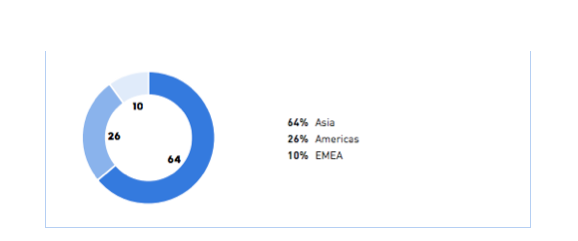
Given that it outsources most of its production, it has a complex and large scale supply chain, with approximately 700 independent factories that manufacture products in over 50 countries.[6]  Its supplier factories by region as at 2016 are depicted in the image below. Its top sourcing countries are China, Vietnam and Indonesia.[7]
 

Source: Adidas Sustainability Progress Report 2016, p 61.


Adidas has both direct suppliers and indirect suppliers (i.e. material and other service providers that supply goods and services to Adidas’ direct suppliers; licensees which manage the design, production and distribution of specific products to Adidas; and agents that act as intermediaries and determine where products are manufactured, manage the manufacturing process and sell finished products to the group). Approximately 75% of its total sourcing volume comes directly from its supply chain, with the other 25% coming from agents or made under licence. The manufactured products are sold in over 100 markets.[8]

Adidas states that it supports the UNGPs and it is a ‘long time adherent’ to the OECD Guidelines. It considers that the corporate responsibility to respect human rights is a ‘global standard of expected conduct for all business enterprises’ and it states that it has ‘incorporated key elements of the [UNGPs] into its general practice in managing the human rights impacts of its business.’

Adidas’ general approach to human rights is firstly to strive ‘to operate responsibly and in a sustainable way along the entire value chain’, and secondly to safeguard the rights of its employees and those that work in its manufacturing supply chains. HRDD is a key part of this approach. Given the extensive nature of Adidas’ supply chains, it has taken a targeted approach to HRDD by focusing on mitigating and remediating issues that arise in high-risk locations, processes and activities.[9] It also imposes ‘cascading responsibilities’ on its business partners in order to ‘capture and address potential and actual human rights issues upstream and downstream’.[10]

Adidas’ Social and Environmental Affairs team (SEA Team) is tasked with, inter alia, ensuring compliance with the Workplace Standards within Adidas’ supply chains (discussed in further detail below). The Team consists of approximately 70 individuals, including engineers, lawyers, HR managers and former members of NGOs. It is organised into three regional teams covering Asia, the Americas and Europe, Middle East and Africa. The Team collaborates with other functions within Adidas, including Legal and Human Resources. The Team works collaboratively with other functions, including Legal, Sourcing and Human Resources. It engages directly with suppliers, governments and other external stakeholders as and when required.


Identification and Assessment of Risks

Adidas engages in a range of processes to identify and assess its human rights risks and impacts on a continuous basis within its supply chains. Adidas’ SEA Team engages commissioned third party experts and independent audits as part of this process where necessary.[11]

Adidas completes annual Country Risk Assessments (CRAs), which are not publically available, in the countries in which it sources products whereby it reviews the salient human rights issues and risks in a particular country. CRAs are informed by various people, including Adidas’ field teams, its engagement with local stakeholders, concerns raised by international NGOs, as well as an examination of regional human rights reports (as necessary). The risks identified in these CRAs inform its priorities and guides its prevention and mitigation strategies, particularly in relation to its supply chain monitoring.

Entry into new countries

Where Adidas plans to enter a new sourcing country, in-depth assessments are normally undertaken over a period of one to two years. The process involves engagement with government departments, international agencies and civil society groups to determine country level risks and issues. This process informs whether Adidas should or should not enter a particular country, as well as whether additional processes should be undertaken to safeguard against particular adverse human rights impacts that are common within a country arising within Adidas’ supply chains.

Engaging with new suppliers

All new supplier relationships must be disclosed to Adidas’ SEA Team for approval.

The process followed by Adidas when considering entering into direct supplier relationships is illustrated below.
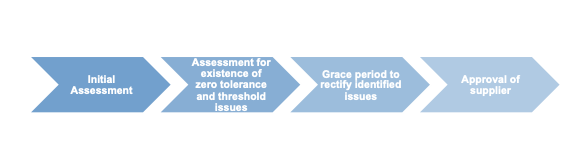
Adidas conducts an initial assessment, which consists of a document check whereby prospective suppliers are assessed against the Workplace Standards (discussed below) and may include a factory visit. As stated in Adidas’ Enforcement Guidelines, Adidas checks prospective suppliers against a set of zero tolerance issues (e.g. prison labour, repetitive and systematic abuse, life-threatening health and safety conditions)[12] and threshold issues (e.g. fraud and exploitation issues, serious labour issues).[13] Zero tolerance issues are severe breaches that ‘may threaten the lives or well-being of workers, suppress fundamental rights, or result in irreparable damage to the environment’, whereas threshold issues are ‘those types of breaches or workplace issues which are considered to be extremely serious in nature, requiring enforcement action to be taken against existing suppliers.’[14]

Where a zero tolerance issue exists, Adidas will reject a relationship with that particular prospective supplier, whereas where a threshold issue exists, if the issue can be fixed, a prospective supplier will be given a timeline to rectify the issues. If they are found to have improved after a subsequent check, they will be approved.[15] In 2018, Adidas conducted initial assessments of 221 factories. As a result, approximately 25% were rejected directly after the initial assessment due to the presence of zero tolerance issues or after a second visit due to the presence of threshold issues that they failed to rectify between the initial and subsequent visits.[16]

With respect to Adidas’ indirect supply chain, external audit firms are commissioned to carry out initial assessments. Adidas provides detailed guidance to these external monitors so that assessments are carried out in a consistent manner. Where these assessments identify the need for remediation processes, the SEA team oversees them.[17]

Once a supplier, agent, licensee or subcontract has been approved, they enter into a formal legal agreement (e.g. manufacturing agreement). Adidas’ Workplace Standards are an integral part of such agreements – parties are contractually bound to uphold the Workplace Standards and act in a manner that safeguards human rights, workers’ employment rights, safety and the environment. They are also required to assist in identifying issues as and when they arise.[18] Suppliers are encouraged to share the Workplace Standards with their subordinate relationships, including external service providers. Additionally, Adidas incorporates human rights-related clauses into its direct supplier contracts, as well as clauses relating to labour, workplace health and safety and the environment.

Engaging with existing suppliers

Once direct suppliers have been approved and have entered into a contractual relationship with Adidas, Adidas monitors their compliance through auditing, factory visits, worker feedback mechanisms, partnerships with external organisations (such as ILO Better Work, the Bangladesh Accord and the Fair Labor Association) and stakeholder outreach, including engagement with government regulators, unions, employer federations, workers and civil society groups at the country level. This process enables Adidas to monitor its supply chain risk to ensure that its suppliers manufacture in a socially and environmentally responsible manner.[19]

The CRAs that Adidas conducts results in the categorisation of countries as either high or low risk, factories located in high-risk countries are more likely to be audited regularly (the full list of countries by category is not publicly available). Factories located in low-risk countries are excluded from Adidas’ audit coverage.[20] Factories are assessed based on their commitment to and performance against the Workplace Standards. During 2018, Adidas conducted 546 factory visits in order to engage to ‘improve working conditions and … empower workers’[21], and 1,207 social compliance audits and environment assessments. Additionally, for suppliers that were considered to be ‘compliance mature’ 102 self-governance audits and collaboration audits were conducted, which were reviewed by Adidas. 

Where non-compliances are identified, if the relevant issue is a zero tolerance issue a warning and potential disqualification of a supplier will be triggered. If the relevant issue is a threshold issue, Adidas will see whether the issue can be addressed in a specified timeframe through remedial action. It may also take enforcement action against the supplier, which includes the termination of the relationship, stop-work notices, third party investigations and warning letters. In 2018, Adidas issued a total of 39 warning letters across 16 countries, and terminated agreements with one supplier on the basis that it refused to grant the SEA team access to audit the factory.[22]

The top 10 labour and health and safety non-compliance findings during the 2018 audits are depicted in the image below.
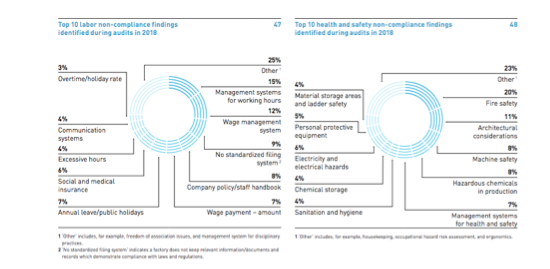

Source: Adidas Annual Report 2018, p 99.

External monitors that have been approved by Adidas audit indirect supply chain factories that work with Adidas’ licensees and agents. Audits are conducted at least once a year, but will be conducted more frequently when additional follow up assessments are required to monitor remedial action.

Adidas has also implemented a Crisis Protocol so that business entities and factories can report on high-risk issues, which in turn inform Adidas’ site visits, audits and engagement with the business entities and factories.[23]

Stakeholder Engagement Channels

Adidas’ Stakeholder Relations Guidelines define its stakeholders as ‘those people or organizations who affect, or are affected by, [its] operations and activities.’ Its stakeholders include employees, shareholders and investors, authorisers (e.g. governments and trade associations), business partners (e.g. unions and suppliers), workers in supplier factories, customers and opinion-formers (e.g. journalists and special interest groups). Adidas claims to utilise stakeholder engagement in order to identify human rights risks and impacts through its supply chains. In order to obtain the views of these different stakeholders, frequent forms of engagement utilised by Adidas include stakeholder consultation meetings with workers, NGOs and suppliers, meetings with investors and Socially Responsible Investment analysts, employee engagement surveys and programmes, responding to inquiries from consumers and the media and participating in multi-stakeholders initiatives (e.g. the Better Cotton Initiative). Adidas aims to ensure that its engagement is balanced and inclusive.

Adidas captures and addresses complaints from third parties through its third party grievance mechanism. The mechanism allows third parties directly affected by an issue, including workers within its supply chains, to raise complaints. Complaints may be raised in relation to violations of Adidas’ Workplace Standards, or any potential, or actual, breach of human rights linked to Adidas’ operations, products or services. As part of this, Adidas also has an SMS hotline in the countries in which it sources its products so that workers can voice their concerns in an easy manner. From 2014 to 2018, Adidas has received a total of 52 complaints relating to labour and human right concerns by third parties. Third parties may also lodge complaints through the Third Party Complaint Process of the Fair Labor Association and the OECD National Contact Point for Germany.

Additionally, Adidas’ SEA Team regularly meets and interviews supply chain workers and tracks feedback from independent worker hotlines and from its suppliers’ own internal complaint systems.

Identified risks

Through the processes set out above Adidas has identified various human rights risks in its supply chains. Salient human rights risks include: freedom of association and collective bargaining, working hours, health and safety, fair wages, child labor, forced labor, resource consumption, water (including chemical management), access to grievance mechanisms, diversity, mega sporting events, procurement, product safety, as well as data protection and privacy security. 

Other risks identified include right of assembly, freedom of expression, migrant workers, human trafficking, discrimination, Indigenous peoples’ rights, occupational health and safety and environmental pollution.[24] A number of these risks are common to the garment and footwear industry as noted by the OECD Guideline on Responsible Supply Chains in the Garment and Footwear Industry.

Integrating and Acting

Adidas feeds the findings from the identification and assessment processes set out above into its active programmes and they drive prevention and mitigation measures.

The SEA Team reports risks identified in Adidas’ supply chains to executive management on a monthly basis.[25] Reporting highlights the critical issues, investigations and remedial efforts taken with respect to Adidas’ direct and indirect supply chains. This is the ‘primary vehicle through which human rights concerns are shared with senior management and reported progress is tracked’.

Where adverse human rights impacts occur, Adidas seeks to remediate those cases. Corrective Action Plans (CAPs) are put in place, which set out the remedial action, the responsible party and a timeframe to complete that action. The supplier’s specific proposals in the CAP are then tracked and the appropriate documentation, or remedial action(s), reviewed to close-out the non-compliances. CAPs are normally developed through engagement with the suppliers, to define expectations and negotiate appropriate timelines.[26]  The SEA Team closely monitors the development and implementation of CAPs through follow-up audits and record progress and verification status. 

In the past, Adidas has examined and remediated instances of ‘forced labour, child labour, freedom of association, right of assembly, freedom of expression, discrimination, indigenous people’s rights, occupational health and safety, resource consumption and environmental pollution’.[27] It has also dealt with specific cases where workers have been subject to arbitrary arrest and detention and reached out to judicial authorities where human rights defenders have also faced arrest and detention for supporting worker’s rights. It has petitioned governments for their failures in enforcement, particularly in relation to the right to form and join trade unions and the upholding of statutory minimum wages.[28]

In order to prevent adverse human rights impacts from occurring, Adidas binds its suppliers to its Workplace Standards. It continuously monitors those suppliers in which it has a direct contractual relationship and assesses their performance against the Workplace Standards. Adidas also engages in capacity building to strengthen its suppliers’ internal governance and management systems in order to reduce the potential for adverse human rights impacts. With respect to its indirect supply chain, Adidas places expectations on its primary business partners to engage and apply its Workplace Standards.

With respect to grievances raised, in cases where Adidas has caused or directly contributed to the violation, it will seek to prevent or mitigate the chance of the impact occurring or recurring. If an adverse impact is occurring, Adidas will engage actively in its remediation – this may involve site visits, audits or other engagement with a business entity or factory.[29] Where Adidas has neither caused nor directly contributed to a violation, it will encourage the business entity that has caused or contributed to the impact to prevent or mitigate its recurrence.


Tracking

Adidas monitors and evaluates the effectiveness of its response to human rights risks and impacts.

Adidas’ Internal Audit team conducts periodic assessments to evaluate the effectiveness of individual departments and programs, with defined timelines for corrective actions. It reports directly to the CEO and Supervisory Board. As part of this, it evaluates the effectiveness of Adidas’ social compliance monitoring system and human rights due diligence processes and their alignment with policy commitments.

Adidas’ social compliance program is subject to annual third party audits and public disclosure of tracking charts by the Fair Labor Association (available here), to determine whether supplier-level remediation is being effectively managed by Adidas. The Fair Labor Association also undertakes a periodic accreditation process whereby it evaluates all elements of Adidas’ labour and human rights work.[30]

For its direct supply chain, Adidas utilises social and environmental KPIs to assess the effectiveness of its suppliers’ systems to protect labour rights, worker safety and the environment. For its licensee partners and agents that manage its indirect supply chain, Adidas uses a scorecard that evaluates and scores a business entities performance in applying its Workplace Standards and associated guidelines. KPIs and scorecards assist Adidas to determine strategic suppliers and influence sourcing decisions. However, it is unclear as to how KPIs and scorecards influence such decisions and the extent to which they do so. Further, both factories and business entities and licensees are required to prepare strategic compliance plans on a regular basis outlining their strategies to meet Adidas’ Workplace Standards. Adidas’ SEA team uses these plans to monitor the commitment and compliance practices of its direct and indirect supply chains.[31]


Communicating

Adidas claims to have regular contact with a diverse range of stakeholders, including vulnerable groups, workers in supply chains, local and international NGOs, labour rights advocacy groups, human rights advocacy groups, trade unions, investors, national and international government agencies, and academics. The stakeholders that Adidas engages with depend on the specific issues and trends at the time. It uses its network to pinpoint areas for dialogue and the applicable parties to engage with. It then prioritises stakeholders depending on action radius, relevance, risk, willingness and capacity to engage. The frequency of dialogue can range from monthly to quarterly or annually.

Adidas utilises various channels to communicate its human rights impacts, policies and approaches, including:

  • annual Sustainability Progress Report;
  • annual Modern Slavery Statements;
  • individual stakeholder meetings and correspondence;
  • structured stakeholder dialogues;
  • public statements;
  • collaborative engagements with NGOs;
  • multi-stakeholder and partner organizations; and
  • one-on-one worker interviews and meetings.

It also uses FAQs and blogs, as an accessible and understandable way for the public and its internal staff, to grasp its human rights work and specific programme initiatives related to worker rights, safety and the environment.[32] Other vehicles for stakeholder engagement include purpose-built fora such as the OECD Advisory Panel for embedding of Business & Human Rights Due Diligence practices into the Apparel and Footwear sector, the Bali Process Business and Government Forum and the Bangladesh Accord.[33]

Adidas seeks to define and tailor the appropriate level of communications needed for a given target audience. For example, with respect to trade unions, it is Adidas standard protocol that its local monitoring staff engage with the factory-level trade union officials or relevant worker representatives to cross check issues that arise during its compliance audits and discuss the necessary remedial actions that the supplier has to follow-up on.

To ensure clear and effective communications with local stakeholders, affected communities and other vulnerable groups, the SEA Team has embedded local staff in Adidas’ key sourcing countries. The team operates in 18 languages, but employs translators where needed for special investigations, stakeholder outreach or communicating outcomes or mechanisms to improve human rights impacts. For example, Adidas has contracted Arabic translators in Turkey to support its communications with Syrian refugees at risk of exploitation in the supply chain. With respect to complaints, phone calls and direct face-to-face meetings will be used to capture issues and provide feedback. Adidas publishes high-level information regarding the status and resolution of complaints through its third party grievance mechanism on its website (see, for example, a summary of the third party complaints handled by Adidas in 2018 here).

The Gaps Between Paper and Practice

As stated at the outset, brands within the apparel and footwear sector face a plethora of challenges in conducting effective HRDD given the human rights risks inherent in their supply chains. Adidas itself has acknowledged that effective HRDD remains a ‘primary challenge’ of the business, given the ‘breadth and depth of [its] business, which includes tens of thousands of business relationships along a value chain that stretches from smallholders, farming cotton, to the final point of sale in a retail store.’ Nonetheless, Adidas is considered to have leading HRDD practices globally, not only in the apparel sector, but also across the sectors that have been benchmarked to date.[34]

What is clear from a review of Adidas’ human rights approach is that it recognises its responsibility to respect human rights and has sought to take steps to fulfil this obligation along its entire value chain. As part of that, it has developed over a period of over 20 years extensive HRDD practices fleshing out its commitment to upholding human rights.[35] Adidas’ HRDD practices seek to properly identify and assess the human rights risks and impacts that arise in its supply chains, and prevent and mitigate those risks through engagement with suppliers and stakeholders.

Despite this strong commitment and extensive HRDD processes and procedures in its supply chains, Adidas’ human rights track record is not perfect. Over recent years Adidas has featured in headlines where it has been demonstrated that human rights issues exist in its supply chains. Many of these issues relate to the wages paid to its supply chain workers. In 2014, the Clean Clothes Campaign (CCC) released a profile on Adidas with respect to its practices regarding workers’ living wages. The profile noted that while Adidas was assessing its wages practices across Asia, ‘it [was] still not willing to define what a living wage means in its business’ and had passed on responsibility for wages in supplier factories to factory owners. The CCC called on Adidas to ‘engage in identifying a living-wage figure and changing pricing in order to enable its payment.’ This call to action came after workers in factories that supply to Adidas went on strike in Asia.

In 2014, there was a nationwide strike in Cambodia calling for an increase of the minimum wage for garment workers. Shortly before the strike the CCC reported that the minimum wage in Cambodia at the time did not allow workers to meet their living costs in housing, food, clothing, education, transport and healthcare. During a crackdown in Cambodia, five workers were shot dead and 30 others were injured. Following this event, Adidas backed the development of a minimum wage review mechanism for garment workers. Also in 2014, workers at the Yue Yuen shoe factory in China, an Adidas supplier, went on strike over social security payments and housing fund contributions. In response, Adidas moved some of its orders from the factory in order to ‘minimize the impact on [its] operations’. It did not sever ties with the factory given that ‘China is, and will continue to be, a strategic sourcing country for [it].’ Again in 2015 workers from the same factory went on strike due to changes in its production process, resulting in workers demanding an immediate payout of their housing fund. No information on Adidas’ response to this issue has been located, however, Reuters reported that Adidas did not immediately respond to its request for comment.

The payment of low wages to workers was more recently raised in June last year where Adidas was accused of ‘foul play’ by paying thousands of female workers within its supply chain low wages in order to prepare football shirts and shoes for the Football World Cup that year. In their report, Éthique sur l’étiquette and the CCC compared the costs of Adidas’ current production with that in the 1990s and found that the costs paid to workers had decreased by 30%. Noting that a large proportion of Adidas production occurs in Indonesia, it found that the wages paid to female workers was not sufficient to cover their basic needs, with some women not even receiving the minimum legal wage. The report stated that:

If … Adidas had paid the same amount of dividends in 2017 as they did in 2012, or maintained the level of marketing/sponsorship spending, the resulting proceeds would have allowed for living wages to be paid throughout their entire supply chain in China, Indonesia, Vietnam, and Cambodia.

Outside Asia, concerns were also raised in 2016 in relation to the treatment and serious exploitation of Syrian refugees in Turkish supplier factories, including sexual abuse and child labour. As a result, Adidas was called upon by the Business and Human Rights Resource Centre to respond to these concerns by completing a questionnaire, Adidas’ response to the questionnaire outlined its policies and procedures with respect to employing Syrian refugees and their treatment in supply chains, noting that it does not have any Syrian refugees working for any of its five Turkish first tier Turkish suppliers.

Similarly concerns were also raised in 2016 and 2017 in relation to the poor working conditions in shoe supply chains in Eastern Europe (see for example the CCC’s reports titled ‘Labour on a Shoe String’ and ‘Europe’s Sweatshops: The results of CCC’s Most Recent Researches in Central, East and South East Europe’). Adidas was again called upon by the Business and Human Rights Resource Centre to respond to a series of questions regarding its efforts and work in the area of sustainability and social responsibility, precisely on sourcing policies with regard to Eastern Europe. In its 2016 response, Adidas defended its engagement with leather tanneries stating that it has ‘a well-tested human rights due diligence process, one which considers the severity of country and industry-level risks within our global supply chain.’ However, it also noted that the sourcing of raw hides and finished leather has been identified as a ‘priority area for further assessment and [its] deeper involvement’. With respect to its footwear manufacturing in Eastern Europe, Adidas stated that ‘more should be done to improve wages’ and ‘engagement between local suppliers, unions, governments, and buyers’ is critical to improving the lives of workers. It did not, however, outline what actions it would take to improve worker wages. In its 2017 response, Adidas set out its general approach to ensuring fair wages in its supply chain and provided an example of the processes it has followed to set wages in Georgia and the Ukraine.

Conclusion

The instances of human / labour rights abuses detailed above demonstrate that despite Adidas’ comprehensive HRDD process, there are failings and gaps in that process that create space for human rights violations to occur in its supply chains. It also shows that the paper-based process detailed in this blog has imperfections in practice that need to be ironed out. Literature has demonstrated that there are often considerable discrepancies between HRDD processes on paper and in practice, highlighting gaps in supply chain governance. For example, Genevieve LeBaron has found through her research on ethical audits and the supply chains of corporations, businesses have ‘claimed supply chain monitoring for themselves’ by using audits as a way to ‘preserve their business model and take responsibility for supply-chain monitoring out of the hands of governments.’ As such, they have been able to avoid ‘stricter state and international regulation’ and to take steps to ensure they are perceived as responsible companies. However, while this is benefiting businesses by giving the impression that businesses are taking active steps on the journey to respect human rights, it is failing workers in supply chains. Human rights violations such as labour abuses are still widespread within supply chains. Therefore, in order to avoid going down this path, businesses need to engage with the issues that are arising in their supply chains, consider the root causes of those issues and make adjustments to HRDD processes.

This review of Adidas’ HRDD process and the gaps identified between the process in theory and in practice raises a number of interesting questions. For example – What precise aspects of Adidas’ identification of risks process are not living up to their expectations allowing human rights violations to continue to occur in its supply chains? What steps are Adidas taking in order to continuously improve its HRDD process? To what extent does Adidas look to or gain inspiration from the practices of its peers? What challenges does Adidas currently face in conducting HRDD in its supply chains and how is it seeking to respond to those challenges?


[1] The information in this blog has been obtained from Adidas’ 2018 submission to the Corporate Human Rights Benchmark and from other Adidas sources. Accordingly, it represents Adidas’ views on its HRDD process.

[2] Human Rights Watch, “Paying for a Bus Ticket and Expecting to Fly”: How Apparel Brand Purchasing Practices Drive Labor Abuses, April 2019.

[3] OECD Due Diligence Guidance For Responsible Supply Chains in the Garment and Footwear Sector, p 15.

[4] Adidas Annual Report 2018, p 72.

[5] Adidas Profile.

[6] Adidas Supply Chain Approach.

[7] Adidas Assessment for Re-Accreditation by the Fair Labor Association, p 6.

[8] Adidas Supply Chain Approach.

[9] Ibid.

[10] Ibid.

[11] Adidas Sustainability Report 2010, p 42

[12] Adidas Enforcement Guidelines, pp 4-5.

[13] Ibid, pp 5-7.

[14] Ibid, p 4.

[15] Adidas Supply Chain Approach.

[16] Adidas Annual Report 2018, p 96.

[17] Adidas Sustainability Report 2010, p 49.

[18] Adidas has produced a number of supporting guidelines that aim to ‘make the Workplace Standards understandable and practical, provide additional guidance for [its] suppliers’ and assist in finding effective solutions to workplace problems: Adidas Sustainability Report 2010, p 44.

[19] Adidas Supply Chain Approach.

[20] Adidas Annual Report 2018, p 98

[21] Ibid, p 96.

[22] Adidas Supply Chain Approach; Adidas Annual Report 2018, pp 98-99

[23] Adidas Supply Chain Approach.

[24] Business and Human Rights Resource Centre, Company Action Platform, Adidas.

[25] Adidas Supply Chain Approach.

[26] Adidas Response to KnownTheChain Apparel and Footwear Benchmark, p 16.

[27] Business and Human Rights Resource Centre, Company Action Platform, Adidas.

[28] Ibid.

[29] Adidas Supply Chain Approach.

[30] Adidas was last re-accredited in 2017.

[31] Adidas Sustainability Report 2010, p 49

[32] See for example Adidas’ Human Rights and Responsible Business Practices: Frequently Asked Questions.

[33] Adidas Analysis: Cross Section of Stakeholder Feedback 2017/2018.

[34] See for example: Corporate Human Rights Benchmark 2017 and 2018; Know the Chain 2018; and Fashion Transparency Index 2019.

[35] In 1997, Adidas developed its initial supplier code of conduct (Standards of Engagement, now referred to as the Workplace Standards), which formed part of the contractual obligations under manufacturing agreements, and established a Compliance Team. The Standards of Engagement, which are now called Workplace Standards, reflect international human rights and labour rights conventions. A full timeline of Adidas’ social compliance history is accessible here.


Comments are closed