Asser International Sports Law Blog

Our International Sports Law Diary
The Asser International Sports Law Centre is part of the T.M.C. Asser Instituut

International and European Sports Law – Monthly Report – November 2017. By Tomáš Grell

Editor's note: This report compiles all relevant news, events and materials on International and European Sports Law based on the daily coverage provided on our twitter feed @Sportslaw_asser. You are invited to complete this survey via the comments section below, feel free to add links to important cases, documents and articles we might have overlooked.


The Headlines

FIFA and FIFPro sign landmark agreement

A six-year cooperation agreement concluded between FIFA and FIFPro on 6 November 2017 puts an end to protracted negotiations which began after the latter had filed in September 2015 a complaint with the European Commission, challenging the validity of the FIFA transfer system under EU competition law. This agreement, together with an accord reached between FIFA, FIFPro, the European Club Association, and the World Leagues Forum under the umbrella of the FIFA Football Stakeholders Committee, should help streamline dispute resolution between players and clubs, avoid abusive practices in the world of football, or contribute to the growth of professional women's football. In addition, the FIFA Football Stakeholders Committee is now expected to establish a task force to study and conduct a broader review of the transfer system. As part of the deal, FIFPro agreed to withdraw its EU competition law complaint.

FIFA strengthens its human rights commitment amid reports of journalists getting arrested in Russia

It is fair to say that human rights have been at the forefront of FIFA's agenda in 2017. Following the establishment of the Human Rights Advisory Board in March and the adoption of the Human Rights Policy in June this year, in November FIFA published the bidding regulations for the 2026 World Cup. Under these new regulations, member associations bidding to host the final tournament shall, inter alia, commit themselves to respecting all internationally recognised human rights in line with the United Nations Guiding Principles on Business and Human Rights or present a human rights strategy on how they intend to honour this commitment. Importantly, the human rights strategy must include a comprehensive report that is to be complemented and informed by a study elaborated by an independent expert organisation. Moreover, on 9 November 2017, the Human Rights Advisory Board published its first report in which it outlined several recommendations for FIFA on how to further strengthen its efforts to ensure respect for human rights.

While all these attempts to enhance human rights protection are no doubt praiseworthy, they have not yet produced the desired effect as reports of gross human rights abuses linked to FIFA's activities continue to emerge. Most recently, Human Rights Watch documented how Russian police arrested a newspaper editor and a human rights defender whose work focused on exposing World Cup-related corruption and exploitation of migrant construction workers. On a more positive note, a bit of hope comes with the announcement by a diverse coalition, including FIFA, UEFA, and the International Olympic Committee, of its intention to launch a new independent Centre for Sport and Human Rights in 2018.

More than 20 Russian athletes sanctioned by the Oswald Commission for anti-doping rule violations at the Sochi Games   

November has been a busy month for the International Olympic Committee, especially for its Oswald Commission. Established in July 2016 after the first part of the McLaren Independent Investigation Report had been published, the Oswald Commission is tasked with investigating the alleged doping violations by Russian athletes at the 2014 Winter Olympic Games in Sochi. Its first sanctions were handed down last month. As of 30 November 2017, the Commission chaired by the IOC Member Denis Oswald sanctioned 22 athletes (see here, here, here, here, here, and here) who competed at the Sochi Olympics in the following sports: biathlon, bobsleigh, cross country skiing, skeleton, and speed skating. The Commission published its first full decision on 27 November 2017 in the case against the cross country skier Alexander Legkov, a gold and silver medallist from the Sochi Olympics, who was ultimately banned for life from attending another Olympics.More...

Statement on the European Commission's ISU Decision by Ben Van Rompuy and Antoine Duval

Editor's note: We (Ben Van Rompuy and Antoine Duval) are at the origin of today's decision by the European Commission finding that the International Skating Union's eligibility rules are contrary to EU competition law. In 2014, we were both struck by the news that ISU threatened lifetime ban against speed skaters wishing to participate in the then projected Icederby competitions and convinced that it was running against the most fundamental principles of EU competition law. We got in touch with Mark and Niels and lodged on their behalf a complaint with the European Commission. Three years after we are pleased to see that the European Commission, and Commissioner Vestager in particular, fully embraced our arguments and we believe this decision will shift the tectonic structure of sports governance in favour of athletes for years to come.


Here is our official statement:

Today is a great day for Mark Tuitert and Niels Kerstholt, but more importantly for all European athletes. The European Commission did not only consider the International Skating Union's eligibility rules contrary to European law, it sent out a strong message to all international sports federations that the interests of those who are at the centre of sports, the athletes, should not be disregarded. This case was always about giving those that dedicate their lives to excelling in a sport a chance to compete and to earn a decent living. The majority of athletes are no superstars and struggle to make ends meet and it is for them that this decision can be a game-changer.

However, we want to stress that this case was never about threatening the International Skating Union’s role in regulating its sport. And we very much welcome the exceptional decision taken by the European Commission to refrain from imposing a fine which could have threatened the financial stability of the International Skating Union. The International Skating Union, and other sports federations, are reminded however that they cannot abuse their legitimate regulatory power to protect their economic interests to the detriment of the athletes.

We urge the International Skating Union to enter into negotiations with representatives of the skaters to devise eligibility rules which are respectful of the interests of both the athletes and their sport.

Since the summer of 2014, it has been our honour to stand alongside Mark and Niels in a 'David versus Goliath' like challenge to what we always perceived as an extreme injustice. In this fight, we were also decisively supported by the team of EU Athletes and its Chance to Compete campaign.

Finally, we wish to extend a special thank you to Commissioner Vestager. This case is a small one for the European Commission, but Commissioner Vestager understood from the beginning that small cases do matter to European citizens and that European competition law is there to provide a level playing for all, and we are extremely grateful for her vision.


Dr. Ben Van Rompuy (Leiden University) and Dr. Antoine Duval (T.M.C. Asser Instituut)

A Good Governance Approach to Stadium Subsidies in North America - By Ryan Gauthier

Editor's Note: Ryan Gauthier is Assistant Professor at Thompson Rivers University in Canada. Ryan’s research addresses the governance of sports organisations, with a particular focus on international sports organisations. His PhD research examined the accountability of the International Olympic Committee for human rights violations caused by the organisation of the Olympic Games.


Publicly Financing a Stadium – Back in the Saddle(dome)

Calgary, Canada, held their municipal elections on October 16, 2017, re-electing Naheed Nenshi for a third term as mayor. What makes this local election an interesting issue for sports, and sports law, is the domination of the early days of the campaign by one issue – public funding for a new arena for the Calgary Flames. The Flames are Calgary’s National Hockey League (NHL) team, and they play in the Scotiabank Saddledome. More...


Illegally obtained evidence in match-fixing cases: The Turkish perspective - By Oytun Azkanar

Editor’s Note: Oytun Azkanar holds an LLB degree from Anadolu University in Turkey and an LLM degree from the University of Melbourne. He is currently studying Sports Management at the Anadolu University.


Introduction

On 19 October 2017, the Turkish Professional Football Disciplinary Committee (Disciplinary Committee) rendered an extraordinary decision regarding the fixing of the game between Manisaspor and Şanlıurfaspor played on 14 May 2017. The case concerned an alleged match-fixing agreement between Elyasa Süme (former Gaziantepspor player), İsmail Haktan Odabaşı and Gökhan Sazdağı (Manisaspor players). The Disciplinary Committee acknowledged that the evidence relevant for proving the match-fixing allegations was obtained illegally and therefore inadmissible, and the remaining evidence was not sufficient to establish that the game was fixed. Before discussing the allegations, it is important to note that the decision is not only significant for Turkish football but is also crucial to the distinction between disciplinary and criminal proceedings in sports. More...

Report from the first ISLJ Annual International Sports Law Conference - 26-27 October at the T.M.C. Asser Instituut

Close to 100 participants from 37 different countries attended the first ISLJ Annual International Sports Law Conference that took place on 26-27 October 2017 in The Hague. The two-day programme featured panels on the FIFA transfer system, the labour rights and relations in sport, the protection of human rights in sport, EU law and sport, the Court of Arbitration for Sport, and the world anti-doping system. On top of that, a number of keynote speakers presented their views on contemporary topics and challenges in international sports law. This report provides a brief summary of the conference for both those who could not come and those who participated and would like to relive their time spent at the T.M.C. Asser Institute.More...

International and European Sports Law – Monthly Report – October 2017. By Tomáš Grell

Editor's note: This report compiles all relevant news, events and materials on International and European Sports Law based on the daily coverage provided on our twitter feed @Sportslaw_asser. You are invited to complete this survey via the comments section below, feel free to add links to important cases, documents and articles we might have overlooked. More...

Multi-Club Ownership in European Football – Part II: The Concept of Decisive Influence in the Red Bull Case – By Tomáš Grell


Introduction 

The first part of this two-part blog on multi-club ownership in European football outlined the circumstances leading to the adoption of the initial rule(s) aimed at ensuring the integrity of the UEFA club competitions (Original Rule) and retraced the early existence of such rule(s), focusing primarily on the complaints brought before the Court of Arbitration for Sport and the European Commission by the English company ENIC plc. This second part will, in turn, introduce the relevant rule as it is currently enshrined in Article 5 of the UCL Regulations 2015-18 Cycle, 2017/18 Season (Current Rule). It will then explore how the UEFA Club Financial Control Body (CFCB) interpreted and applied the Current Rule in the Red Bull case, before drawing some concluding remarks.  More...

Multi-Club Ownership in European Football – Part I: General Introduction and the ENIC Saga – By Tomáš Grell

Editor’s note: Tomáš Grell holds an LL.M. in Public International Law from Leiden University. He contributes to the work of the ASSER International Sports Law Centre as a research intern.


Introduction

On 13 September 2017, more than 40,000 people witnessed the successful debut of the football club RasenBallsport Leipzig (RB Leipzig) in the UEFA Champions League (UCL) against AS Monaco. In the eyes of many supporters of the German club, the mere fact of being able to participate in the UEFA's flagship club competition was probably more important than the result of the game itself. This is because, on the pitch, RB Leipzig secured their place in the 2017/18 UCL group stage already on 6 May 2017 after an away win against Hertha Berlin. However, it was not until 16 June 2017 that the UEFA Club Financial Control Body (CFCB) officially allowed RB Leipzig to participate in the 2017/18 UCL alongside its sister club, Austrian giants FC Red Bull Salzburg (RB Salzburg).[1] As is well known, both clubs have (had) ownership links to the beverage company Red Bull GmbH (Red Bull), and therefore it came as no surprise that the idea of two commonly owned clubs participating in the same UCL season raised concerns with respect to the competition's integrity. More...


International and European Sports Law – Monthly Report – September 2017. By Tomáš Grell

Editor's note: This report compiles all relevant news, events and materials on International and European Sports Law based on the daily coverage provided on our twitter feed @Sportslaw_asser. You are invited to complete this survey via the comments section below, feel free to add links to important cases, documents and articles we might have overlooked.


The Headlines 

2024 and 2028 Olympic Games to be held in Paris and Los Angeles respectively

On 13 September 2017, the Session of the International Olympic Committee (IOC) held in Lima, Peru, elected Paris and Los Angeles as host cities of the 2024 and 2028 Olympic Games respectively. On this occasion, the IOC President Thomas Bach said that ''this historic double allocation is a 'win-win-win' situation for the city of Paris, the city of Los Angeles and the IOC''. The idea of a tripartite agreement whereby two editions of the Olympic Games would be awarded at the same time was presented by a working group of the IOC Vice-Presidents established in March 2017. Both Paris and Los Angeles have pledged to make the Olympic Games cost-efficient, in particular through the use of a record-breaking number of existing and temporary facilities. In addition to economic aspects, it will be worthwhile to keep an eye on how both cities will address human rights and other similar concerns that may arise in the run-up to the Olympic Games. More...

The limits to multiple representation by football intermediaries under FIFA rules and Swiss Law - By Josep F. Vandellos Alamilla

Editor’s note: Josep F. Vandellos Alamilla is an international sports lawyer and academic based in Valencia (Spain) and a member of the Editorial Board of the publication Football Legal. Since 2017 he is the Director of  the Global Master in Sports Management and Legal Skills FC Barcelona – ISDE.

I think we would all agree that the reputation of players’ agents, nowadays called intermediaries, has never been a good one for plenty of reasons. But the truth is their presence in the football industry is much needed and probably most of the transfers would never take place if these outcast members of the self-proclaimed football family were not there to ensure a fluid and smooth communication between all parties involved.

For us, sports lawyers, intermediaries are also important clients as they often need our advice to structure the deals in which they take part. One of the most recurrent situations faced by intermediaries and agents operating off-the-radar (i.e. not registered in any football association member of FIFA) is the risk of entering in a so-called multiparty or dual representation and the potential risks associated with such a situation.

The representation of the interests of multiple parties in football intermediation can take place for instance when the agent represents the selling club, the buying club and/or the player in the same transfer, or when the agent is remunerated by multiple parties, and in general when the agent incurs the risk of jeopardizing the trust deposited upon him/her by the principal. The situations are multiple and can manifest in different manners.

This article will briefly outline the regulatory framework regarding multiparty representation applicable to registered intermediaries. It will then focus on provisions of Swiss law and the identification of the limits of dual representation in the light of the CAS jurisprudence and some relevant decisions of the Swiss Federal Tribunal.More...


Asser International Sports Law Blog | International Sports Law Cases

Asser International Sports Law Blog

Our International Sports Law Diary
The Asser International Sports Law Centre is part of the T.M.C. Asser Instituut

From Veerpalu to Lalluka: ‘one step forward, two steps back’ for CAS in dealing with Human Growth Hormone tests (by Thalia Diathesopoulou)

In autumn 2011, the Finnish cross-country skier Juha Lalluka, known as a “lone-wolf” because of his training habit, showed an adverse analytical finding with regard to human growth hormone (hGH). The timing was ideal. As the FINADA Supervisory Body in view of the A and B positive samples initiated disciplinary proceedings against Lalluka for violation of anti-doping rules, the Veerpalu case was pending before the CAS. At the athlete’s request, the Supervisory Board postponed the proceedings until the CAS rendered the award in the Veerpalu case. Indeed, on 25 March 2013, the CAS shook the anti-doping order: it cleared Andrus Veerpalu of an anti-doping rule violation for recombinant hGH (rhGH) on the grounds that the decision limits set by WADA to define the ratio beyond which the laboratories should report the presence of rhGH had not proven scientifically reliable.

The Veerpalu precedent has become a rallying flag for athletes suspected of use of hGH and confirmed some concerns raised about the application of the hGH test. Not surprisingly, Sinkewitz and Lallukka followed the road that Veerpalu paved and sought to overturn their doping ban by alleging the scientific unreliability of the hGH decisions limits. Without success, however. With the full text of the CAS award on the Lallukka case released a few weeks ago[1] and the new rules of the 2015 WADA Code coming into force, we grasp the opportunity to outline the ambiguous approach of CAS on the validity of the hGH test. In short: Should the Veerpalu case and its claim that doping sanctions should rely on scientifically well founded assessments be considered as a fundamental precedent or as a mere exception? More...

State aid in Croatia and the Dinamo Zagreb case

Introduction

The year 2015 promises to be crucial, and possibly revolutionary, for State aid in football. The European Commission is taking its time in concluding its formal investigations into alleged State aid granted to five Dutch clubs and several Spanish clubs, including Valencia CF and Real Madrid, but the final decisions are due for 2015.

A few months ago, the Commission also received a set of fresh State aid complaints originating from the EU’s newest Member State Croatia. The complaints were launched by a group of minority shareholders of the Croatian football club Hajduk Split, who call themselves Naš Hajduk. According to Naš Hajduk, Hajduk Split’s eternal rival, GNK Dinamo Zagreb, has received more than 30 million Euros in unlawful aid by the city of Zagreb since 2006.More...

The Pechstein ruling of the Oberlandesgericht München - Time for a new reform of CAS?

Editor's note (13 July 2015): We (Ben Van Rompuy and I) have just published on SSRN an article on the Pechstein ruling of the OLG. It is available at http://papers.ssrn.com/sol3/papers.cfm?abstract_id=2621983. Feel free to download it and to share any feedback with us!


On 15 January 2015, the earth must have been shaking under the offices of the Court of Arbitration for Sport (CAS) in Lausanne when the Oberlandesgericht München announced its decision in the Pechstein case. If not entirely unpredictable, the decision went very far (further than the first instance) in eroding the legal foundations on which sports arbitration rests. It is improbable (though not impossible) that the highest German civil court, the Bundesgerichtshof (BGH), which will most likely be called to pronounce itself in the matter, will entirely dismiss the reasoning of the Oberlandesgericht. This blogpost is a first examination of the legal arguments used (Disclaimer: it is based only on the official press release, the full text of the ruling will be published in the coming months).More...


In blood we trust? The Kreuziger Biological Passport Case. By Thalia Diathesopoulou

Over the last twenty years, professional cycling has developed the reputation of one of the “most drug soaked sports in the world”.[1] This should not come as a surprise. The sport’s integrity has plummeted down due to an unprecedented succession of doping scandals. La crème de la crème of professional cyclists has been involved in doping incidents including Tyler Hamilton, Floyd Landis, Alejandro Valverde and Lance Armstrong. The once prestigious Tour de France has been stigmatized as a race of “pharmacological feat, not a physical one”.[2]

In view of these overwhelming shadows, in 2008, the International Cycling Union (UCI), in cooperation with the World Anti-Doping Agency (WADA) took a leap in the fight against doping. It became the first International Sports Federation to implement a radical new anti-doping program known as the Athlete Biological Passport (ABP).[3] More...

A Question of (dis)Proportion: The CAS Award in the Luis Suarez Biting Saga

The summer saga surrounding Luis Suarez’s vampire instincts is long forgotten, even though it might still play a role in his surprisingly muted football debut in FC Barcelona’s magic triangle. However, the full text of the CAS award in the Suarez case has recently be made available on CAS’s website and we want to grasp this opportunity to offer a close reading of its holdings. In this regard, one has to keep in mind that “the object of the appeal is not to request the complete annulment of the sanction imposed on the Player” (par.33). Instead, Suarez and Barcelona were seeking to reduce the sanction imposed by FIFA. In their eyes, the four-month ban handed out by FIFA extending to all football-related activities and to the access to football stadiums was excessive and disproportionate. Accordingly, the case offered a great opportunity for CAS to discuss and analyse the proportionality of disciplinary sanctions based on the FIFA Disciplinary Code (FIFA DC).  More...

The CAS Ad Hoc Division in 2014: Business As Usual? - Part. 2: The Selection Drama

In a first blog last month we discussed the problem of the scope of jurisdiction of the Ad Hoc Division of the Court of Arbitration for Sport. The key issue was whether an athlete could get his case heard in front of the CAS Ad Hoc Division or not. In this second part, we will also focus on whether an athlete can access a forum, but a different kind of forum: the Olympic Games as such. This is a dramatic moment in an athlete’s life, one that will decide the future path of an entire career and most likely a lifetime of opportunities. Thus, it is a decision that should not be taken lightly, nor in disregard of the athletes’ due process rights. In the past, several (non-)selection cases were referred to the Ad Hoc Divisions at the Olympic Games, and this was again the case in 2014, providing us with the opportunity for the present review.

Three out of four cases dealt with by the CAS Ad Hoc Division in Sochi involved an athlete contesting her eviction from the Games. Each case is specific in its factual and legal assessment and deserves an individual review. More...

Should the CAS ‘let Dutee run’? Gender policies in Sport under legal scrutiny. By Thalia Diathesopoulou

The rise of Dutee Chand, India’s 100 and 200-meter champion in the under 18-category, was astonishing. Her achievements were more than promising: after only two years, she broke the 100m and 200m national junior records, competed in the 100m final at the World Youth Athletics Championships in Donetsk and collected two gold medals in the Asian Junior Championships in Chinese Taipei. But, in July 2014, this steady rise was abruptly halted. Following a request from the Athletics Federation of India (AFI), the Sports Authority of India (SAI) conducted blood tests on the Indian sprinters. Dutee was detected with female hyperandrogenism, i.e a condition where the female body produces high levels of testosterone. As a result, a few days before the Commonwealth Games in Glasgow, the AFI declared Dutee ineligible to compete under the IAAF Regulations and prevented her from competing in future national and international events in the female category. Pursuant to the IAAF ‘Hyperandrogenism Policy’, the AFI would allow Dutee to return to competition only if she lowers her testosterone level beneath the male range by means of medical or surgical treatment.[1] On 25 September 2014, Dutee filed an appeal before the CAS, seeking to overturn the AFI’s decision and declare IAAF and IOC’s hyperandrogenism regulations null and void. She is defending her right to compete the way she actually is: a woman with high levels of testosterone. Interestingly enough, albeit a respondent, AFI supports her case.

IAAF and IOC rules set limits to female hyperandrogenism, which is deemed an unfair advantage that erodes female sports integrity. While these rules have been contested with regard to their scientific and ethical aspects, this is the first time that they will be debated in court. This appeal could have far-reaching ramifications for the sports world. It does not only seek to pave the way for a better ‘deal’ for female athletes with hyperandrogenism, who are coerced into hormonal treatment and even surgeries to ‘normalise’ themselves as women[2], but it rather brings the CAS, for the first time, before the thorny question:

How to strike a right balance between the core principle of ‘fair play’ and norms of non-discrimination, in cases where a determination of who qualifies as a ‘woman’ for the purposes of sport has to be made? More...

The O’Bannon Case: The end of the US college sport’s amateurism model? By Zygimantas Juska

On 8 August, U.S. District Judge Claudia Wilken ruled in favour of former UCLA basketball player O'Bannon and 19 others, declaring that NCAA's longstanding refusal to compensate athletes for the use of their name, image and likenesses (NILs) violates US antitrust laws. In particular, the long-held amateurism justification promoted by the NCAA was deemed unconvincing.

On 14 November, the NCAA has appealed the judgment, claiming that federal judge erred in law by not applying a 1984 Supreme Court ruling. One week later, the NCAA received support from leading antitrust professors who are challenging the Judge Wilken’s reasoning in an amicus curiae. They are concerned that the judgment may jeopardize the proper regulation of college athletics. The professors argued that if Wilken’s judgment is upheld, it

would substantially expand the power of the federal courts to alter organizational rules that serve important social and academic interests…This approach expands the ‘less restrictive alternative prong’ of the antitrust rule of reason well beyond any appropriate boundaries and would install the judiciary as a regulatory agency for collegiate athletics”.   

More...

Image Rights in Professional Basketball (Part II): Lessons from the American College Athletes cases. By Thalia Diathesopoulou

In the wake of the French Labour Union of Basketball (Syndicat National du Basket, SNB) image rights dispute with Euroleague and EA Games, we threw the “jump ball” to start a series on players’ image rights in international professional basketball. In our first blogpost, we discussed why image rights contracts in professional basketball became a fertile ground for disputes when it comes to the enforcement of these contracts by the Basketball Arbitral Tribunal (BAT). Indeed, we pointed out that clubs might take advantage of the BAT’s inconsistent jurisprudence to escape obligations deriving from image rights contracts.

In this second limb, we will open a second field of legal battles “around the rim”: the unauthorized use of players’ image rights by third parties. We will use as a point of reference the US College Athletes image rights cases before US Courts and we will thereby examine the legal nature of image rights and the precise circumstances in which such rights may be infringed. Then, coming back to where we started, we will discuss the French case through the lens of US case law on players’ image rights. 
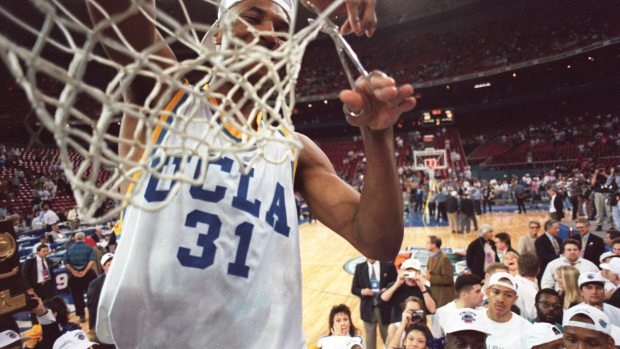

Source: http://philadelphia.cbslocal.com/2013/09/27/ea-sports-settles-college-likeness-case/ More...


Image Rights in Professional Basketball (Part I): The ‘in-n-out rimshot’ of the Basketball Arbitral Tribunal to enforce players’ image rights contracts. By Thalia Diathesopoulou

A warning addressed to fans of French teams featuring in the recently launched video game NBA 2K15: Hurry up! The last jump ball for Strasbourg and Nanterre in NBA 2K 15 may occur earlier than expected. The French Labour Union of Basketball (Syndicat National du Basket, SNB) is dissatisfied that Euroleague and 2K Games did not ask (nor paid) for its permission before including the two teams of Pro A in the NBA 2K15 edition. What is at issue? French basketball players’ image rights have been transferred to SNB, which intends to start proceedings before the US Courts against 2K Games requesting 120.000 euros for unauthorized use of the players’ image rights. SNB is clear: it is not about the money, but rather to defend the players’ rights.[1] Strasbourg and Nanterre risk to “warm up” the virtual bench if this litigation goes ahead. 
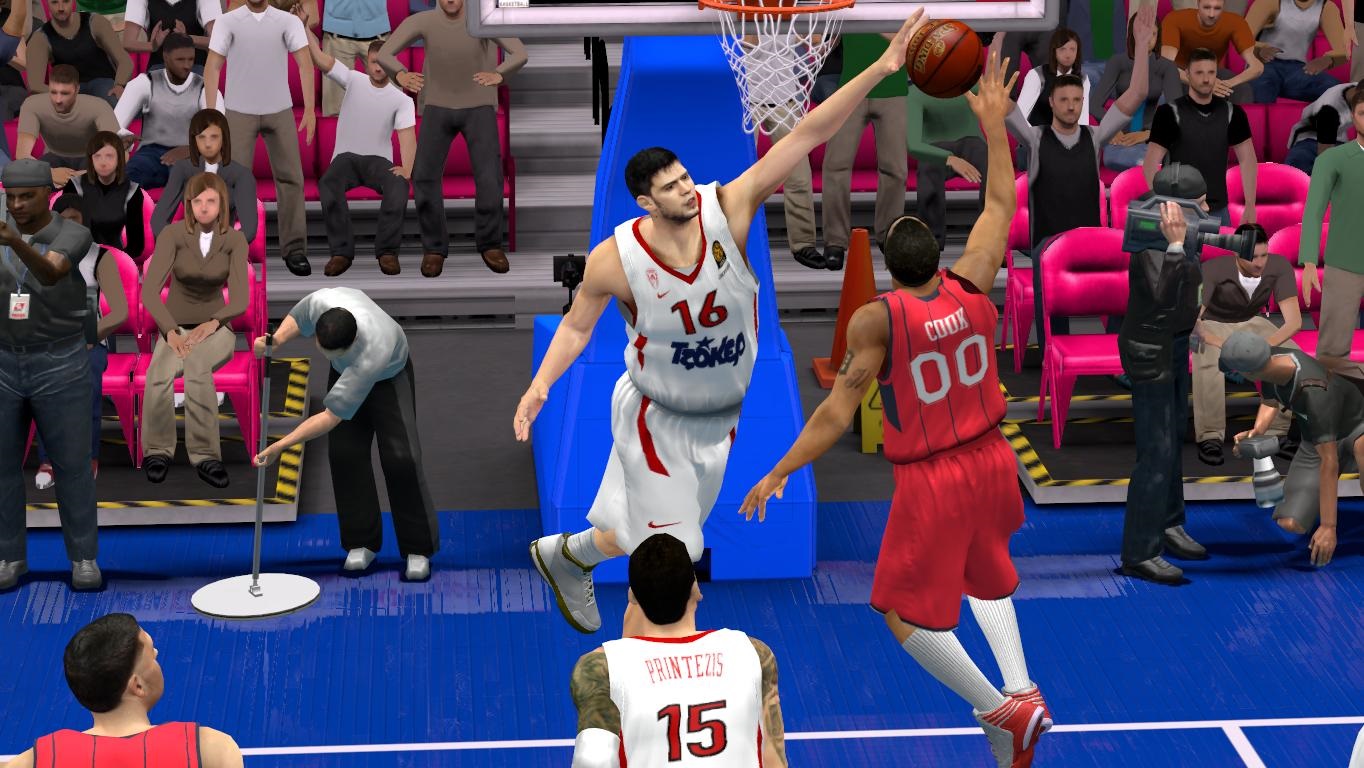
Source: http://forums.nba-live.com/viewtopic.php?f=149&t=88661&start=250 More...