Asser International Sports Law Blog

Our International Sports Law Diary
The Asser International Sports Law Centre is part of the T.M.C. Asser Instituut

The European Commission’s ISU antitrust investigation explained. By Ben Van Rompuy

In June 2014, two prominent Dutch speed skaters, Mark Tuitert (Olympic Champion 1500m) and Niels Kerstholt (World Champion short track), filed a competition law complaint against the International Skating Union (ISU) with the European Commission.
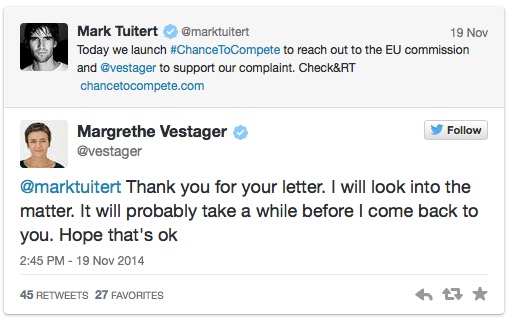

ChanceToCompeteTwitter.png (50.4KB)


Today, the European Commission announced that it has opened a formal antitrust investigation into International Skating Union (ISU) rules that permanently ban skaters from competitions such as the Winter Olympics and the ISU World and European Championships if they take part in events not organised or promoted by the ISU. The Commissioner for Competition, Margrethe Vestager, stated that the Commission "will investigate if such rules are being abused to enforce a monopoly over the organisation of sporting events or otherwise restrict competition. Athletes can only compete at the highest level for a limited number of years, so there must be good reasons for preventing them to take part in events."

Since the case originates from legal advice provided by the ASSER International Sports Law Centre, we thought it would be helpful to provide some clarifications on the background of the case and the main legal issues at stake. 


1. What are the events leading to the complaint? 

In December 2011, a private entity, Icederby International, informed the ISU of its intentions to start organising international speed skating events with an innovative competition format, combining long track and short track skating. At that time, Icerderby International was considering hosting betting activities on the races alongside the tracks. 

In January 2012, the ISU issued a revised Code of Ethics stipulating that persons subjected to the Code ought “to refrain from participating in all forms of betting or support betting or gambling related to any event/activity under the jurisdiction of the ISU”. 

In November 2013, Dubai is awarded the organisation of the World Expo 2020. Icederby International secured a contract to organise an annual speed skating event in Dubai as part of the programme leading up to the World Expo. The first Dubai Icederby Grand Prix Exhibition 2014 was to take place in October 2014. The organisers clarified that there would be no on-site betting activities during the planned Icederby events since betting activities are strictly prohibited in Dubai. 

In March 2014, the ISU nonetheless issued a statement (Communication No. 1853) saying that, because the competitions organised by Icederby International are “possibly being closely connected to betting”, they would not sanction them. The ISU also threatened that anyone participating in events organised by Icederby International would become persona non grata within the ISU. 


2. Persona non grata … what does that mean?  

According to the ISU Eligibility rules,[1] a person skating or officiating in an event not sanctioned by the ISU and/or its Members (i.e. the individual national associations) becomes ineligible to participate in ISU activities and competitions (Rule 102, para. 2 (ii)). This sanction applies not only to the skaters, but also to coaches, trainers, doctors, team attendants, team officials, judges, referees, volunteers, and anyone else engaging in a relation with the ISU.  

A person who is or has been ineligible may be reinstated as an eligible person (Rule 103, para. 1). However, this does not apply to a skater that participated in a non-sanctioned event (Rule 103, para. 2). In other words, once a skater participates in an event not organised or promoted by the ISU, he or she is banned for life from participating in the Winter Olympic Games or any of the ISU events such as the World and European Championships. In practice this would put an end to the athlete’s sporting career. 


3. Why is the ISU allegedly violating the EU competition rules? 

The complainants contend that the ISU Eligibility Rules, in particular Rule 102, as well as its enforcement by the ISU in the case at hand, constitutes a violation of Articles 101 and 102 TFEU. The main premise of the complaint is that the sanction of a lifelong ban cannot be considered inherent and proportionate to the pursuit of any legitimate objective.

The ISU Eligibility Rules are laid down in the ISU General Regulations, which the Members of the ISU have adopted. This is a decision taken by an association of associations of undertakings, within the meaning of Article 101(1) TFEU. By their very nature, the restrictions imposed by the Eligibility Rules have the potential to restrict competition because they raise virtually insurmountable barriers to entry and expansion on the market for the organisation of international speed skating events (i.e. the organisation of such events require access to the human resources controlled by the ISU). This directly and manifestly affects the interests of the skaters (and ultimately has the potential to harm the welfare of sports fans). 

Additionally, the ISU and its Members enjoy a position of collective dominance, which amounts to an absolute monopoly, on the market for the organisation of international speed skating events.[2] The ISU Eligibility Rules enable the ISU (and its Members) to prevent or impede effective competition on the market for international speed skating events. In short, the complainants argue that the ISU effectively abuses its powers to foreclose competitors on this and other related markets. The ISU Eligibility Rules are not simply there “on the books” but are actively invoked by the ISU to deter skaters (and officials etc.) from breaching these rules by participating/officiating in non-sanctioned events.[3] 

The initiative to launch the Icederby International Competitions exemplifies that there is a demand for more international speed skating events in addition to those that the ISU administers, both in terms of new competition formats and competing events. This need is also evident from the limited prize money that is available for long track and short track skaters in ISU sanctioned international speed skating events. The prize money available for individual skaters in a typical season with 21 international speed skating competitions (13 long track / 8 short track) is a minimum of $ 0 and maximum of $ 109,000 (long track) / $ 31,900 (short track). If speed skaters would be able to participate in the Dubai Icederby Grand Prix, which is but one out-of-season single event, they would earn individually a minimum of $ 37.650 and a maximum of $ 130,000. In other words, a short track skater could earn more by simply participating in the Icederby event than he/she would be able to earn by winning all of the ISU sanctioned international competitions during an entire season. 

While the ISU’s decision not to sanction the Icederby International Competitions is an important contextual element, the complainants are not asking the European Commission to denounce that decision. Rather, their complaint focuses entirely on the disproportionate sanction prescribed by Rule 102(2) of the ISU General Regulations. Because Icederby International is the first major organisation that wishes to organise international speed skating events without the ISU’s approval, the radical anti-competitive nature of the ISU Eligibility Rules has only now manifested itself. Any other (future) initiative to organise a non-sanctioned international speed skating event would likewise face the disproportionate restrictions imposed by the ISU Eligibility Rules. 

It is undisputed that an international sports federation, such as the ISU, may legitimately assert the interests of the sport it administers. Yet it is doubtful that the ISU could rely on its Code of Ethics (that only applies to events and activities “under the jurisdiction of the ISU”) to render ineligible any person skating or officiating in events in compliance with national laws. Sole participation in a non-sanctioned speed skating event should not constitute a threat to the integrity of speed skating that would justify a total ban. 


4. What is the remedial scope of EU competition law? 

The ISU Eligibility rules and the ISU’s conduct deprive speed skaters from the benefits that a situation of fair and open competition on the market for the organisation of international speed skating events would offer them. The scope for intervention on the basis of EU competition law is evident from previous decisional practice. 

In the FIA case, the European Commission was confronted with similar rules contained in several regulations notified by the Fédération International de l’Automobile (FIA). The International Sporting Code of the FIA provided that no licence holder could participate in an international Formula One event that is not entered on the FIA calendar. Anyone that would not comply with this provision would have their licence withdrawn and thus would be excluded from any event authorized by FIA. This and other restrictive rules led the Commission to make, in its Statement of Objections, the preliminary assessment that FIA “was using its regulatory powers to block the organization of races which competed with the events promoted or organized by FIA (i.e. events from which FIA derived a commercial benefit”.[4] The Commission eventually closed the case after having reached a settlement with FIA, which provided inter alia that FIA no longer would prevent teams and circuit owners to participate in and organise other races provided that essential requisite safety standards are met.[5] 

More recently, National Competition Authorities (NCAs) have also intervened on the basis of national and EU competition law. For example: 

  • In Sweden, the Market Court confirmed that two clauses in the Swedish Automobile Sports Federation (SBF)’s Common rules, according to which its members were forbidden from participating as drivers and event staff in races not sanctioned by the SBF, violated Article 101 TFEU.[6] The Court therefore upheld the decision of the Swedish NCA, which obliged the SBF to amend its Common rules so that they no longer prevent licence holders from applying for, participating in or being functionaries at unsanctioned motor races.[7] In 2014, the Swedish NCA also closed an investigation into a loyalty clause applied by the Swedish Bodybuilding Association (SKKF) after the SKFF committed no longer to suspend or fine athletes, coaches, officials or judges for participating in non-sanctioned competitions.[8]

  • In Italy, the NCA launched antitrust investigations into the regulations and conduct of the national motor sports federation (ACI) and equestrian sports federation (FISE) under Articles 101 and 102 TFEU. The FISE investigation focused on clauses forbidding FISE members from participating in equestrian events and activities organized by other entities (subject to exclusion from the federation). The investigation was closed after FISE committed to remove the anti-competitive clauses from its statutes. FISE also committed to allow the use of its affiliated clubs’ facilities by independent event organizers.[9] The ACI investigation focused on several regulatory and statutory provisions intended to limit access to the market for the organization of motor sport events for competitors. In 2009, the NCA adopted a commitment decision after the ACI undertook to inter alia allow its members to participate in events not organized by the federation.[10]

    In Ireland, the NCA opened an investigation into a rule of Show Jumping Ireland (SJI) that prevented members of the SJI to compete at unaffiliated show jumping events. The case was closed after the SJI committed to amend the rule to address the competition concerns. Since then, members of SJI who enter into unaffiliated show can only be penalized if the show has not signed up to the specified Health and Safety Standards and has not provided the SJI with evidence of adequate insurance.[11] 

Two important lessons can be drawn from this decisional practice. 

First, save for compliance with objective technical safety standards, the decisional practice has consistently found that rules prohibiting the participation of its members in non-sanctioned events violated Articles 101 and/or 102 TFEU and had to be abolished. Evidently, to be deemed proportional, the sports federation would still be required to prove that a certain non-sanctioned event would be less safe than its own events.[12] 

Second, all national cases dealt with rules of national federations. In the Swedish bodybuilding case (2014), the contested rule was the national equivalent of a clause contained in the Constitution of the International Bodybuilding Federation. Yet the remedial action was purely national in scope. The SKKF committed no longer to apply the restriction in Sweden, but the rule continues to be enforced by the IFBB and all other European member federations. The much wider scope of the parties affected by a rule from an international sports federation makes it necessary to tackle the restriction at the EU level. 


5. What are the next procedural steps? 

Since this is the first time in more than a decade that the European Commission is conducting an in-depth antitrust investigation in the field of (regulatory aspects of) sport, the decision to open proceedings delivers a powerful message. 

The opening of an in-depth antitrust investigation does not prejudice the finding of a violation of the European competition rules, however. It only signals that (1) the initial assessment led to the conclusion that there are “reasonable indications of a likely infringement” and (2) the Commission will further pursue the case as a matter of priority with a view to adopting a decision.[13] The Commission will thus allocate recourses on the case and endeavour to resolve the case in a timely manner.

Unless the Commission would in the end conclude that there is not sufficient evidence to find an infringement, the case will be resolved through the adoption of a prohibition or commitment decision.  

The ISU could offer commitments suitable to address the competition concerns arising from the investigation. The Commission might then conclude that there are no longer grounds for actions. Instead of formally establishing a violation of the EU competition rules, a commitment decision will simply make those commitments legally binding. In the alternative, the Commission will proceed to a prohibition decision, requiring the ISU to bring the infringements to an end. For this purpose, it may impose on the ISU remedies proportionate to the infringement committed and necessary to bring the infringement to an end and impose a fine. 


6. Why is this case so important? 

Needless to say, the stakes are significant and extend well beyond the sport of speed skating. 

Only a handful of international sport federations have truly experienced the “Bosman effect” and faced scrutiny of their regulatory overreach under the European competition rules. The fact that most international sports federations are based in Switzerland, outside the EU, may further explain a lack of awareness about the need to comply with EU competition law. Of course, this does not mean they are immune: anti-competitive practices that appreciably affect the EU market are drawn into the net of EU competition law. 

While the compliance of sporting rules with EU competition law needs to be assessed on a case-by-case basis, the European Commission did present an indicative list of sporting rules that are likely to infringe Articles 101 and 102 TFEU in its 2007 White Paper on Sport. Rules shielding sports associations from competition are mentioned. Other than in the area of revenue generating activities related to sport (in particular the sale of sports media rights), however, the body of competition case law at the EU level dealing with organisational sporting rules is limited. Even though sports associations usually have practical monopolies in a given sport, the remedial potential of EU competition law to influence their regulatory actions (that often have significant economic consequences) remains underexplored.[14]  

The Commission’s decision to pursue this case therefore has an important precedent-setting value. This is particularly true for the numerous international sports federations that also disproportionally restrict athlete participation in unsanctioned events with penalties ranging from fines, periods of ineligibility, and lifetime bans. For instance: 

  • International Federation of Volleyball (FIVB): since 2009, all athletes that take part in unauthorized beach volleyball events will have their membership withdrawn for all FIVB competitions (period of ineligibility up to a life ban).[15] Surprisingly, different sanctions apply to participation in volleyball competitions of non-FIVB recognized organizations (e.g. a fine on the club involved of CHF 30.000 and suspension of the club, teams, players, and officials involved for a period up to two years).[16]

  • International Swimming Federation (FINA): any affiliated member having any kind of relationship with non-affiliated bodies shall be suspended for a minimum period of one year up to a maximum period of two years.[17]

    International Netball Federation (INF): any person participating in any capacity in an unsanctioned event is automatically ineligible to participate in INF events for a minimum of 12 months thereafter.[18]

    International Gymnastics Federation (FIG): gymnasts taking part in unsanctioned competitions or exhibitions may not claim to be eligible to participate in the Olympic Games.[19]

    International Cricket Council (ICC): other than in exceptional circumstances, a person participating in unofficial cricket events shall not be selected or permitted to participate in official events for a minimum of one year thereafter.[20]

    International Hockey Federation (FIH): any athlete or other individual participating in an unsanctioned event is automatically ineligible for one year to participate in any FIH event.[21]

The mere threat of drastic sanctions, combined with the general lack of objective, transparent, and non-discriminatory rules governing the authorization of international sports events, enables federations to de facto block events that could compete with the events they organise and promote. In the absence of sufficient procedural safeguards, this clearly raises concerns about a conflict of interest between a federation’s power to authorise the organisation of events and the federation’s commercial interests in promoting its own events.

The ISU case will hopefully provide a much-needed reminder to sports federations that without valid justifications they cannot use their private regulatory power to foreclose competitors or hinder the freedom of EU athletes and sports personnel to exercise economic activities. 

Disclaimer: the author represents and advises the complainants in their antitrust proceedings.


[1] ISU General Regulations (2014), available at http://static.isu.org/media/165642/constitution-and-general-regulations-version-july-31-2014.pdf

[2] This has already been recognized by the German courts in the Pechstein case.

[3] In its 2014 statement (Communication No. 1853), the ISU found it opportune to remind all its members “that participation in any international ice skating competition not sanctioned by the ISU will result in the loss of eligibility of the participants”.

[4] Notice published pursuant to Article 19(3) of Council Regulation No 17 concerning Cases COMP/35.163, Notification of FIA Regulations, COMP/36.638, Notification by FIA/FOA of agreements relating to the FIA Formula One World Championship, COMP/36.776  GTR/FIA & others (2001/C 169/03), OJ C169/6-7

[5] European Commission, XXXIst Report on Competition Policy 2001, para. 221 et seq.

[6]  Swedish Market Court's ruling 2012:16 in Case A 5/11, Svenska Bilsportförbundet v Konkurrensverket (December 20, 2012) available at http://www.kkv.se/t/NewsArchive.aspx?id=529  (see also e.g. http://www.kkv.se/t/NewsPage____8672.aspx ).

[7] Konkurrensverket (Swedish Competition Authority) Decision of 13 May 2011 in Case 709/2009, available at http://www.kkv.se/upload/Filer/Konkurrens/2011/Beslut/09-0709.pdf.

[8] Konkurrensverket (Swedisch Competition Authority) Decision of 28 May 2014 in Case 590/2013, available at http://www.konkurrensverket.se/upload/Filer/Konkurrens/2014/13-0590.pdf.

[9] Autorità Garante della Concorrenza e del Mercato, Federitalia/Federazione Italiana Sport Equestri (FISE), Decision n°18285 of 28 July 2008, Bolletino n° 19/2008. 

[10] Autorità Garante della Concorrenza e del Mercato, Gargano Corse/ACI, Decision n° 19946 of 30 June 2009, Bolletino n° 23/2009.

[11] The Competition Authority, Show Jumping Ireland, case summary available at http://www.tca.ie/images/uploaded/documents/201205%20Case%20Summary%20-%20SJI.pdf

[12] Swedish Market Court's ruling 2012:16 in Case A 5/11, Svenska Bilsportförbundet v Konkurrensverket (December 20, 2012) available at http://www.kkv.se/t/NewsArchive.aspx?id=529; The Competition Authority, Show Jumping Ireland, case summary available at http://www.tca.ie/images/uploaded/documents/201205%20Case%20Summary%20-%20SJI.pdf.

[13] European Commission, Antitrust Manual of Procedures (2012), available at http://ec.europa.eu/competition/antitrust/antitrust_manproc_3_2012_en.pdf

[14] Ben Van Rompuy, "The role of EU competition law in tackling abuse of regulatory power by sports associations" (2015) 22 Maastricht Journal of European and Comparative Law 2, 174-204.

[15] FIVB, Beach Volleyball Handbook 2013, Article 9.1 and 11.3. 

[16] FIVB, Disciplinary Regulations, Article 15.2 and Sports Regulations Volleyball, Article 46.6.

[17] FINA, General Rules 2013-2017, Rule GR4.

[18] INF, General Regulations – Appendix – Regulations on Sanctioned & Unsanctioned Events: Guidance Notes (August 2013).

[19] FIG, Technical Regulations, Appendix B (Rules of Eligibility for the International Gymnastics Federation).

[20] ICC, Regulations for Approved/Disapproved Cricket and Domestic Cricket Events, Section 32.4.

[21] FIH, Regulations on Sanctioned & Unsanctioned events, Article 2.


Comments are closed
Asser International Sports Law Blog | The Evolution of UEFA’s Financial Fair Play Rules – Part 3: Past reforms and uncertain future. By Christopher Flanagan

Asser International Sports Law Blog

Our International Sports Law Diary
The Asser International Sports Law Centre is part of the T.M.C. Asser Instituut

The Evolution of UEFA’s Financial Fair Play Rules – Part 3: Past reforms and uncertain future. By Christopher Flanagan

Part Two of this series looked at the legal challenges FFP has faced in the five years since the controversial ‘break even’ requirements were incorporated. Those challenges to FFP’s legality have been ineffective in defeating the rules altogether; however, there have been iterative changes during FFP’s lifetime. Those changes are marked by greater procedural sophistication, and a move towards the liberalisation of equity input by owners in certain circumstances. In light of recent statements from UEFA President Aleksander Čeferin, it is possible that the financial regulation of European football will be subject to yet further change.


FFP from 2010 to 2015 

FFP was integrated into UEFA’s licensing requirements in the Club Licensing and Financial Fair Play Regulations Edition 2010.  In the 2010 Edition, implementation of FFP was to be overseen by the UEFA Club Financial Control Panel. Disciplinary action was carried out by the UEFA Control and Disciplinary Body, whose decisions could be appealed to the UEFA Appeals Board.

In the Club Licensing and Financial Fair Play Regulations Edition 2012, the oversight and disciplinary procedure of FFP was amended. The functions of the Club Financial Control Panel, Control and Disciplinary Body, and Appeals Board were replaced with a two-tier Club Financial Control Body (CFCB). The two chambers of the CFCB are the Investigatory Chamber, which actively monitors FFP compliance; and the Adjudicatory Chamber, which levies sanctions for non-compliance.

Under Article 53.1 of the 2012 Edition rules, the CFCB “carries out its duties as specified in the present regulations and the Procedural rules governing the UEFA Club Financial Control Body” (the Procedural Rules). The bespoke Procedural Rules establish a framework for the composition of the CFCB, the decision making processes of both the Investigatory and Adjudicatory Chambers, and the rules applicable to the whole proceedings. Like the Club Licensing and FFP Regulations, the Procedural Rules have gone through iterative changes (2014, and 2015 editions).

The Procedural Rules are a welcome development to FFP, ensuring the independence of the CFCB (Articles 6 and 7); bestowing broad investigatory powers upon the Investigatory Chamber (Article 13); and setting clear parameters for disciplinary action and process, including setting out potential disciplinary measures (Article 29). Overall, the Procedural Rules increase the legal sophistication of the end-to-end FFP process, and in doing so reduce the risk of irrational or arbitrary outcomes.  This protects clubs and UEFA; clubs who are in breach of FFP have clear guidance on the process that will be followed; clubs who adhere to FFP are reassured that those clubs who breach the rules will be put through a sophisticated investigation and (if necessary) disciplinary process (and additionally, pursuant to Article 22, where third party clubs and member associations are affected and have a legitimate interest in joining proceedings before the Adjudicatory Chamber, may do so); and UEFA, in having a clear and detailed rules governing procedure, helps to insulate FFP from legal challenge.

(By way of aside, in light of the changes to the procedure governing FFP sanctions, it is noteworthy that Bursaspor, in CAS 2014/A/3870 Bursaspor Kulübü Derneği v. Union des Associations Européennes de Football, argued that Control and Disciplinary Body and Appeals Board were “not professional on financial subjects”, although the Turkish club was unsuccessful in its appeal, and UEFA’s rebuttal was to highlight that the Club Financial Control Panel was made up of “financial and legal experts” and that the creation of the CFCB was “principally motivated by a desire to streamline the process”.)

Amongst the Procedural Rules, Article 33 stipulates that decisions of the Adjudicatory Chamber are to be published (subject to redaction to protect confidential information or personal data), which has the effect not just of increasing the transparency of UEFA’s decision making, but also of increasing the transparency of the financial affairs of European club football.


Settlement Agreements

One of the more dramatic changes implemented by the Procedural Rules was the implementation of ‘Settlement Agreements’, which are “aimed at ensuring that clubs in breach of the break-even requirement become compliant within a certain timeframe and are designed to be effective, equitable and dissuasive.”

Settlement Agreements have been described as “basically a plea bargain”. Redolent of the settlement procedures in many competition law or white collar crime regimes, Settlement Agreements are consensual agreements entered into between a party who has breached FFP and the CFCB, which avoid the need for a breach to be referred to the Adjudicatory Chamber (Article 15.1).   Settlement Agreements have been viewed by the CAS as effectively giving clubs a ‘second chance’ to comply with FFP (CAS 2016/A/4692 Kardemir Karabükspor v. UEFA), albeit with more stringent conditions applied.

Settlement Agreements may include sanctions and timeframes for compliance (Article 15.2) and are monitored by the CFCB Chief Investigator (Article 15.4). If there is a breach of a settlement agreement, the matter is then referred to the Adjudicators Chamber.


FFP from 2015

The next major changes to FFP were implemented in the Club Licensing and Financial Fair Play Regulations Edition 2015.

Introduction of Voluntary Agreements 

In contrast to the ex post compliance approach of Settlement Agreements, Voluntary Agreements are an ex ante mechanism for clubs to derogate from the normal FFP standards, with the ultimate aim of complying with the break-even requirement. Voluntary Agreements are defined as being “a structured set of obligations which are individually tailored to the situation of the club, break-even targets defined as annual and aggregate break-even results for each reporting period covered by the agreement, and any other obligations as agreed with the UEFA Club Financial Control Body investigatory chamber” (Edition 2015, Annex XII A.5). They can last for up to four reporting periods (Annex XII A.3).

In order to enter into a Voluntary Agreement, a club must adhere to certain procedural requirements. These include submitting a long-term business plan “based on reasonable and conservative assumptions” (Annex XII B.2(a)).

On the face of it, the concept of the Voluntary Agreements–allowing clubs with new owners to incur debts on the promise of future FFP compliance–sounds like a recipe for sort of financial peril FFP was created to avoid.  However, in order to be allowed to enter into a Voluntary Agreement, there must be put in place “an irrevocable commitment(s) by an equity participant(s) and/or related party(ies) to make contributions for an amount at least equal to the aggregate future break-even deficits for all the reporting periods covered by the voluntary agreement” (Annex XII B.2(c)).

Break Even Limit Increase

Another significant change implemented by the Club Licensing and Financial Fair Play Regulations Edition 2015 was a variation to the quantum of the break even limits in certain circumstances. The limits were increased from €5m to €45m for assessment periods 2013/14 and 2014/15, and €30m for assessment periods 2015/16, 2016/17 and 2017/18  “if it is entirely covered by a direct contribution/payment from the club owner(s) or a related party” (Article 61.2).

This balance between short-term losses, guaranteed in the event of financial failure (per the Voluntary Agreement process) or offset by owner input, against long term sustainability are superficially congruent with the objectives identified by UEFA for its licensing regime, which include “to introduce more discipline and rationality in club football finances; to encourage clubs to operate on the basis of their own revenues; to encourage responsible spending for the long-term benefit of football; and to protect the long-term viability and sustainability of European club football” (Article 2 (c)-(f)).  But this takes a somewhat narrow view of the impact of spending in football. A club’s spending affects not just a buying and selling club in a market transaction for a player’s registration, but affects the overall market in football players.

Inflation in the market for player registrations far outstrips inflation across the broader economy (by one estimate, inflation in football transfer fees runs ten times higher than inflation in the “normal” economy – and those figure were calculated before Paris Saint Germain doubled the record transfer fee with the purchase of Neymar in the summer of 2017. Player wage growth runs at over 10% per annum. Voluntary Agreements and increased owner investment may contribute to this vertiginous inflation. This runs in contrast to some of UEFA’s messaging around FFP. For example, it has previously been stated that FFP was intended to “decrease pressure on salaries and transfer fees and limit inflationary effect”.

Of course, it should be borne in mind that there is nothing inherently wrong with inflation where it is sustainable; but when considered in an environment where capital is accruing to the wealthy elite (top 15 European clubs) at a quicker rate than the rest of the market (see UEFA’s Financial Fair Play Regulations and the Rise of Football’s 1% by van Maren for further analysis), there is a risk of bifurcation of the financial capabilities of football clubs, with inflation marginalising the non-elite.  European clubs have seen revenue growth at over 9% per annum on UEFA’s figures, although since 2009, the average English Premier League club has added “five times more revenue than the average Italian Serie A or French Ligue Un club”. Inflation, if not intrinsically problematic, certainly has the potential to cause problems; and UEFA, in administering and approving Voluntary Agreements, and in weakening its stance on owners offsetting losses, should consider the impact on inflation and stability. Voluntary Agreements and financial input by owners are potentially gateways to the elite level; however, this should not be at the expense of those who do not have wealthy owners or pre-existing wealth.

Perhaps more significantly, there is a normative dimension to the introduction of Voluntary Agreements and the relaxation of financial input from benefactors. The message behind FFP was one of “revolutionising European football”, with then President of UEFA Michel Platini saying that UEFA would “never [be] going back on this.” Quite conversely, the changes brought about by the 2015 Edition of FFP were welcomed with a message of FFP being “eased”. This is disappointing because, on UEFA’s own figures, FFP has had a considerable positive impact on the European football financial landscape. On one view, allowing equity input from owners is a pro-competitive encouragement of exogenous investment; on another, it is rowing back from a positive and successful policy initiative at the expense of those not fortunate enough to have a benefactor owner.


The impact of FFP

In defence of its loosening of the restriction on loss-making, UEFA would doubtless point to the positive impact the FFP has had to date,[1] which, perhaps, creates financial latitude that once did not exist.

As a part of FFP, the clubs under UEFA’s direct jurisdiction report standardised, audited, financial information. UEFA publishes annual benchmarking reports, which draw upon the information clubs submit. Since the introduction of FFP, there has been a general positive trend in European clubs’ finances.

For example, UEFA’s 7th Benchmarking Report, covering the financial year 2014, showed wage growth to have slowed to its “lowest rate in recent history” at 3%. Overdue payables (essentially debts that clubs owe but have not paid on time) had reduced by 91%. The most recent report published by UEFA, its eight Club Licensing Benchmarking Report, covering the financial year 2015, indicates that clubs “have generated underlying operating profits of €1.5bn in the last two years, compared with losses of €700m in the two years before the introduction of [FFP]”; whereas “Combined bottom-line losses have decreased by 81% since the introduction of [FFP]”.

Of course, there are methodological problems in ascribing the improvement in European clubs’ finances exclusively to FFP when in reality there are a combination of factors at play. However, what we can comfortably say is that there is an evident correlation between FFP and the stabilisation of the football financial landscape.

There is also a second-order effect of FFP at play. UEFA, in its position as the game’s regulator, in introducing FFP, has had a hegemonic influence on the governance of the game at national level.  For example, in England, domestic iterations of FFP have been instituted in the Football League, and the Premier League has introduced its own Short Term Cost Control Measures.

Thus, by setting the tone of sustainability expectations, UEFA has influenced the financial stability of clubs outside of its jurisdiction. This is highlighted neatly in the following passage from UEFA’s eight Benchmarking Report:

“The centrepiece of financial fair play, the break-even rule, may not directly address small and medium-sized clubs with costs and incomes below €5m, but financial fair play has other direct and indirect impacts on these clubs. Direct in that UEFA and the Club Financial Control Body pass their eyes over detailed financial data from all clubs competing in UEFA competitions and in particular take careful, regular note of all overdue payables. And indirect in that financial fair play has resulted in a significantly higher level of scrutiny of club finances and the actions of club owners and directors. In addition, some countries, such as Cyprus, have introduced their own versions of financial fair play, tailored to their clubs and the scale of their financial activities.” 

So, whilst UEFA can legitimately point to the more secure position across the financial landscape as a good reason that Voluntary Agreements or wider economic input from owners will do no harm, it should continue to reflect on the message this loosening of FFP may send to the wider football market.


FFP Exemptions

One area of change for which UEFA should be applauded is in its use of certain exemptions from the FFP ‘break even’ calculation. These include areas such as infrastructure and youth football, both essential to the game’s long-term sustainability. By exempting these areas from the break even calculation, clubs’ owners are incentivised to invest (by equity rather than debt) in the game’s future, without an impact on short-term competitiveness.

More recently (from 2015), UEFA has moved to exclude expenditure on women’s football from the break-even calculation (Annex X C(i). Again, UEFA should be praised for taking positive steps to encourage growth across less wealthy areas of the game.


The Future of FFP after Neymar

Over the summer of 2017, public interest in FFP has reignited. The rules are now becoming synonymous with Neymar and his new club, Paris Saint Germain, after the Brazilian player’s reported €222m release clause was activated, doubling the world record fee for a player transfer.   This move, followed by French player Kylian Mbappe joining Paris Saint Germain from Monaco for similarly large fee, has upset some in the game.

These events pose a significant problem for UEFA. It is not yet known whether PSG are in breach of FFP (and, of course, it is conceivable that they have sufficient financial capabilities to fund the purchases without any breach of the rules); however, the transactions have raised questions, including La Liga President Javier Tebas stating that he believed PSG were guilty of “infringing on UEFA regulations, financial fair play and EU laws”, and Arsenal manager Arsène Wenger saying that “it looks like we have created rules that cannot be respected…there are too many legal ways to get around it.” 

The public grievances around FFP precipitated by PSG’s spending do, to an extent, seem to conflate simply spending large sums of money with breaching FFP. The rules do not prohibit spending large sums on transfers or otherwise; rather, they limit how much debt can be incurred by a club, assessed over a three year rolling period, with only limited equity input from an owner. The rules were not designed to prevent a €222m transfer per se (with the fee amortised across the length of the contract period, as is standard practice in the football industry); rather, they were designed to ensure that any such spending was sustainable, and did not put clubs at risk.

However, FFP is a reactive, not a proactive tool. Clubs report spending after the event; they are not required to seek permission from UEFA to make a capital investment. This ex post approach does perhaps reveal a flaw in managing any egregious short-term infractions that should arise, the impact of which will be felt by other clubs before UEFA, through the CFCB, can have its say.

The broader problem associated with PSG’s spending is one of opacity. PSG is owned by Oryx Qatar Sports Investments, which is an investment vehicle for the state of Qatar. There were contemporary (unconfirmed) reports that the deal would be structured to take place off of PSG’s accounting books, with Neymar being paid the value of his release clause directly for agreeing to become an ambassador to the Qatar World Cup, so that he could in turn pay his own release clause.  If true, this would notionally take the release clause fee off of PSG’s books, but would almost certainly qualify as a related party transaction with the meaning of FFP’s Annex X F and thus remain examinable by the CFCB. Similarly, it was reported that PSG’s loan-come-purchase of Kylian Mbappe was “complex”. While complicated transfer arrangements are to be expected in a game that is going through increasing commercial sophistication, there are evidently some suspicions that PSG are attempting to circumvent FFP (or, more colourfully, ‘peeing in the pool’).

However, UEFA anticipated clubs employing ‘creative’ tactics to superficially comply with FFP, and gave the CFCB jurisdiction to consider “at all times…the overall objectives of these regulations, in particular to defeat any attempt to circumvent these objectives” (Article 72.1). (At this stage, one can only speculate as to what, if any, FFP objectives PSG may have breached, but the CFCB will surely consider Article 2.2 (a) and (c) - (f)).

UEFA has publicly stated that it is investigating PSG’s FFP compliance, saying “The investigation will focus on the compliance of the club with the break-even requirement, particularly in light of its recent transfer activity”. Of course, this should not be particularly surprising given the CFCB annually examines the finances of each club that enters into UEFA competitions under the standard FFP procedure, but it will be interesting to observe how CFCB’s investigation progresses, and, if PSG is found to have breached FFP in letter or in spirit, what punishment is meted out to PSG. 

Whether PSG’s aggressive spending was emboldened by UEFA’s weakening of the more restrictive elements of FFP will remain unknown.  Similarly, one can only speculate as to whether the dilution of FFP, through changes such as the implementation of Settlement Agreements and Voluntary Agreements, came about as a result of legal challenges already brought and defended by UEFA; or whether UEFA is insulating itself from further legal challenges; or whether UEFA is simply altering the rules for the good of the game. As detailed in Part One of this series, the legality of FFP will rest on its proportionality. These changes have moved FFP towards a more flexible, and arguably more proportionate, proposition; but, given the public exposure that PSG’s spending has precipitated,UEFA will surely wish to ensure that FFP is not seen as a paper tiger.

The matter is on UEFA’s agenda. Even before the events involving PSG in the summer of 2017, incoming UEFA president, Aleksander Čeferin, spoke about the possibility of a fixed wage cap and closing the gap between the game’s haves and have nots. Such changes would certainly make FFP more congruent with its name. FFP is not about being ‘fair’ in the sense of being egalitarian or introducing a level playing field. It is a gentle brake applied to the rate of growth in the game, aimed predominantly at reducing long-term loss making and insolvency. Perhaps the rules might have been less controversial from the outset, and might not have been a mechanism for the frustration ventilated by sum following PSG’s purchase of Neymar and Mbappe, if instead of being called FFP, the rules were called ‘financial management rules’, and absolved themselves from the pretence of ‘fairness’.

Alternatively, UEFA could revisit FFP, implementing a genuinely egalitarian set of rules – a hard salary cap, a luxury tax, the abolition of the transfer market, or some combination of those things and others. This would, however, undoubtedly engender its own set of legal challenges, as we have seen with FFP. 

Whilst the challenges to various aspects of FFP have been largely ineffective in defeating FFP (see for example CAS 2016/A/4692 Kardemir Karabükspor v. UEFA; CAS 2016/A/4492 Galatasary v. UEFA; CAS 2014/A/3870 Bursaspor Kulübü Derneği v. UEFA; CAS 2014/A/3533 Football Club Metallurg v. UEFA; CAS 2013/A/3067 Málaga CF SAD v. UEFA; CAS 2012/A/2824 Beşiktaş JK v UEFA; CAS 2012/A/2821 Bursaspor Kulübü Dernegi v. UEFA; CAS 2012/A/2702 Györi ETO v. UEFA ), the rules have, against the backdrop of repeated disputes about their legality, iteratively changed, including a move towards greater liberalisation in respect of equity input into clubs by owners. 

And so UEFA finds itself at a crossroads. FFP, bombarded with legal challenges (which it has to date ridden) has gradually developed and liberalised as financial stability in European football has improved. Now, with the transfer market having escalated, the efficacy of the rules has come into question. UEFA must decide on the path it wishes to take; whether to liberate the market altogether,  whether to institute a truly ‘fair’ system, or whether to continue on FFP’s current centrist ground. Aleksander Čeferin, a lawyer by extraction, is certain to face a legal and political struggle in whichever direction he turns.


[1] For further discussion on the efficacy of FFP, see Neil Dunbar (2015) "The union of European football association’s club licensing and financial fair play regulations - are they working?" ISSN 1836-1129 http://epublications.bond.edu.au/slej/27

Comments are closed