Editor’s
note: Chuck Blazer declined our official interview request but thanks to some trusted
sources (the FIFA indictment and
Chuck’s testimony) we
have reconstructed his likely answers. This is a fictional interview. Any resemblance with real facts is purely coincidental.
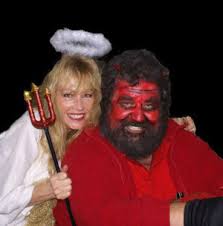
Mr
Blazer, thank you for agreeing to this interview, especially considering the
circumstances. How are you doing?
I am facing ten charges concerning, among others,
conspiracy to corrupt and money laundering. But apart from that, I am doing
great (laughs)!
It is
good to know that you have not lost your spirit. And since you’ve been involved
in football, or as you call it soccer, for years could you please first tell us
what was your career at FIFA and its affiliates like?
Let me see… Starting from the 1990s I was employed by and
associated with FIFA and one of its constituent confederations, namely the
Confederation of North, Central American and Caribbean Association Football (CONCACAF).
At various times, I also served as a member of several FIFA standing
committees, including the marketing and television committee. As CONCACAF’s
general secretary, a position I proudly held for 21 years, I was responsible,
among many other things, for negotiations concerning media and sponsorship
rights. From 1997 to 2013 I also served at FIFA’s executive committee where I
participated in the selection process of the host countries for the World Cup
tournaments. Those years at the helm of world soccer were truly amazing years
of travel and hard work mainly for the good of the beautiful game. I might add
that I even managed to document some of my voyages on my blog. I initially
called it “Travels with Chuck Blazer” but Vladimir (Putin) convinced me to
change the name to “Travels
with Chuck Blazer and his Friends”. You should check it out.
Sure,
but you ended up facing corruption and tax fraud charges in the US. What
happened?
Concerning the charges I am currently facing, I
pleaded guilty to participating in a conspiracy to corrupt FIFA and its related
constituent organizations through various bribery schemes. In addition, I acknowledged
taking part in money laundering process, violation of certain financial
reporting laws, and tax evasion. But please keep it quiet. My family was
devastated when they heard about this. After all, they know me as a
kind-hearted and giving type, especially if you consider that, given my
appearance, I’m always Santa Claus when Christmas time is around.
Concretely, around 1992 and together with other
representatives of the soccer world, I agreed to accept a bribe in connection
with the selection of the host nation of the 1998 World Cup. Together with
other FIFA executive committee members I also accepted illegal payments
concerning the selection of South Africa as the 2010 World Cup host.
Simultaneously, since approximately 1993, still with the same bunch of soccer executives,
I accepted bribes connected to the award of broadcasting and other rights to
the 1996, 1998, 2000, 2002 and 2003 Gold Cup, a tournament analogue to the Copa
América, featuring member associations of CONCACAF.
I know it’s wrong. But at FIFA a lot of people were
doing it and it was just a common practice at that time. Money was flowing in
my bank accounts and it felt right. We were working so hard to organize those
tournaments, you know.
How
come the US authorities’ ended up investigating you and FIFA?
I am not completely sure. When I testified back in
2013 the judge indicated that FIFA and its attendant or related constituent
organizations were identified as a RICO enterprise, that is, a Racketeering Influenced Corrupt Organization if I remember correctly. I was terrified, it sounded
very intimidating at first. Now I guess I got used to the sound of it. I am even
thinking about calling my next cat Rico (laughs). I also recall that the
Department of Justice’s involvement in the case was due to the fact that we
used the US financial system to funnel the money. In hindsight, it was a very
bad idea.
Could
you give us some more details on how the corruption mechanism actually worked
in practice?
In general terms there were media and marketing rights
to be sold. Those rights, and often their extensions, were awarded in exchange
for bribes, sometimes via intermediaries. The sports marketing companies
engaged in the schemes were then able not only to profit from the acquired
rights themselves, but also to accept illegal payments for passing on some of
those rights to sponsors.
(Long pause) Take for instance Copa Libertadores. The
tournament developed and gained popularity which sparked sports marketing
companies’ interest in acquiring marketing rights to the competition. Around
2000 an entity affiliated with one of the sports marketing companies was
awarded sponsorship rights for the tournaments which took place between 2001
and 2007, with a subsequent renewal of the contract in 2007 and 2012. In the
early 2000s Nicolás Leoz, acting as the president of Confederación Sudamericana
de Fútbol (CONMEBOL) and a member of its executive committee, sold his support
to award the rights to a specific company. What is more, not only did he receive
the money, he also gave instructions to forward approximately $2 million to his
personal bank accounts, a sum which was owed to CONMEBOL itself based on the
awarded sponsorship rights’ contract. The Copa Libertadores was only one of the
many affected soccer competitions.
And
what were the other tournaments affected?
I am American so please excuse my accent, but besides
Copa Libertadores, also Copa América, Copa do Brasil, Gold Cup, and the World
Cup qualifiers games. I might also add that corruption affected at least the FIFA
2011 presidential elections, the voting process concerning the hosts of the
1998 and 2010 World Cups, and Brazil’s national team’s sponsorship.
Who
would you identify as the main players in the corruption schemes?
Except myself you mean (laughs)? Well, definitely a
number of FIFA officials that you hear a lot about in the news lately. I can
easily mention a few of my colleagues, like Rafael Esquivel who served as the
president of the Venezuelan soccer association and a vice president on the
CONMEBOL executive committee. There was also my good friend Eugenio Figueredo,
a former president of the Uruguayan soccer association who was a member of
FIFA’s executive committee, a vice president at FIFA, a member of various FIFA
standing committees, and a vice and then president of CONMEBOL. Surely you know
of José Maria Marin and Jeffrey Webb. The former was the president of the
Brazilian soccer association, and sat on several FIFA standing committees. The
latter was the president of Cayman Islands Football Association and a member of
the Caribbean Football Union’s (CFU) executive committee. He was also appointed
as the president of CONCACAF and a FIFA vice president. The funny thing is that
Webb took these positions in order to clean up after the corruption scandal
which led to the resignation of Jack Warner.
Jack
Warner, you mean the former president of CONCACAF and the vice president of
FIFA?
Correct. But do not forget that he was also the
secretary and then a special advisor to the Trinidad and Tobago Football
Federation (TTFF), and the president of the CFU. Jack is probably the most
corrupt soccer official I ever met. Personally
I did not like him, he just couldn’t get enough. Already in the early 1990s he
began exploiting his position for personal gains. In this regard, he did not
only treat the assets of the organizations he served as his own, but also actively
solicited bribes in connection with for example the 1998 World Cup. Hundreds of
thousands of dollars in bribes were also paid to him with regard to the award
of commercial rights to several editions of the Gold Cup. Moreover, acting as
the president of the CFU and a special advisor to the TTFF he orchestrated the
sale of media rights to World Cup qualifying matches which the national members
of the CFU decided to sale as a bundle. Following negotiations Traffic, a
sports marketing company, acquired the rights to 2002, 2006, 2010, and 2014
World Cup qualifier matches. A substantial part of the value of the contracts
concluded by Warner on behalf of the CFU was automatically transferred to
accounts under his personal control. He was also involved in a $10 million
bribe related to the award of the 2010 World Cup to South Africa. I could go on
and on.
You
mentioned Traffic. Could you tell us more about it?
Of course. Several of these sports marketing companies
were involved, but to my knowledge Traffic was one of the biggest players. This
multinational company was based in Brazil and comprised of subsidiaries
operating around the globe including the US where it commenced its operations
around 1990. The US branch alone was engaged in a number of bribery and fraud
schemes in connection with their efforts to obtain various rights from soccer
organization and federations in the region. The beneficiaries of these schemes included,
among others, Jack Warner, Nicolás Leoz, and Rafael Esquivel. Traffic’s main
goal was to expand its operations through developing ties with soccer governing
bodies. I remember that in 1991 during Nicolás’ term as CONMEBOL’s president
Traffic acquired exclusive commercial rights to three editions of Copa América.
Nicolás then threatened to walk away. He claimed that Traffic was about to make
a lot of money out of the deal and that it was only fair for him to get his share
of the pie. With each of the new editions of the Copa América, Nicolás would
demand fresh bribes, a personal business of his which, to my knowledge, went on
until 2011. Additional payments were made by Traffic based on their subsequent
profits. Esquivel also benefited by requesting bribes in exchange for his
ongoing support for Traffic’s position. As I said, bribery at FIFA was often
the result of the initiative on the part of its officials. But coming back to
Traffic, their involvement is best described in numbers. Out of the twelve bribery
schemes I know of, Traffic was involved in nine of them. However, if we
disregard the schemes concerning FIFA elections and the voting process for the
World Cup hosts the share is nine out of ten. You also need to keep in mind that
a former employee of the US branch of Traffic involved in the corruption scheme
went on to serve as a general secretary of CONCACAF. On a side note, I think I
was a much better general secretary than he ever was. I still receive birthday cards
from my former colleagues at CONCACAF.
You
stated that several companies were involved. How did they share the rights
acquisition between themselves?
I’m not entirely sure about the exact mechanisms
involved. What I know, however, is that sometimes conflicts emerged between the
different companies seeking to secure contracts for themselves. On other
occasions they were able to join forces, for example with the media and
marketing rights to Copa América. At first, CONMEBOL entered into a contract
with Traffic on the basis of which the latter was awarded the exclusive rights
to, among others, the 2015 edition of the tournament, and an option to retain
those rights for the next three editions. But in 2010 CONMEBOL signed another
agreement, this time with Full Play, on the basis of which Full Play was
granted media and marketing rights to several editions of the tournament,
including the 2015 edition already sold to Traffic. As you can imagine, Traffic
was not happy. They decided to sue CONMEBOL and Full Play. In the end the companies
came to an understanding and formed Datisa, a new entity which was to obtain
and exploit the commercial rights to the Copa América. In return, Traffic was
to shoulder a share of the bribes offered to CONMEBOL officials.
I also recall that there were tensions between Traffic
and another company established by a former employee of Traffic who, after
bribing Brazilian federation’s officials in order to acquire a contract for the
rights to Copa do Brasil, was accused by Traffic’s owner of stealing his
business. But they also managed to solve the issue by combining their “efforts”
and by sharing the financial burden of the “investments” made to acquire the
rights.
And
what sums are we talking about?
Not so much, really (laughs). Concerning Datisa the
company agreed to pay between $100 and $110 million in bribes to CONMEBOL
officials all of whom worked also at FIFA. The FBI told me that they estimated
that the “business” generated approximately $150 million in bribes, an amount
which may increase if new information come to light. In the end, I did not get
so much out of it compared to some of my dear colleagues. Sometimes I think
that I should have been more firm during the “negotiations”. For a long time I
have been dreaming about having an additional apartment in the Trump Tower. I
remember that when I got the first one it almost seemed as it came from some
divine intervention.
Wow,
that’s a lot. How did they manage to conceal it?
As I already mentioned the “business” was sometimes
conducted via intermediaries. Jose Margulies was one of the prominent ones. He
was the brother of an old friend of the owner of Traffic, and often used
accounts in the names of offshore corporations in order to makes payments on
his behalf. In addition, he tried to conceal the bribes by using accounts at
Swiss banks, made recourse to currency dealers, destroyed documentation, and
discouraged the corrupt soccer officials from using accounts in their own name
in order to avoid detection from law enforcement bodies, an advice which was
not always taken seriously. People like Nicolás Leoz for example did not
hesitate to have sums being paid to their personal bank accounts on the basis
of “consulting contracts”. As I already mentioned, Jack (Warner), for his part,
concluded a double agreement in the name of the TTFF concerning rights to World
Cup qualifier games. He first sold the TTFF’s rights as part of a bundle, and
later on sold them again, but this time separately. There was also the famous
$10 million paid by South Africa’s authorities to the CFU in order to “support
the African diaspora”, a payment which was in fact made in exchange for votes
regarding the 2010 World Cup host. This money was diverted back into Jack’s
pockets via a number of tricks. Using family members’ accounts was another way
of deception. Lately, the business of taking bribes was getting more and more complicated,
prompting officials to look for new complex schemes. In fact, the attempts to
conceal illegal payments made in connection with the rights to the World Cup
2018 and 2022 qualifiers caused a lot of headache to Jeffrey Webb in his
capacity as a high level CFU official. One of the companies with whom Traffic
was to make payment to Webb had difficulties finding the right way to discretely
transfer the money to him. This led to long negotiations between Webb’s
associate and the company’s executives in order to find a clean method to make
the outstanding payment.
Thank
you so much Mr Blazer for your time and your invaluable insights!
You’re welcome. I am a big fan of the ASSER
International Sports Law Blog so anything for you guys.