Asser International Sports Law Blog

Our International Sports Law Diary
The Asser International Sports Law Centre is part of the T.M.C. Asser Instituut

The Pechstein ruling of the Oberlandesgericht München - Time for a new reform of CAS?

Editor's note (13 July 2015): We (Ben Van Rompuy and I) have just published on SSRN an article on the Pechstein ruling of the OLG. It is available at http://papers.ssrn.com/sol3/papers.cfm?abstract_id=2621983. Feel free to download it and to share any feedback with us!


On 15 January 2015, the earth must have been shaking under the offices of the Court of Arbitration for Sport (CAS) in Lausanne when the Oberlandesgericht München announced its decision in the Pechstein case. If not entirely unpredictable, the decision went very far (further than the first instance) in eroding the legal foundations on which sports arbitration rests. It is improbable (though not impossible) that the highest German civil court, the Bundesgerichtshof (BGH), which will most likely be called to pronounce itself in the matter, will entirely dismiss the reasoning of the Oberlandesgericht. This blogpost is a first examination of the legal arguments used (Disclaimer: it is based only on the official press release, the full text of the ruling will be published in the coming months).More...


In blood we trust? The Kreuziger Biological Passport Case. By Thalia Diathesopoulou

Over the last twenty years, professional cycling has developed the reputation of one of the “most drug soaked sports in the world”.[1] This should not come as a surprise. The sport’s integrity has plummeted down due to an unprecedented succession of doping scandals. La crème de la crème of professional cyclists has been involved in doping incidents including Tyler Hamilton, Floyd Landis, Alejandro Valverde and Lance Armstrong. The once prestigious Tour de France has been stigmatized as a race of “pharmacological feat, not a physical one”.[2]

In view of these overwhelming shadows, in 2008, the International Cycling Union (UCI), in cooperation with the World Anti-Doping Agency (WADA) took a leap in the fight against doping. It became the first International Sports Federation to implement a radical new anti-doping program known as the Athlete Biological Passport (ABP).[3] More...

A Question of (dis)Proportion: The CAS Award in the Luis Suarez Biting Saga

The summer saga surrounding Luis Suarez’s vampire instincts is long forgotten, even though it might still play a role in his surprisingly muted football debut in FC Barcelona’s magic triangle. However, the full text of the CAS award in the Suarez case has recently be made available on CAS’s website and we want to grasp this opportunity to offer a close reading of its holdings. In this regard, one has to keep in mind that “the object of the appeal is not to request the complete annulment of the sanction imposed on the Player” (par.33). Instead, Suarez and Barcelona were seeking to reduce the sanction imposed by FIFA. In their eyes, the four-month ban handed out by FIFA extending to all football-related activities and to the access to football stadiums was excessive and disproportionate. Accordingly, the case offered a great opportunity for CAS to discuss and analyse the proportionality of disciplinary sanctions based on the FIFA Disciplinary Code (FIFA DC).  More...

The International Sports Law Digest – Issue II – July-December 2014

I. Literature


1. Antitrust/Competition Law and Sport

G Basnier, ‘Sports and competition law: the case of the salary cap in New Zealand rugby union’, (2014) 14 The International Sports Law Journal 3-4, p.155

R Craven, ‘Football and State aid: too important to fail?’ (2014) 14 The International Sports Law Journal 3-4, p.205

R Craven, ‘State Aid and Sports Stadiums: EU Sports Policy or Deference to Professional Football’ (2014) 35 European Competition Law Review Issue 9, 453


2. Intellectual Property Rights in Sports law / Betting rights/ Spectators’ rights/ Sponsorship Agreements

Books

W T Champion and K DWillis, Intellectual property law in the sports and entertainment industries (Santa Barbara, California; Denver, Colorado; Oxford, England: Praeger 2014)

J-M Marmayou and F Rizzo, Les contrats de sponsoring sportif (Lextenso éditions 2014) 

More...


Time to Cure FIFA’s Chronic Bad Governance Disease

 After Tuesday’s dismissal of Michael Garcia’s complaint against the now infamous Eckert statement synthetizing (misleadingly in his eyes) his Report on the bidding process for the World Cup 2018 and 2022, Garcia finally decided to resign from his position as FIFA Ethics Committee member. On his way out, he noted: “No independent governance committee, investigator, or arbitration panel can change the culture of an organization”. It took Garcia a while to understand this, although others faced similar disappointments before. One needs only to remember the forgotten reform proposals of the Independent Governance Committee led by Prof. Dr. Mark Pieth. More...

The CAS Ad Hoc Division in 2014: Business As Usual? - Part. 2: The Selection Drama

In a first blog last month we discussed the problem of the scope of jurisdiction of the Ad Hoc Division of the Court of Arbitration for Sport. The key issue was whether an athlete could get his case heard in front of the CAS Ad Hoc Division or not. In this second part, we will also focus on whether an athlete can access a forum, but a different kind of forum: the Olympic Games as such. This is a dramatic moment in an athlete’s life, one that will decide the future path of an entire career and most likely a lifetime of opportunities. Thus, it is a decision that should not be taken lightly, nor in disregard of the athletes’ due process rights. In the past, several (non-)selection cases were referred to the Ad Hoc Divisions at the Olympic Games, and this was again the case in 2014, providing us with the opportunity for the present review.

Three out of four cases dealt with by the CAS Ad Hoc Division in Sochi involved an athlete contesting her eviction from the Games. Each case is specific in its factual and legal assessment and deserves an individual review. More...

Should the CAS ‘let Dutee run’? Gender policies in Sport under legal scrutiny. By Thalia Diathesopoulou

The rise of Dutee Chand, India’s 100 and 200-meter champion in the under 18-category, was astonishing. Her achievements were more than promising: after only two years, she broke the 100m and 200m national junior records, competed in the 100m final at the World Youth Athletics Championships in Donetsk and collected two gold medals in the Asian Junior Championships in Chinese Taipei. But, in July 2014, this steady rise was abruptly halted. Following a request from the Athletics Federation of India (AFI), the Sports Authority of India (SAI) conducted blood tests on the Indian sprinters. Dutee was detected with female hyperandrogenism, i.e a condition where the female body produces high levels of testosterone. As a result, a few days before the Commonwealth Games in Glasgow, the AFI declared Dutee ineligible to compete under the IAAF Regulations and prevented her from competing in future national and international events in the female category. Pursuant to the IAAF ‘Hyperandrogenism Policy’, the AFI would allow Dutee to return to competition only if she lowers her testosterone level beneath the male range by means of medical or surgical treatment.[1] On 25 September 2014, Dutee filed an appeal before the CAS, seeking to overturn the AFI’s decision and declare IAAF and IOC’s hyperandrogenism regulations null and void. She is defending her right to compete the way she actually is: a woman with high levels of testosterone. Interestingly enough, albeit a respondent, AFI supports her case.

IAAF and IOC rules set limits to female hyperandrogenism, which is deemed an unfair advantage that erodes female sports integrity. While these rules have been contested with regard to their scientific and ethical aspects, this is the first time that they will be debated in court. This appeal could have far-reaching ramifications for the sports world. It does not only seek to pave the way for a better ‘deal’ for female athletes with hyperandrogenism, who are coerced into hormonal treatment and even surgeries to ‘normalise’ themselves as women[2], but it rather brings the CAS, for the first time, before the thorny question:

How to strike a right balance between the core principle of ‘fair play’ and norms of non-discrimination, in cases where a determination of who qualifies as a ‘woman’ for the purposes of sport has to be made? More...

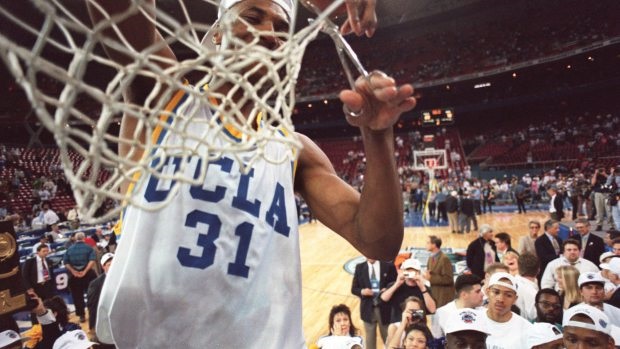
The O’Bannon Case: The end of the US college sport’s amateurism model? By Zygimantas Juska

On 8 August, U.S. District Judge Claudia Wilken ruled in favour of former UCLA basketball player O'Bannon and 19 others, declaring that NCAA's longstanding refusal to compensate athletes for the use of their name, image and likenesses (NILs) violates US antitrust laws. In particular, the long-held amateurism justification promoted by the NCAA was deemed unconvincing.

On 14 November, the NCAA has appealed the judgment, claiming that federal judge erred in law by not applying a 1984 Supreme Court ruling. One week later, the NCAA received support from leading antitrust professors who are challenging the Judge Wilken’s reasoning in an amicus curiae. They are concerned that the judgment may jeopardize the proper regulation of college athletics. The professors argued that if Wilken’s judgment is upheld, it

“would substantially expand the power of the federal courts to alter organizational rules that serve important social and academic interests…This approach expands the ‘less restrictive alternative prong’ of the antitrust rule of reason well beyond any appropriate boundaries and would install the judiciary as a regulatory agency for collegiate athletics”.   

More...

Image Rights in Professional Basketball (Part II): Lessons from the American College Athletes cases. By Thalia Diathesopoulou

In the wake of the French Labour Union of Basketball (Syndicat National du Basket, SNB) image rights dispute with Euroleague and EA Games, we threw the “jump ball” to start a series on players’ image rights in international professional basketball. In our first blogpost, we discussed why image rights contracts in professional basketball became a fertile ground for disputes when it comes to the enforcement of these contracts by the Basketball Arbitral Tribunal (BAT). Indeed, we pointed out that clubs might take advantage of the BAT’s inconsistent jurisprudence to escape obligations deriving from image rights contracts.

In this second limb, we will open a second field of legal battles “around the rim”: the unauthorized use of players’ image rights by third parties. We will use as a point of reference the US College Athletes image rights cases before US Courts and we will thereby examine the legal nature of image rights and the precise circumstances in which such rights may be infringed. Then, coming back to where we started, we will discuss the French case through the lens of US case law on players’ image rights. 

Source: http://philadelphia.cbslocal.com/2013/09/27/ea-sports-settles-college-likeness-case/ More...


The Olympic Agenda 2020: The devil is in the implementation!

The 40 recommendations of the Olympic Agenda 2020 are out! First thought: one should not underplay the 40 recommendations, they constitute (on paper at least) a potential leap forward for the IOC. The media will focus on the hot stuff: the Olympic channel, the pluri-localisation of the Games, or their dynamic format. More importantly, and to some extent surprisingly to us, however, the IOC has also fully embraced sustainability and good governance. Nonetheless, the long-term legacy of the Olympic Agenda 2020 will hinge on the IOC’s determination to be true to these fundamental commitments. Indeed, the devil is always in the implementation, and the laudable intents of some recommendations will depend on future political choices by Olympic bureaucrats. 

For those interested in human rights and democracy at (and around) the Olympics, two aspects are crucial: the IOC’s confession that the autonomy of sport is intimately linked to the quality of its governance standards and the central role the concept of sustainability is to play in the bidding process and the host city contract.  More...

Asser International Sports Law Blog | Our International Sports Law Diary <br/>The <a href="http://www.sportslaw.nl" target="_blank">Asser International Sports Law Centre</a> is part of the <a href="https://www.asser.nl/" target="_blank"><img src="/sportslaw/blog/media/logo_asser_horizontal.jpg" style="vertical-align: bottom; margin-left: 7px;width: 140px" alt="T.M.C. Asser Instituut" /></a>

Asser International Sports Law Blog

Our International Sports Law Diary
The Asser International Sports Law Centre is part of the T.M.C. Asser Instituut

WISLaw Blog Symposium - Freedom of Expression in Article 10 of the ECHR and Rule 50 of the IOC Charter: Are these polar opposites? - By Nuray Ekşi

Editor's note: Prof. Dr. Ekşi is a full-time lecturer and chair of Department of Private International Law at Özyeğin University Faculty of Law. Prof. Ekşi is the founder and also editor in chief of the Istanbul Journal of Sports Law which has been in publication since 2019.


While Article 10 of the European Convention on Human Rights (‘ECHR’) secures the right to freedom of expression, Rule 50 of the Olympic Charter of 17 July 2020 (‘Olympic Charter’) restricts this freedom. Following the judgments of the European Court of Human Rights (‘ECtHR’) relating to sports, national and international sports federations have incorporated human rights-related provisions into their statutes and regulations. They also emphasized respect for human rights. For example, Article 3 of the Fédération Internationale de Football Association (‘FIFA’) Statutes, September 2020 edition, provides that “FIFA is committed to respecting all internationally recognised human rights and shall strive to promote the protection of these rights”. Likewise, the Fundamental Principles of Olympism which are listed after the Preamble of the of the Olympic Charter 2020 also contains human rights related provisions. Paragraph 4 of Fundamental Principles of Olympism provides that the practice of sport is a human right. Paragraph 6 forbids discrimination of any kind, such as race, colour, sex, sexual orientation, language, religion, political or other opinion, national or social origin, property, birth or other status. In addition, the International Olympic Committee (‘IOC’) inserted human rights obligations in the 2024 and 2028 Host City Contract.[1] The IOC Athletes’ Rights and Responsibilities Declaration even goes further and aspires to promote the ability and opportunity of athletes to practise sport and compete without being subject to discrimination. Fair and equal gender representation, privacy including protection of personal information, freedom of expression, due process including the right to a fair hearing within a reasonable time by an independent and impartial panel, the right to request a public hearing and the right to an effective remedy are the other human rights and principles stated in the IOC Athletes’ Rights and Responsibilities Declaration. Despite sports federations’ clear commitment to the protection of human rights, it is arguable that their statutes and regulations contain restrictions on athletes and sports governing bodies exercising their human rights during competitions or in the field. In this regard, particular attention should be given to the right to freedom of expression on which certain restrictions are imposed by the federations even if it done with good intentions and with the aim of raising awareness. More...


WISLaw Blog Symposium - Legal and other issues in Japan arising from the postponement of the Tokyo 2020 Olympic Games due to COVID-19 - By Yuri Yagi

Editor's note: Yuri Yagi is a sports lawyer involved in Sports Federations and Japanese Sports Organizations including the Japan Equestrian Federation (JEF), the International Equestrian Federation (FEI), the Japanese Olympic Committee (JOC), the Japan Sports Council (JSC) and the All-Japan High School Equestrian Federation.


1. Introduction

Japan has held three Olympic Games since the inception of the modern Olympics;Tokyo Summer Olympic Games in 1964, Sapporo Winter Olympic Games in 1972, and Nagano Winter Olympic Games in 1998. Therefore, the Tokyo 2020 Olympic Games (Tokyo 2020) are supposed to be the fourth to be held in Japan, the second for Tokyo. Tokyo 2020 were originally scheduled for 24 July 2020 to 9 August 2020. Interestingly, the word ‘postpone’ or ‘postponement’ does not appear in the Host City Contract (HCC).

However, the International Olympic Committee (IOC), the Tokyo Metropolitan Government (TMG), the Japanese Olympic Committee (JOC), and the Tokyo Organising Committee of the Olympic and Paralympic Games (TOCOG) decided on 24 March 2020 that Tokyo 2020 would be postponed because of the pandemic of COVID-19. Later on, the exact dates were fixed ‘from 23 July 2021 (date of the Opening Ceremony) to 8 August 2021 (date of the Closing Ceremony).

The process of the decision is stipulated in the ‘ADDENDUM N° 4’ signed by IOC, TMG, JOC and TOCOG.

This paper provides an overview of the current situation, along with legal and other issues in Japan that have arisen due to the postponement of Tokyo 2020 due to COVID-19. The overview is offered from the perspective of a citizen of the host city and includes a consideration of national polls, the torch relay, vaccination, training camps, ever increasing costs, and the related provisions in the Candidature File and the Host City Contract. More...


WISLaw Blog Symposium - 2020 Tokyo Olympic Games - Introduction

Women In Sports Law (WISLaw) is an international, non-profit association based in Switzerland and aimed at promoting women in the sports law sector, through scientific and networking events, annual meetings and annual reports. WISLaw’s objectives are to raise awareness of the presence, role and contribution of women in the sports law sector, enhance their cooperation, and empower its global membership through various initiatives.

This year, WISLaw has partnered with the Asser International Sports Law Blog to organise a special blog symposium featuring WISLaw members. The  symposium will entail both the publication of a series of blog posts authored by WISLaw members, and a virtual webinar (accessible at https://lnkd.in/dgWsy6q with the Passcode 211433) to promote discussion on the selected topics. Article contributions were invited on the topic of legal issues surrounding the Tokyo 2020 Olympics. In the midst of a pandemic and the rise of social justice movements around the world, the Games and their organisation gave rise to a number of interesting legal issues and challenges, which will be explored through a variety of lenses. 

We hope that you enjoy and participate in the discussion.

New Event! The Court of Arbitration for Sport at the European Court of Human Rights - Prof. Helen Keller - 26 May - 16:00

On Wednesday 26 May 2021 from 16.00-17.00 CET, the Asser International Sports Law Centre, in collaboration with Dr Marjolaine Viret (University of Lausanne), is organising its fifth Zoom In webinar on the Court of Arbitration for Sport (CAS) from the perspective of the European Court of Human Rights (ECtHR).

We have the pleasure to be joined by Prof. Helen Keller, former Judge at the ECtHR and a prominent dissenter to the majority’s ruling in the Mutu and Pechstein case.

The ECtHR decision in the Mutu and Pechstein case rendered on 2 October 2018 is widely seen as one of the most important European sports law rulings. It was also the first decision of the Strasbourg court dealing with a case in which the CAS had issued an award. The applicants, Adrian Mutu and Claudia Pechstein, were both challenging the compatibility of CAS proceedings with the procedural rights enshrined in Article 6(1) of the European Convention on Human Rights (ECHR). The court famously declined to conclude that the CAS lacked independence or impartiality, but did find that, insofar as Claudia Pechstein was concerned, she was forced to undergo CAS arbitration and, therefore, that CAS proceedings had to fully comply with the procedural rights guaranteed in the ECHR. In particular, the court held that the refusal by CAS to hold a public hearing, in spite of Claudia Pechstein’s express request, was contrary to Article 6(1) ECHR. Beyond this case, as highlighted by the recent decision of Caster Semenya to submit an application to the ECtHR, the decision opens the way for a more systematic intervention of the Strasbourg court in assessing the human rights compatibility of CAS awards and more broadly of the transnational sports regulations imposed by international sports governing bodies.

Prof. Helen Keller will discuss with us the implications of the ECtHR’s Mutu and Pechstein decision and the potential for future interventions by the court in the realm of the lex sportiva.

The webinar will take the form of an interview followed by a short Q&A open to the digital public. 

Please note the discussion will NOT be recorded and posted on our Youtube channel. 

Register HERE!


Never let a good fiasco go to waste: why and how the governance of European football should be reformed after the demise of the ‘SuperLeague’ - By Stephen Weatherill

Editor’s note: Stephen Weatherill is the Jacques Delors Professor of European Law at Oxford University. He also serves as Deputy Director for European Law in the Institute of European and Comparative Law, and is a Fellow of Somerville College. This blog appeared first on eulawanalysis.blogspot.com and is reproduced here with the agreement of the author. 


The crumbling of the ‘SuperLeague’ is a source of joy to many football fans, but the very fact that such an idea could be advanced reveals something troublingly weak about the internal governance of football in Europe – UEFA’s most of all – and about the inadequacies of legal regulation practised by the EU and/ or by states. This note explains why a SuperLeague is difficult to stop under the current pattern of legal regulation and why accordingly reform is required in order to defend the European model of sport with more muscularity. More...


New Digital Masterclass - Mastering the FIFA Transfer System - 29-30 April

The mercato, or transfer window, is for some the most exciting time in the life of a football fan. During this narrow period each summer and winter (for the Europeans), fantastic football teams are made or taken apart. What is less often known, or grasped is that behind the breaking news of the latest move to or from your favourite club lies a complex web of transnational rules, institutions and practices.

Our new intensive two-day Masterclass aims to provide a comprehensive understanding of the FIFA Regulations on the Status and Transfer of Players (RSTP) to a small group of dedicated legal professionals who have the ambition to advise football clubs, represent players or join football governing bodies. The course combines theoretical insights on FIFA’s regulation of the transfer market with practical know-how of the actual operation of the RSTP distilled by hands-on practitioners.

Download the full Programme and register HERE.


The Team:

  • Dr Antoine Duval is a senior researcher at the Asser Institute and the head of the Asser International Sports Law Centre. He has widely published and lectured on transnational sports law, sports arbitration and the interaction between EU law and sport. He is an avid football fan and football player and looks forward to walking you through the intricacies of the FIFA transfer system.

  • Carol Couse is a Partner in the sports team at Mills & Reeve LLP , with extensive in-house and in private practice experience of dealing with sports regulatory matters, whether contentious or non-contentious.  She has advised on many multi million pound international football transfer agreements, playing contracts and image rights agreements on behalf clubs, players and agents.
  • Jacques Blondin is an Italian lawyer, who joined FIFA inundefined 2015, working for the Disciplinary Department. In 2019, he was appointed Head of FIFA TMS (now called FIFA Regulatory Enforcement) where he is responsible, among other things, for ensuring compliance in international transfers within the FIFA Transfer Matching System.
  • Oskar van Maren joined FIFA as a Legal Counsel in December 2017, forming part of the Knowledge Management Hub, a department created in September 2020. Previously, he worked for FIFA’s Players' Status Department. Between April 2014 and March 2017, he worked as a Junior Researcher at the T.M.C. Asser Instituut. He holds an LL.M in European law from Leiden University (The Netherlands).
  • Rhys Lenarduzzi is currently a research intern at the Asser International Sports Law Centre, where he focuses in particular on the transnational regulation of football. Prior to this, he acquired over 5 years of experience as a sports agent and consultant, at times representing over 50 professional athletes around the world from various sports, though predominantly football.


(A)Political Games? Ubiquitous Nationalism and the IOC’s Hypocrisy

Editor’s note: Thomas Terraz is a L.LM. candidate in the European Law programme at Utrecht University and a former intern of the Asser International Sports Law Centre


1.     Sport Nationalism is Politics

Despite all efforts, the Olympic Games has been and will be immersed in politics. Attempts to shield the Games from social and political realities are almost sure to miss their mark and potentially risk being disproportionate. Moreover, history has laid bare the shortcomings of the attempts to create a sanitized and impenetrable bubble around the Games. The first blog of this series examined the idea of the Games as a sanitized space and dived into the history of political neutrality within the Olympic Movement to unravel the irony that while the IOC aims to keep the Olympic Games ‘clean’ of any politics within its ‘sacred enclosure’, the IOC and the Games itself are largely enveloped in politics. Politics seep into the cracks of this ‘sanitized’ space through: (1) public protests (and their suppression by authoritarian regimes hosting the Games), (2) athletes who use their public image to take a political stand, (3) the IOC who takes decisions on recognizing national Olympic Committees (NOCs) and awarding the Games to countries,[1] and (4) states that use the Games for geo-political posturing.[2] With this background in mind, the aim now is to illustrate the disparity between the IOC’s stance on political neutrality when it concerns athlete protest versus sport nationalism, which also is a form of politics.

As was mentioned in part one of this series, the very first explicit mention of politics in the Olympic Charter was in its 1946 version and aimed to combat ‘the nationalization of sports for political aims’ by preventing ‘a national exultation of success achieved rather than the realization of the common and harmonious objective which is the essential Olympic law’ (emphasis added). This sentiment was further echoed some years later by Avery Brundage (IOC President (1952-1972)) when he declared: ‘The Games are not, and must not become, a contest between nations, which would be entirely contrary to the spirit of the Olympic Movement and would surely lead to disaster’.[3] Regardless of this vision to prevent sport nationalism engulfing the Games and its codification in the Olympic Charter, the current reality paints quite a different picture. One simply has to look at the mass obsession with medal tables during the Olympic Games and its amplification not only by the media but even by members of the Olympic Movement.[4] This is further exacerbated when the achievements of athletes are used for domestic political gain[5] or when they are used to glorify a nation’s prowess on the global stage or to stir nationalism within a populace[6]. Sport nationalism is politics. Arguably, even the worship of national imagery during the Games from the opening ceremony to the medal ceremonies cannot be depoliticized.[7] In many ways, the IOC has turned a blind eye to the politics rooted in these expressions of sport nationalism and instead has focused its energy to sterilize its Olympic spaces and stifle political expression from athletes. One of the ways the IOC has ignored sport nationalism is through its tacit acceptance of medal tables although they are expressly banned by the Olympic Charter.

At this point, the rules restricting athletes’ political protest and those concerning sport nationalism, particularly in terms of medal tables, will be scrutinized in order to highlight the enforcement gap between the two. More...


“Sport Sex” before the European Court of Human Rights - Caster Semenya v. Switzerland - By Michele Krech

Editor's note: Michele Krech is a JSD Candidate and SSHRC Doctoral Fellow at NYU School of Law. She was retained as a consultant by counsel for Caster Semenya in the proceedings before the Court of Arbitration for Sport discussed above. She also contributed to two reports mentioned in this blog post: the Report of UN High Commissioner for Human Rights,  Intersection of race and gender discrimination in sport (June 2020); and the Human Rights Watch Report, “They’re Chasing Us Away from Sport”: Human Rights Violations in Sex Testing of Elite Women Athletes (December 2020).

This blog was first published by the Völkerrechtsblog and is republished here with authorization. Michele Krech will be joining our next Zoom In webinar on 31 March to discuss the next steps in the Caster Semenya case.


Sport is the field par excellence in which discrimination
against intersex people has been made most visible.

Commissioner for Human Rights, Council of Europe
Issue Paper: Human rights and intersex people (2015)


Olympic and world champion athlete Caster Semenya is asking the European Court of Human Rights (ECtHR) to make sure all women athletes are “allowed to run free, for once and for all”. Semenya brings her application against Switzerland, which has allowed a private sport association and a private sport court to decide – with only the most minimal appellate review by a national judicial authority – what it takes for women, legally and socially identified as such all their lives, to count as women in the context of athletics. I consider how Semenya’s application might bring human rights, sex, and sport into conversation in ways not yet seen in a judicial forum. More...


New Event - Zoom In - Caster Semenya v. International Association of Athletics Federations - 31 March - 16.00-17.30 CET

On Wednesday 31 March 2021 from 16.00-17.30 CET, the Asser International Sports Law Centre, in collaboration with Dr Marjolaine Viret (University of Lausanne), is organising its fourth Zoom In webinar on the recent developments arising from the decision of the Swiss Federal Tribunal (SFT) in the case Caster Semenya v. International Association of Athletics Federations (now World Athletics), delivered on 25 August 2020.


Background
The participation of athletes with biological sex differences to international competitions is one of the most controversial issues in transnational sports law. In particular, since 2019, Caster Semenya, an Olympic champion from South-Africa has been challenging the World Athletics eligibility rules for Athletes with Differences of Sex Development (DSD Regulation), which would currently bar her from accessing international competitions (such as the Tokyo Olympics) unless she accepts to undergo medical treatment aimed at reducing her testosterone levels. In April 2019, the Court of Arbitration for Sport rejected her challenge against the DSD Regulation in a lengthy award. In response, Caster Semenya and the South African Athletics Federation filed an application to set aside the award before the Swiss Federal Tribunal. In August 2020, the SFT released its decision rejecting Semenya’s challenge of the award (for an extensive commentary of the ruling see Marjolaine Viret’s article on the Asser International Sports Law Blog).

Recently, on 25 February 2021, Caster Semenya announced her decision to lodge an application at the European Court of Human Rights (ECtHR) against Switzerland on the basis of this judgment. In this context, we thought it important to organise a Zoom In webinar around the decision of the SFT and the pending case before the ECtHR. Indeed, should the ECtHR accept the case, it will be in a position to provide a definitive assessment of the human rights compatibility of the DSD Regulation. Moreover, this decision could have important consequences on the role played by human rights in the review of the private regulations and decisions of international sports governing bodies.


Speakers


Participation is free, register HERE.