The Court of Justice of the European Union has recently handed down its judgement in the Lassana Diarra case (C-650/22 FIFA v. BZ).
Given the importance of this case to the sports industry, LawInSport, the Asser Instituut and the Association for the Study of Sport and the EU (Sport & EU) are hosting a joint webinar to bring together experts to unpack and provide clarity on the complex legal, regulatory & commercial issues stemming from this case. This free webinar will be hosted from 14:00 UK time (15:00 CET) on 18 October 2024.
Register HERE
Speakers
Our expert speakers come from academia, law and sport. Our confirmed speakers are:
- Mario Flores Chemor, Head of Sports Legal, European Club Association
- Sinziana Ianc, Antitrust & Foreign Investment Managing Associate, Linklaters
- Carol Couse, Partner, Mills & Reeve
- Pieter Paepe, Partner, Edson Legal (represented FIFPRO & UNFP - French player’s association in this case)
- Dr. Andrea Cattaneo, Senior Lecturer in Law, Edge Hill University
- Dr. Antoine Duval, Senior Researcher, T.M.C. Asser Instituut
- Sean Cottrell, CEO, LawInSport (moderator)
Register HERE

On 24 and 25 October 2024, the Asser Institute in The Hague will host the 2024 edition of the International Sports Law Journal (ISLJ) Conference. The ISLJ is the leading academic journal in transnational sports law and governance and is proud to provide a platform for transnational debates on the state of the field. The conference will address a number of issues of interest to the ISLJ and its readers.
Register HERE
Drivers and effects of reform in transnational sports governance
Transnational sports governance seems to be in a permanently unstable state of crisis and reform. At regular interval, international sports governing bodies face scandals triggered by corruption investigations or human rights violations, as well as adverse judidicial decisions. These are often followed by waves of institutional reforms, such as the creation of new bodies (E.g. the Athletics Integrity Unit), the adoption of new codes and regulation (such as Codes of Ethics) or human rights commitments (e.g. FIFA and the IOC’s Human Rights Policy/Strategy). This dynamic of crisis and reform will be at the heart of this year’s ISLJ conference, as a number of panels will critically investigate the triggers, transformative effects and limited impacts of reforms in transnational sports governance.
Football in the midst of international law and relations
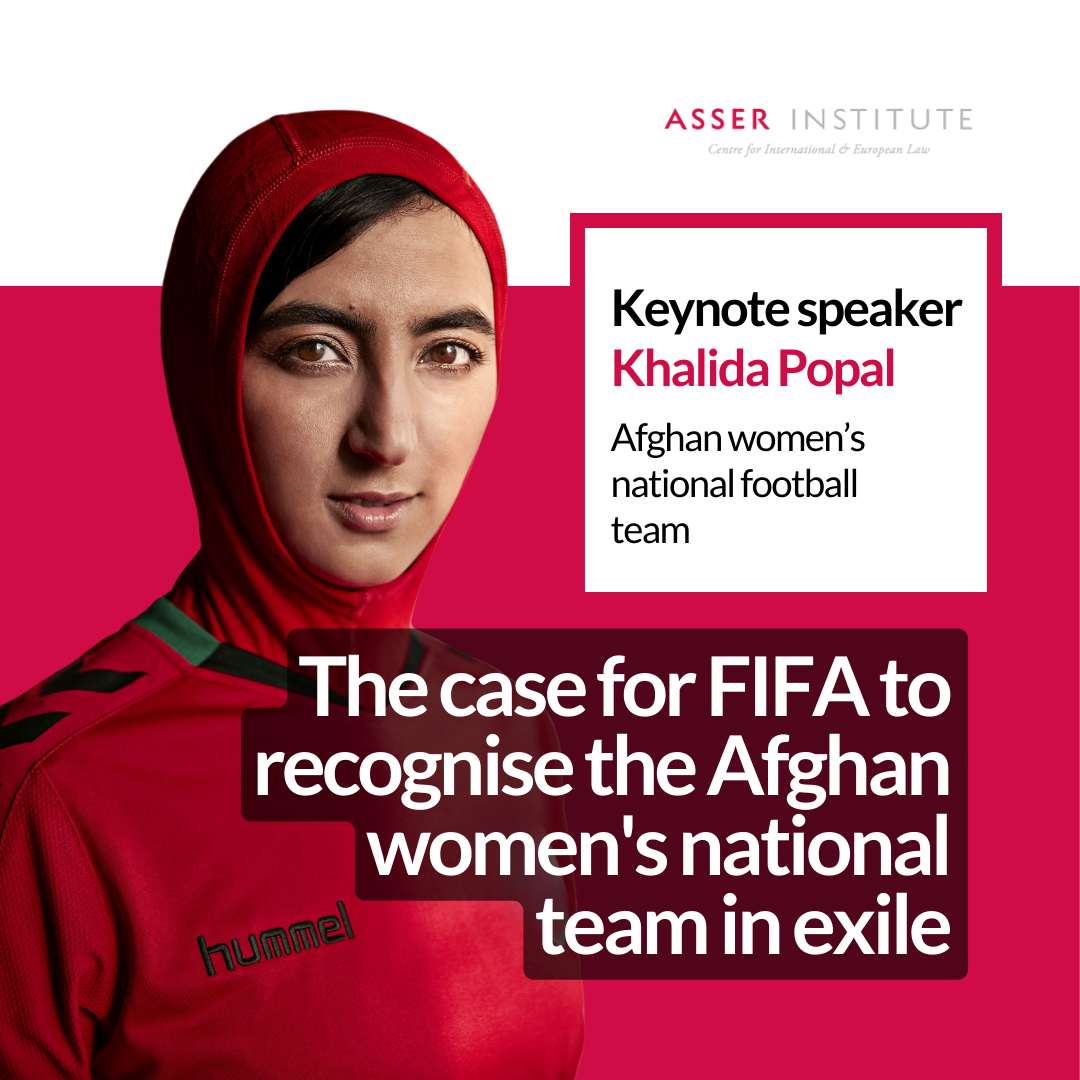
As the war in Gaza and Russia’s invasion of Ukraine continue to rage, it has become even clearer that the football world can hardly be entirely abstracted from international relations. Yet, FIFA and UEFA continue to insist on their neutrality and to deny that their governance is (or should be) affected by the world’s political affairs. During the conference, we will engage with case studies in which football is entangled with international politics and law. In particular, the speakers will delve into the role of FIFA and UEFA in such situations and on the legal standards and processes that should be applied throughout their decision-making.
Olympic challenges of today and tomorrow
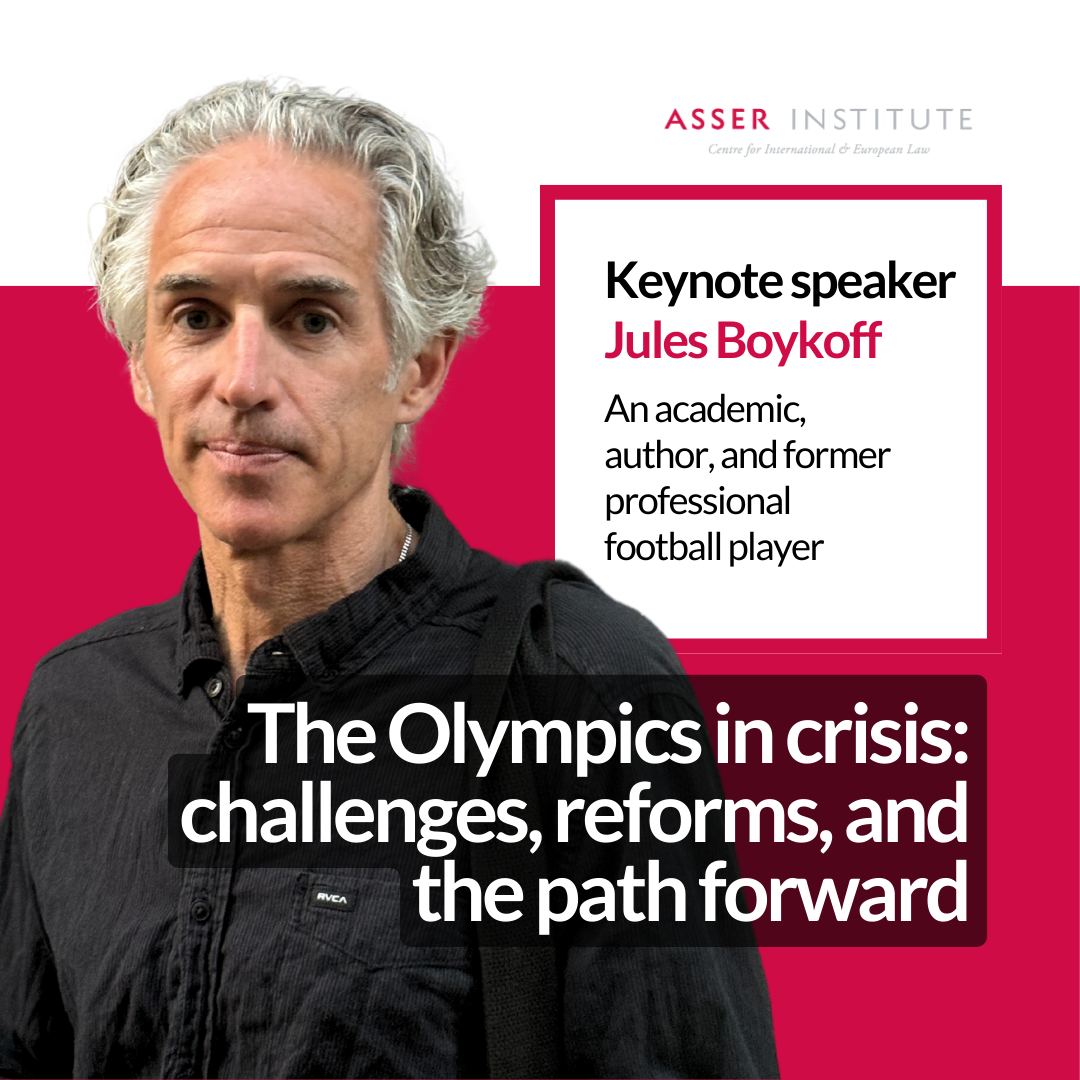
While the Paris 2024 Olympics have come to a close, the legal questions they have raised are far from exhausted. Instead, the Olympics have highlighted new issues (such as the question of the legality of the hijab ban imposed by the French Federation on its athletes) or old ones (such as the question whether Olympians should be remunerated by the IOC or the international federations), which will be discussed by our speakers. Finally, with the help of our keynote speaker, Prof. Jules Boykoff, a longstanding critique of the current Olympic regime, we will explore the IOC’s capacity to adapt to challenges while resisting radical change to the current model of olympism.
Download the full programme
Online participation available
Following the success of our webinar option in the past years, we are once again allowing online participation to the conference at an affordable price. Thus, we hope to internationalise and diversify our audience and to reach people who are not in a position to travel to The Hague.
We look forward to welcoming you in person in The Hague or digitally to this new iteration of the ISLJ conference.
Register HERE
Speakers
Register HERE
The newly launched ‘Global Sport and Human Rights Research Network’, an initiative jointly hosted by the T.M.C. Asser Instituut and the Centre for Sport and Human Rights, together with the European Union-funded project ‘Human Rights Empowered Through Athletes Rights (H.E.R.O.)' is organising an in-person conference on October 23 at the Asser Institute in The Hague, to map the field of athletes' rights and engage in critical discussions on protection of these rights and how to prevent rights violations.
The one-day conference will kick off with a presentation by the H.E.R.O. team on their research results, followed by a short panel discussion. The rest of the day will be filled with four panels on different aspects related to the topic of athletes’ human rights, with speakers from academic institutions around the world.
Check out the full programme HERE and register for free HERE.



Editor's note: Saverio P. Spera is an Italian qualified attorney-at-law. He has practiced civil and employment law in Italy and briefly worked at the Asser International Sports Law Centre before joining FIFA in 2017. Until May 2024, he has worked within the FIFA legal division - Litigation Department, and lectured in several FIFA sports law programmes. In the spring of 2024 he has co-founded SP.IN Law, a Zurich based international sports law firm.
On 21 December 2023 a judicial hat-trick stormed the scene of EU sports law. That day, the European Court of Justice (the “ECJ”) issued three decisions: (i) European Superleague Company, SL v FIFA and UEFA (Case C-333/21); (ii) UL and SA Royal Antwerp Football Club v Union royale belge des sociétés de football association ASBL (Case C-680/21)and (iii) International Skating Union (ISU) v. European Commission – Case C-124/21.
These judgments were much scrutinised (see here, here and here) in the past 6 months. For the reader’s relief, this paper will not venture into adding another opinion on whether this was a fatal blow to the foundation of EU sports law or if, after all, the substantive change is minimal (as persuasively argued here). It will analyse, instead, UEFA’s recent amendments of its Statutes and Authorisation Rules governing International Club Competitions (the “Authorisation Rules”) and whether these amendments, clearly responding to the concerns raised in the ISU judgment with respect to the sports arbitration system,[1] might pave the way for other Sports Governing Bodies (SGBs) to follow suit and what the implications for CAS arbitration might be. More...
Editor's note: Dr Rishi Gulati is Associate Professor in International Law at the University of East Anglia (UK) and Barrister in Law. He has a PhD from King’s College London, Advanced Masters in Public International Law from Leiden University, and a Bachelor of Laws from the Australian National University. Amongst other publications, he is the author of Access to Justice and International Organisations (Cambridge University Press, 2022). He has previously worked for the Australian Government, has consulted for various international organizations, and regularly appears as counsel in transnational cases.
On 1 December 2024, Jay Shah, the son of India’s powerful Home Minister and Modi confidante Amit Shah, will take over the role of the Independent Chair of the International Cricket Council (ICC). This appointment reflects the influence India now has on the governance of cricket globally. A key test Jay Shah will face is whether or not the ICC should suspend the Afghanistan Cricket Board (ACB) from its membership as Afghanistan no longer maintains a women’s cricket team contrary to the organization’s own rules, as well as its human rights responsibilities. More...
Editor's note: Ella Limbach is currently completing her master’s degree in International Sport Development and Politics at the German Sport University Cologne. Her interests include human rights of athletes, labour rights in sport, the intersection of gender, human rights and sport and the working conditions in women’s football. Previously, she graduated from Utrecht University with a LL.M in Public International Law with a specialization in International Human Rights Law. This blog was written during Ella's internship at the Asser Institute where she conducted research for the H.E.R.O. project. The topic of this blog is also the subject of her master's thesis.
Women’s football has experienced exponential growth over the past decade, though the professionalization of the women’s game continues to face barriers that can be tied to the historical exclusion of women from football and insufficient investment on many levels. While attendance records have been broken and media coverage has increased, the rise in attention also highlighted the need for special accommodations for female footballers regarding health and safety at the workplace. Female footballers face gender specific circumstances which can have an impact on their health such as menstruation, anterior cruciate ligament (ACL) injuries and the impact of maternity. As the recent ILO Brief on ‘Professional athletes and the fundamental principles and rights at work' states “gender issues related to [occupational health and safety] risks are often neglected (p. 23).” While it could be argued that from a human rights point of view article 13(c) of the Convention on the Elimination of Discrimination of Women stipulates “the right to participate in […] sports [on an equal basis to men],” reality shows that so far practices of men’s football were simply applied to women’s football without taking into consideration the physiological differences between male and female players and the implications that can have for female players’ health. The ILO Declaration on Fundamental Principles and Rights at Work(ILO Declaration, amended in 2022) includes “a safe and healthy working environment” as one of the fundamental rights at work (Art. 2e). This begs the question whether the scope of the right to occupational health and safety at the workplace includes the consideration of female specific health issues in women’s football. More...
The Editors of the International Sports Law Journal (ISLJ) invite you to submit abstracts for the next edition of the ISLJ Conference on International Sports Law, which will take place on 24 and 25 October 2024 at the Asser Institute in The Hague. The ISLJ, published by Springer and TMC Asser Press, is the leading academic publication in the field of international sports law and the conference is a unique occasion to discuss the main legal issues affecting international sports and its governance with renowned academic experts.
We welcome abstracts from academics and practitioners on all issues related to international and transnational sports law and their impact on the governance of sport. We also welcome panel proposals (including a minimum of three presenters) on specific issues of interest to the Journal and its readers. For this year’s edition, we specifically invite submissions on the following themes and subthemes:
Reformism in transnational sports governance: Drivers and impacts
- Legal and social drivers of reforms in transnational sports governance
- The role of strategic litigation (before the EU/ECtHR/National courts) as a driver of reform;
- The role of public/fan pressure groups on clubs, competition organisers and governments as a driver of change.
- The impact of internal reforms in transnational sports governance: Cosmetic or real change? (e.g. IOC Agenda 2020+5, FIFA governance reforms, CAS post-Pechstein changes, WADA sfter the Russian doping scandal)
- Emerging alternatives to private sports governance – the UK’s Independent Football Regulator.
The organization and regulation of mega sporting events: Current and future challenges
- Mega-sporting events as legalized sites of digital surveillance
- Greening mega-sporting events (e.g. carbon neutral pledges, environmental footprints of events, the impact of multiple hosting sites)
- Mega-sporting events and the protection of human rights and labour rights (e.g. Paris 2024 Social Charter, Euro 2024 human rights commitments)
- The Olympic Games and athletes’ economic rights (remuneration/advertisement)
- Reviews of the legal issues raised at Euro 2024 in Germany and the Paris 2024 Olympic Games
- Previews of the legal issues likely to have an impact on the FIFA 2026 World Cup and the Milano-Cortina 2026 Winter Olympic Games
Please send your abstract of 300 words and CV no later than 15 July 2024 to a.duval@asser.nl. Selected speakers will be informed by 30 July.
The selected participants will be expected to submit a draft of their paper by 1 October 2024. Papers accepted and presented at the conference are eligible for publication in a special issue of the ISLJ, subject to peer-review.
The Asser Institute will provide a limited number of travel & accommodation grants (max. 300€). If you wish to be considered for a grant, please explain why in your submission.
The Editors of the International Sports Law Journal (ISLJ) invite you to submit abstracts for the next edition of the ISLJ Conference on International Sports Law, which will take place on 24 and 25 October 2024 at the Asser Institute in The Hague. The ISLJ, published by Springer and TMC Asser Press, is the leading academic publication in the field of international sports law and the conference is a unique occasion to discuss the main legal issues affecting international sports and its governance with renowned academic experts.
We welcome abstracts from academics and practitioners on all issues related to international and transnational sports law and their impact on the governance of sport. We also welcome panel proposals (including a minimum of three presenters) on specific issues of interest to the Journal and its readers. For this year’s edition, we specifically invite submissions on the following themes and subthemes:
Reformism in transnational sports governance: Drivers and impacts
- Legal and social drivers of reforms in transnational sports governance
- The role of strategic litigation (before the EU/ECtHR/National courts) as a driver of reform;
- The role of public/fan pressure groups on clubs, competition organisers and governments as a driver of change.
- The impact of internal reforms in transnational sports governance: Cosmetic or real change? (e.g. IOC Agenda 2020+5, FIFA governance reforms, CAS post-Pechstein changes, WADA sfter the Russian doping scandal)
- Emerging alternatives to private sports governance – the UK’s Independent Football Regulator.
The organization and regulation of mega sporting events: Current and future challenges
- Mega-sporting events as legalized sites of digital surveillance
- Greening mega-sporting events (e.g. carbon neutral pledges, environmental footprints of events, the impact of multiple hosting sites)
- Mega-sporting events and the protection of human rights and labour rights (e.g. Paris 2024 Social Charter, Euro 2024 human rights commitments)
- The Olympic Games and athletes’ economic rights (remuneration/advertisement)
- Reviews of the legal issues raised at Euro 2024 in Germany and the Paris 2024 Olympic Games
- Previews of the legal issues likely to have an impact on the FIFA 2026 World Cup and the Milano-Cortina 2026 Winter Olympic Games
Please send your abstract of 300 words and CV no later than 15 July 2024 to a.duval@asser.nl. Selected speakers will be informed by 30 July.
The selected participants will be expected to submit a draft of their paper by 1 October 2024. Papers accepted and presented at the conference are eligible for publication in a special issue of the ISLJ, subject to peer-review.
The Asser Institute will provide a limited number of travel & accommodation grants (max. 300€). If you wish to be considered for a grant, please explain why in your submission.
Join us for the first online version of our unique training programme on ‘Sport and human rights’ jointly organised by the Centre for Sport and Human Rights and the Asser Institute taking place on May 22-24 & May 27-29.
After the success of the first editions in 2022 and 2023 the programme returns, focusing on the link between the sport and human rights and zooming in on a number of topics, such as the UN Guiding Principles for Business and Human Rights and their application in sports. We will also adopt a human rights lens to sport governance and address freedom of speech, the rights of athletes, and access to remedy.
Tackling contemporary human rights challenges in sport
The programme brings together the latest in academic research with practical experiences from working in the field in an interactive package, fostering productive exchanges between the speakers and participants. Theoretical knowledge will be complemented by exposure to hands-on know-how.
Participants will have the opportunity to learn from experts from the Asser Institute, the Centre for Sport and Human Rights, and high-profile external speakers from both academia and practice.
What will you gain?
- An extensive introduction to the emergence of the sport and human rights movement
- A greater understanding of the normative framework for human rights standards in sport
- A comprehensive overview of the latest developments in the interplay between gender and sports
- Practical know-how to govern human rights in the context of sporting organisations
- Practical know-how to address human rights risks in the context of day-to-day sports, including safeguarding
- Practical know-how to access remedy in human rights disputes
- The opportunity to engage in discussions and network with leading academics and professionals
Topics addressed in this summer programme include:
- The emergence of the sport and human rights discussion/movement
- The integration of human rights in the governance of sport
- The protection of athletes’ rights
- Access to remedy for sport-related human rights harms
Read the full programme.
Register HERE
In partnership with: