c2d1af691c5"> AddThis Button END -->

[Conference] Towards a European Social Charter for Sport Events - 1 December - 13:00-17:00 - Asser Institute

Sport events, especially when they are of a global scale, have been facing more and more questions about their impact on local communities, the environment, and human rights. 

It has become clear that their social legitimacy is not a given, but must be earned by showing that sport events can positively contribute to society. During this half-day conference, we will debate the proposal of a European Social Charter for Sport Events in order to achieve this goal. 

In January 2021, a consortium of eight partners launched a three-year project, supported by the European Commission under the Erasmus+ scheme, aimed at devising a European Social Charter for Sport Events (ESCSE). The project ambitions to develop a Charter which will contribute to ensuring that sport events taking place in the European Union are socially beneficial to the local communities concerned and, more generally, to those affected by them. The project is directly inspired by the decision of the Paris 2024 bid to commit to a social charter enforced throughout the preparation and the course of the 2024 Olympics.

This first public event in the framework of the ESCSE project, will be introducing the project to a wider public. During the event we will review the current state of the implementation of the Paris 2024 Social Charter, discuss the expectations of stakeholders and academics for a European Social Charter and present for feedback the first draft of the ESCSE (and its implementing guidelines) developed by the project members. It will be a participatory event; we welcome input from the participants.

The Asser International Sports Law Centre, powered by the Asser Institute, is contributing to the project through the drafting of a background study, which we will introduce during the conference.

Please note that we can provide some financial support (up to 100 euros)  towards travel and/or accommodation costs for a limited number of participants coming from other EU Member States or the UK. To apply for this financial support please reach out to ConferenceManager@asser.nl.  `

Register HERE

undefined

undefined

[Video] Diversity at the Court of Arbitration for Sport: Time for a Changing of the Guard? - Zoom In Webinar - 14 October 2021

New Event! Diversity at the Court of Arbitration for Sport: Time for a Changing of the Guard? - Zoom In Webinar - 14 October - 4pm

On Thursday 14 October 2021 from 16.00-17.30 CET, the Asser International Sports Law Centre, in collaboration with Dr Marjolaine Viret (University of Lausanne), will be launching the second season of the Zoom-In webinar series, with a first episode on Diversity at the Court of Arbitration for Sport: Time for a Changing of the Guard?

The Court of Arbitration for Sport (CAS) is a well-known mainstay of global sport. It has the exclusive competence over challenges against decisions taken by most international sports governing bodies and its jurisprudence covers a wide range of issues (doping, corruption, match-fixing, financial fair play, transfer or selection disputes) including disciplinary sanctions and governance disputes. In recent years, the CAS has rendered numerous awards which triggered world-wide public interest, such as in the Semenya v World Athletics case or the case between WADA and RUSADA resulting from the Russian doping scandal (we discussed both cases in previous Zoom-In discussion available here and here). In short, the CAS has tremendous influence on the shape of global sport and its governance.

However, as we will discuss during this webinar, recent work has shown that the arbitrators active at the CAS are hardly reflective of the diversity of people its decisions ultimately affect. This in our view warrants raising the question of the (urgent) need to change the (arbitral) guard at the CAS. To address these issues with us, we have invited two speakers who have played an instrumental role in putting numbers on impressions widely shared by those in contact with the CAS: Prof. Johan Lindholm (Umea University) and attorney-at-law Lisa Lazarus (Morgan Sports Law). Johan recently published a ground-breaking monograph on The Court of Arbitration for Sport and Its Jurisprudence in which he applies empirical and quantitative methods to analyse the work of the CAS. This included studying the sociological characteristics of CAS arbitrators. Lisa and her colleagues at Morgan Sports Law very recently released a blog post on Arbitrator Diversity at the Court of Arbitration for Sport, which reveals a stunning lack of diversity (based on their calculations, 4,5% of appointed CAS arbitrators are female and 0,2% are black) at the institution ruling over global sport.


Guest speakers:


Moderators:


Register for free HERE.


Zoom In webinar series

In December 2020, The Asser International Sports Law Centre in collaboration with Dr Marjolaine Viret launched a new series of zoom webinars on transnational sports law: Zoom In. You can watch the video recordings of our past Zoom In webinars on the Asser Institute’s Youtube Channel.

Investment in Football as a Means to a Particular End – Part 2: The Multiple Layers of Multi-Club Ownership Regulation in Football - By Rhys Lenarduzzi

Editor's note: Rhys was an intern at the T.M.C. Asser Institute. He now advises on investments and Notre acquisitions in sport (mainly football) via Lovelle Street Advisory. Following a career as a professional athlete, Rhys has spent much of his professional life as an international sports agent, predominantly operating in football. Rhys has a Bachelor of Laws (LL.B) and a Bachelor of Philosophy (B.Phil.) from the University of Dame, Sydney, Australia. He is currently completing an LL.M at the University of Zurich in International Business Law / International Sports Law.


Having looked at the different types of investors in football in part one of this two-part blog series, “A non-exhaustive Typology”, it is fitting to now consider the regulations that apply to investors who seek to build a portfolio of football clubs.

One way to measure the momentum of a particular practice and how serious it ought to be taken, might be when that practice earns its own initialism. Multi-club ownership or MCO as it is increasingly known today, is the name given to those entities that have an ownership stake in multiple clubs. Within the little research and writing that has been undertaken on the topic, some authors submit that investors with minority stakes in multiple clubs ought not to be captured by the MCO definition.  This position appears problematic given some of the regulations draw the line at influence rather than stake.

There are now approximately 50 MCO’s across the football world that own approximately 150 clubs.[1] Given the way MCO is trending, one might consider it important that the regulations keep up with the developing MCO practice, so as to ensure the integrity of football competitions, and to regulate any other potentially questionable benefit an MCO might derive that would be contrary to football’s best interests.

In this blog, I focus on the variety of ways (and levels at which) this practice is being regulated.  I will move through the football pyramid from member associations (MA’s) to FIFA, laying the foundations to support a proposition that FIFA and only FIFA is positioned to regulate MCO. More...


New Event! Rule 50 of the Olympic Charter and the Right to Free Speech of Athletes - Zoom In Webinar - 14 July - 16:00 (CET)

On Wednesday 14 July 2021 from 16.00-17.30 CET, the Asser International Sports Law Centre, in collaboration with Dr Marjolaine Viret, is organizing a Zoom In webinar on Rule 50 of the Olympic Charter and the right to free speech of athletes.

As the Tokyo Olympics are drawing closer, the International Olympic Committee just released new Guidelines on the implementation of Rule 50 of the Olympic Charter. The latter Rule provides that ‘no kind of demonstration or political, religious or racial propaganda is permitted in any Olympic sites, venues or other areas’. The latest IOC Guidelines did open up some space for athletes to express their political views, but at the same time continue to ban any manifestation from the Olympic Village or the Podium. In effect, Rule 50 imposes private restrictions on the freedom of expression of athletes in the name of the political neutrality of international sport. This limitation on the rights of athletes is far from uncontroversial and raises intricate questions regarding its legitimacy, proportionality and ultimately compatibility with human rights standards (such as with Article 10 of the European Convention on Human Rights).

This webinar aims at critically engaging with Rule 50 and its compatibility with the fundamental rights of athletes. We will discuss the content of the latest IOC Guidelines regarding Rule 50, the potential justifications for such a Rule, and the alternatives to its restrictions. To do so, we will be joined by three speakers, Professor Mark James from Manchester Metropolitan University, who has widely published on the Olympic Games and transnational law; Chui Ling Goh, a Doctoral Researcher at Melbourne Law School, who has recently released an (open access) draft of an article on Rule 50 of the Olympic Charter; and David Grevemberg, Chief Innovation and Partnerships Officer at the Centre for Sport and Human Rights, and former Chief Executive of the Commonwealth Games Federation (CGF). 

Guest speakers:

Moderators:


Free Registration HERE

Investment in Football as a Means to a Particular End – Part 1: A non-exhaustive Typology - By Rhys Lenarduzzi

Editor's note: Rhys is currently making research and writing contributions under Dr Antoine Duval at the T.M.C. Asser Institute with a focus on Transnational Sports Law. Additionally, Rhys is the ‘Head of Advisory’ of Athlon CIF, a global fund and capital advisory firm specialising in the investment in global sports organisations and sports assets.

Rhys has a Bachelor of Laws (LL.B) and Bachelor of Philosophy (B.Phil.) from the University of Notre Dame, Sydney, Australia. Rhys is an LL.M candidate at the University of Zurich, in International Sports Law. Following a career as a professional athlete, Rhys has spent much of his professional life as an international sports agent, predominantly operating in football.

Rhys is also the host of the podcast “Sportonomic”.


Introduction

In the following two-part blog series, I will start by outlining a short typology of investors in football in recent years, in order to show the emergence of different varieties of investors who seek to use football as a means to a particular end. I will then in a second blog, explore the regulatory landscape across different countries, with a particular focus on the regulatory approach to multi-club ownership. Before moving forward, I must offer a disclaimer of sorts.  In addition to my research and writing contributions with the Asser Institute, I am the ‘Head of Advisory’ for Athlon CIF, a global fund and capital advisory firm specialising in the investment in global sports organisations and sports assets. I appreciate and hence must flag that I will possess a bias when it comes to investment in football.

It might also be noteworthy to point out that this new wave of investment in sport, is not exclusive to football. I have recently written elsewhere about CVC Capital Partners’ US$300 million investment in Volleyball, and perhaps the message that lingers behind such a deal.  CVC has also shown an interest in rugby and recently acquired a 14.3 per cent stake in the ‘Six Nations Championship’, to the tune of £365 million.  New Zealand’s 26 provincial rugby unions recently voted unanimously in favour of a proposal to sell 12.5 per cent of NZ Rugby’s commercial rights to Silver Lake Partners for NZ$387.5 million.  Consider also the apparent partnership between star footballer’s investment group, Gerard Pique’s Kosmos, and the International Tennis Federation.  Kosmos is further backed by Hiroshi Mikitani’s ecommerce institution, Rakuten, and all involved claim to desire an overhaul of the Davis Cup that will apparently transform it into the ‘World Cup of Tennis’. Grassroots projects, prizemoney for tennis players and extra funding for member nations are other areas the partnership claims to be concerned with. As is the case with all investment plays of this flavour, one can be certain that a return on the capital injection is also of interest.

So, what are we to conclude from the trends of investment in sport and more specifically for this blog series, in football? A typology elucidates that a multiplicity of investors have in recent years identified football as a means to achieve different ends. This blog considers three particular objectives pursued; direct financial return, branding in the case of company investment, or the branding and soft power strategies of nations.More...


WISLaw Blog Symposium - Rule 40 of the Olympic Charter: the wind of changes or a new commercial race - By Rusa Agafonova

Editor's note: Rusa Agafonova is a PhD Candidate at the University of Zurich, Switzerland   

The Olympic Games are the cornerstone event of the Olympic Movement as a socio-cultural phenomenon as well as the engine of its economic model. Having worldwide exposure,[1] the Olympic Games guarantee the International Olympic Committee (IOC) exclusive nine-digit sponsorship deals. The revenue generated by the Games is later redistributed by the IOC down the sports pyramid to the International Federations (IFs), National Olympic Committees (NOCs) and other participants of the Olympic Movement through a so-called "solidarity mechanism". In other words, the Games constitute a vital source of financing for the Olympic Movement.

Because of the money involved, the IOC is protective when it comes to staging the Olympics. This is notably so with respect to ambush marketing which can have detrimental economic impact for sports governing bodies (SGBs) running mega-events. The IOC's definition of ambush marketing covers any intentional and non-intentional use of intellectual property associated with the Olympic Games as well as the misappropriation of images associated with them without authorisation from the IOC and the organising committee.[2] This definition is broad as are the IOC's anti-ambush rules.More...

WISLaw Blog Symposium - Why the existing athletes' Olympic entering system does not comply with the fundamental principles of Olympism enshrined in the Olympic Charter - By Anna Antseliovich

Editor's note: Anna Antseliovich heads the sports practice at the Moscow-based legal group Clever Consult. She also works as a senior researcher at the Federal Science Center for Physical Culture and Sport (Russia).


The Olympic Games have always been a source of genuine interest for spectators as Olympians have repeatedly demonstrated astounding capacity of the human body and mind in winning Olympic gold, or by achieving success despite all odds.

At the ancient and even the first modern Olympic Games, there was no concept of a national team; each Olympian represented only himself/herself. However, at the 1906 Intercalated Games[1] for the first time, athletes were nominated by the National Olympic Committees (‘NOCs’) and competed as members of national teams representing their respective countries. At the opening ceremony, the athletes walked under the flags of their countries. This was a major shift, which meant that not only the athletes themselves competed against each other, but so too did the nations in unofficial medal standings.  

The nomination and selection of athletes by their NOCs to compete under their national flag and represent their country is a matter of pride for the vast majority of athletes. However, to what extent does such a scheme correspond to the ideals which the Olympic Games were based on in ancient times? Is it possible to separate sport and politics in the modern world? More...


WISLaw Blog Symposium - Stick to Sports: The Impact of Rule 50 on American Athletes at the Olympic Games - By Lindsay Brandon

Editor's note: Lindsay Brandon is Associate Attorney at Law Offices of Howard L. Jacobs


“Tell the white people of America and all over the world that if they don’t seem to care for the things black people do, they should not go to see black people perform.” – American sprinter and Olympic Medalist John Carlos

On 21 April 2021, the Athletes’ Commission (AC) of the International Olympic Committee (“IOC”) received the “full support of the IOC Executive Board for a set of recommendations in regard to the Rule 50 of the Olympic Charter and Athlete Expression at the Olympic Games.” This came over a year after the 2020 Tokyo Olympic Games were postponed due to the Covid-19 pandemic, and almost a year after the IOC and AC embarked on an “extensive qualitative and quantitative” consultation process to reform Rule 50 involving over 3,500 athletes from around the globe.

Since its introduction of the new guidelines in January 2020, Rule 50 has been touted by the IOC as a means to protect the neutrality of sport and the Olympic Games, stating that “No kind of demonstration or political, religious or radical propaganda is permitted in any Olympic sites, venues, or other areas.”  In other words, the Olympics are a time to celebrate sport, and any political act or demonstration might ruin their “moment of glory”.

In fact, the Rule 50 Guidelines say that a fundamental principle of sport is that it is neutral, and “must be separate from political, religious or any other type of interference.” But this separation is not necessarily rooted in totality in modern sports culture[1], particularly in the United States (“U.S.”).  This is evidenced by the United States Olympic and Paralympic Committee (“USOPC”) committing to not sanctioning Team USA athletes for protesting at the Olympics. The USOPC Athletes stated “Prohibiting athletes to freely express their views during the Games, particularly those from historically underrepresented and minoritized groups, contributes to the dehumanization of athletes that is at odds with key Olympic and Paralympic values.” More...


Asser International Sports Law Blog | All posts by oskar-van-maren

Asser International Sports Law Blog

Our International Sports Law Diary
The Asser International Sports Law Centre is part of the T.M.C. Asser Instituut

Compatibility of Fixed-Term Contracts in Football with Directive 1999/70/EC. Part.1: The General Framework. By Piotr Drabik

Introduction
On 25 March 2015, the Labour Court of Mainz issued its decision in proceedings brought by a German footballer, Heinz Müller, against his (now former) club 1. FSV Mainz 05 (Mainz 05). The Court sided with the player and ruled that Müller should have been employed by Mainz 05 for an indefinite period following his 2009 three year contract with the club which was subsequently extended in 2011 to run until mid-2014. The judgment was based on national law implementing Directive 1999/70 on fixed-term work[1] (Directive) with the latter being introduced pursuant to art. 155(2) TFEU (ex art. 139(2) TEC). On the basis of this article, European social partners’ may request a framework agreement which they conclude to be implemented on the European Union (EU, Union) level by a Council decision on a proposal from the Commission. One of the objectives of the framework agreement,[2] and therefore of the Directive, was to establish a system to prevent abuse arising from the use of successive fixed-term employment contracts or relationships[3] which lies at the heart of the discussed problem.[4] More...

UEFA’s FFP out in the open: The Dynamo Moscow Case

Ever since UEFA started imposing disciplinary measures to football clubs for not complying with Financial Fair Play’s break-even requirement in 2014, it remained a mystery how UEFA’s disciplinary bodies were enforcing the Club Licensing and Financial Fair Play (“FFP”) regulations, what measures it was imposing, and what the justifications were for the imposition of these measures. For over a year, the general public could only take note of the 23 settlement agreements between Europe’s footballing body and the clubs. The evidential obstacle for a proper analysis was that the actual settlements remained confidential, as was stressed in several of our previous Blogs.[1] The information provided by the press releases lacked the necessary information to answer the abovementioned questions.

On 24 April 2015, the UEFA Club Financial Control Body lifted part of the veil by referring FC Dynamo Moscow to the Adjudicatory Body. Finally, the Adjudicatory Body had the opportunity to decide on a “FFP case. The anxiously-awaited Decision was reached by the Adjudicatory Chamber on 19 June and published not long after. Now that the Decision has been made public, a new stage of the debate regarding UEFA’s FFP policy can start.More...

Policing the (in)dependence of National Federations through the prism of the FIFA Statutes. By Tine Misic

…and everything under the sun is in tune,

but the sun is eclipsed by the moon…[1] 


The issue

Ruffling a few feathers, on 30 May 2015 the FIFA Executive Committee rather unsurprisingly, considering the previous warnings,[2] adopted a decision to suspend with immediate effect the Indonesian Football Federation (PSSI) until such time as PSSI is able to comply with its obligations under Articles 13 and 17 of the FIFA Statutes.[3] Stripping PSSI of its membership rights, the decision results in a prohibition of all Indonesian teams (national or club) from having any international sporting contact. In other words, the decision precludes all Indonesian teams from participating in any competition organised by either FIFA or the Asian Football Confederation (AFC). In addition, the suspension of rights also precludes all PSSI members and officials from benefits of any FIFA or AFC development programme, course or training during the term of suspension. This decision coincides with a very recent award by the Court of Arbitration for Sport (CAS) in this ambit, which shall be discussed further below.[4]More...


The Brussels Court judgment on Financial Fair Play: a futile attempt to pull off a Bosman. By Ben Van Rompuy

On 29 May 2015, the Brussels Court of First Instance delivered its highly anticipated judgment on the challenge brought by football players’ agent Daniel Striani (and others) against UEFA’s Club Licensing and Financial Fair Play Regulations (FFP). In media reports,[1] the judgment was generally portrayed as a significant initial victory for the opponents of FFP. The Brussels Court not only made a reference for a preliminary ruling to the European Court of Justice (CJEU) but also imposed an interim order blocking UEFA from implementing the second phase of the FFP that involves reducing the permitted deficit for clubs.

A careful reading of the judgment, however, challenges the widespread expectation that the CJEU will now pronounce itself on the compatibility of the FFP with EU law. More...

Financial Fair Play: Lessons from the 2014 and 2015 settlement practice of UEFA. By Luis Torres

UEFA announced on 8 May that it had entered into Financial Fair Play settlement agreements with 10 European football clubs. Together with the four other agreements made in February 2015, this brings the total to 14 FFP settlements for 2015 and 23 since UEFA adopted modifications in its Procedural rules and allowed settlements agreements to be made between the Clubs and the Chief Investigator of the UEFA Club Financial Control Body (CFCB).[1] 

In the two years during which UEFA’s FFP regulations have been truly up and running we have witnessed the centrality taken by the settlement procedure in their enforcement. It is extremely rare for a club to be referred to the FFP adjudication chamber. In fact, only the case regarding Dynamo Moscow has been referred to the adjudication chamber. Thus, having a close look at the settlement practice of UEFA is crucial to gaining a good understanding of the functioning of FFP. Hence, this blog offers a detailed analysis of this year’s settlement agreements and compares them with last year’s settlements. More...

The Spanish TV Rights Distribution System after the Royal Decree: An Introduction. By Luis Torres

On the first of May 2015, the Spanish Government finally signed the Royal Decree allowing the joint selling of the media rights of the Spanish top two football leagues. The Minister for Sport stated that the Decree will allow clubs to “pay their debts with the social security and the tax authorities and will enable the Spanish teams to compete with the biggest European Leagues in terms of revenues from the sale of media rights”.[1]Although the signing of the Royal Decree was supposed to close a very long debate and discussion between the relevant stakeholders, its aftermath shows that the Telenovela is not entirely over. 

This blog post will first provide the background story to the selling of media rights in Spain. It will, thereafter, analyse the main points of the Royal Decree and outline how the system will work in practice. Finally, the blog will shortly address the current frictions between the Spanish League (LFP) and the Spanish football federation (RFEF).More...

Sport and EU Competition Law: New developments and unfinished business. By Ben Van Rompuy

Editor's note: Ben Van Rompuy, Head of the ASSER International Sports Law Centre, was recently interviewed by LexisNexis UK for their in-house adviser service. With kind permission from LexisNexis we reproduce the interview on our blog in its entirety. 

How does competition law affect the sports sector?  

The application of EU competition law to the sports sector is a fairly recent and still unfolding development. It was only in the mid-1990s, due to the growing commercialization of professional sport, that there emerged a need to address competition issues in relation to, for instance, ticketing arrangements or the sale of media rights.  More...


The Impact of the new FIFA Regulations for Intermediaries: A comparative analysis of Brazil, Spain and England. By Luis Torres

INTRODUCTION

Almost a year after their announcement, the new FIFA Regulations on working with Intermediaries (“FIFA Regulations”) came into force on 1 April 2015. Their purpose is to create a more simple and transparent system of regulation of football agents. It should be noted, however, that the new FIFA rules enable every national football association to regulate their own system on players’ intermediaries, provided they respect the compulsory minimum requirements adopted. In an industry that is already cutthroat, it thus remains to be seen whether FIFA’s “deregulation” indeed creates transparency, or whether it is a Pandora’s Box to future regulatory confusion.

This blog post will provide an overview of the new FIFA Regulations on working with intermediaries and especially its minimum requirements. Provided that national associations are encouraged to “draw up regulations that shall incorporate the principles established in these provisions”[1], three different national regulations have been taken as case-studies: the English FA Regulations, the Spanish RFEF Regulations and the Brazilian CBF Regulations. After mapping their main points of convergence and principal differences, the issues that could arise from these regulatory differences shall be analyzed.  More...

Blog Symposium: Third Party Investment from a UK Perspective. By Daniel Geey

Introduction: FIFA’s TPO ban and its compatibility with EU competition law.
Day 1: FIFA must regulate TPO, not ban it.
Day 2: Third-party entitlement to shares of transfer fees: problems and solutions
Day 3: The Impact of the TPO Ban on South American Football.
Day 5: Why FIFA's TPO ban is justified.

Editor's note: In this fourth part of our blog symposium on FIFA's TPO ban Daniel Geey shares his 'UK perspective' on the ban. The English Premier League being one of the first leagues to have outlawed TPO in 2010, Daniel will outline the regulatory steps taken to do so and critically assess them. Daniel is an associate in Field Fisher Waterhouse LLP's Competition and EU Regulatory Law Group. As well as being a famous 'football law' twitterer, he has also published numerous articles and blogs on the subject.


What is Third Party Investment?
In brief Third Party Investment (TPI) in the football industry, is where a football club does not own, or is not entitled to, 100% of the future transfer value of a player that is registered to play for that team. There are numerous models for third party player agreements but the basic premise is that companies, businesses and/or individuals provide football clubs or players with money in return for owning a percentage of a player’s future transfer value. This transfer value is also commonly referred to as a player’s economic rights. There are instances where entities will act as speculators by purchasing a percentage share in a player directly from a club in return for a lump sum that the club can then use as it wishes. More...


Blog Symposium: The Impact of the TPO Ban on South American Football. By Ariel N. Reck

Introduction: FIFA’s TPO ban and its compatibility with EU competition law.
Day 1: FIFA must regulate TPO, not ban it.
Day 2: Third-party entitlement to shares of transfer fees: problems and solutions
Day 4: Third Party Investment from a UK Perspective.
Day 5: Why FIFA's TPO ban is justified.

Editor’s note: Ariel N. Reck is an Argentine lawyer specialized in the football industry. He is a guest professor at ISDE’s Global Executive Master in International Sports Law, at the FIFA CIES Sports law & Management course (Universidad Católica Argentina) and the Universidad Austral Sports Law diploma (Argentina) among other prestigious courses. He is a regular conference speaker and author in the field of sports law.

Being an Argentine lawyer, Ariel will focus on the impact FIFA’s TPO ban will have (and is already having) on South American football.More...


Asser International Sports Law Blog | All posts by oskar-van-maren

Asser International Sports Law Blog

Our International Sports Law Diary
The Asser International Sports Law Centre is part of the T.M.C. Asser Instituut

Blog Symposium: FIFA must regulate TPO, not ban it. The point of view of La Liga.

Introduction: FIFA’s TPO ban and its compatibility with EU competition law.
Day 2: Third-party entitlement to shares of transfer fees: problems and solutions
Day 3: The Impact of the TPO Ban on South American Football.
Day 4: Third Party Investment from a UK Perspective.
Day 5: Why FIFA's TPO ban is justified.

Editor's note: This is the first blog of our symposium on FIFA's TPO ban, it features the position of La Liga regarding the ban and especially highlights some alternative regulatory measures it would favour. La Liga has launched a complaint in front of the European Commission challenging the compatibility of the ban with EU law, its ability to show that realistic less restrictive alternatives were available is key to winning this challenge. We wish to thank La Liga for sharing its legal (and political) analysis of FIFA's TPO ban with us.

INTRODUCTION

The Spanish Football League (La Liga) has argued for months that the funding of clubs through the conveyance of part of players' economic rights (TPO) is a useful practice for clubs. However, it also recognized that the practice must be strictly regulated. In July 2014, it approved a provisional regulation that was sent to many of the relevant stakeholders, including FIFA’s Legal Affairs Department. More...


The UCI Report: The new dawn of professional cycling?

The world of professional cycling and doping have been closely intertwined for many years. Cycling’s International governing Body, Union Cycliste Internationale (UCI), is currently trying to clean up the image of the sport and strengthen its credibility. In order to achieve this goal, in January 2014 the UCI established the Cycling Independent Reform Commission (CIRC) “to conduct a wide ranging independent investigation into the causes of the pattern of doping that developed within cycling and allegations which implicate the UCI and other governing bodies and officials over ineffective investigation of such doping practices.”[1] The final report was submitted to the UCI President on 26 February 2015 and published on the UCI website on 9 March 2015. The report outlines the history of the relationship between cycling and doping throughout the years. Furthermore, it scrutinizes the role of the UCI during the years in which doping usage was at its maximum and addresses the allegations made against the UCI, including allegations of corruption, bad governance, as well as failure to apply or enforce its own anti-doping rules. Finally, the report turns to the state of doping in cycling today, before listing some of the key practical recommendations.[2]

Since the day of publication, articles and commentaries (here and here) on the report have been burgeoning and many of the stakeholders have expressed their views (here and here). However, given the fact that the report is over 200 pages long, commentators could only focus on a limited number of aspects of the report, or only take into account the position of a few stakeholders. In the following two blogs we will try to give a comprehensive overview of the report in a synthetic fashion.

This first blogpost will focus on the relevant findings and recommendations of the report. In continuation, a second blogpost will address the reforms engaged by the UCI and other long and short term consequences the report could have on professional cycling. Will the recommendations lead to a different governing structure within the UCI, or will the report fundamentally change the way the UCI and other sport governing bodies deal with the doping problem? More...

Book Review - Camille Boillat & Raffaele Poli: Governance models across football associations and leagues (2014)

Camille Boillat & Raffaele Poli: Governance models across football associations and leagues (2014)

Vol. 4, Centre International d'Etude du Sport, Neuchâtel, Switzerland, softback, 114 pages, ISBN 2-940241-24-4, Price: €24


Source: http://www.cies.ch/en/cies/news/news/article/new-publication-in-the-collection-editions-cies-governance-models-across-football-associations-an/

More...


‘The reform of football': Yes, but how? By Marco van der Harst

'Can't fight corruption with con tricks
They use the law to commit crime
And I dread, dread to think what the future will bring
When we're living in gangster time'
The Specials - Gangsters


The pressing need for change 

The Parliamentary Assembly (PACE) of the Council of Europe (CoE), which is composed of 318 MPs chosen from the national parliaments of the 47 CoE member states, unanimously adopted a report entitled ‘the reform of football’ on January 27, 2015. A draft resolution on the report will be debated during the PACE April 2015 session and, interestingly, (only?) FIFA’s president Sepp Blatter has been sent an invitation

The PACE report highlights the pressing need of reforming the governance of football by FIFA and UEFA respectively. Accordingly, the report contains some interesting recommendations to improve FIFA’s (e.g., Qatargate[1]) and UEFA’s governance (e.g., gender representation). Unfortunately, it remains unclear how the report’s recommendations will actually be implemented and enforced. 

The report is a welcomed secondary effect of the recent Qatargate directly involving former FIFA officials such as Jack Warner, Chuck Blazer, and Mohamed Bin Hammam[2] and highlighting the dramatic failures of FIFA’s governance in putting its house in order. Thus, it is undeniably time to correct the governance of football by FIFA and its confederate member UEFA – nolens volens. The real question is how to do it.


            Photograph: Fabrice Coffrini/AFP/Getty Images                   Photograph: Octav Ganea/AP

More...


In Egypt, Broadcasting Football is a Question of Sovereignty … for Now! By Tarek Badawy, Inji Fathalla, and Nadim Magdy

On 15 April 2014, the Cairo Economic Court (the “Court") issued a seminal judgment declaring the broadcasting of a football match a sovereign act of State.[1]


Background

In Al-Jazeera v. the Minister of Culture, Minister of Information, and the Chairman of the Board of Directors of the Radio and Television Union, a case registered under 819/5JY, the Al-Jazeera TV Network (the “Plaintiff” or “Al-Jazeera”) sued the Egyptian Radio and Television Union (“ERTU” or the “Union”) et al. (collectively, the “Respondents”) seeking compensation for material and moral damages amounting to three (3) million USD, in addition to interest, for their alleged breach of the Plaintiff’s exclusive right to broadcast a World Cup-qualification match in Egypt.  Al-Jazeera obtained such exclusive right through an agreement it signed with Sportfive, a sports marketing company that had acquired the right to broadcast Confederation of African Football (“CAF”) World Cup-qualification matches.

ERTU reportedly broadcasted the much-anticipated match between Egypt and Ghana live on 15 October 2013 without obtaining Al-Jazeera’s written approval, in violation of the Plaintiff’s intellectual property rights.

More...


Why the European Commission will not star in the Spanish TV rights Telenovela. By Ben Van Rompuy and Oskar van Maren

The selling of media rights is currently a hot topic in European football. Last week, the English Premier League cashed in around 7 billion Euros for the sale of its live domestic media rights (2016 to 2019) – once again a 70 percent increase in comparison to the previous tender. This means that even the bottom club in the Premier League will receive approximately €130 million while the champions can expect well over €200 million per season.

The Premier League’s new deal has already led the President of the Spanish National Professional Football League (LNFP), Javier Tebas, to express his concerns that this could see La Liga lose its position as one of Europe’s leading leagues. He reiterated that establishing a centralised sales model in Spain is of utmost importance, if not long overdue.

Concrete plans to reintroduce a system of joint selling for the media rights of the Primera División, Segunda División A, and la Copa del Rey by means of a Royal Decree were already announced two years ago. The road has surely been long and bumpy. The draft Decree is finally on the table, but now it misses political approval. All the parties involved are blaming each other for the current failure: the LNFP blames the Sport Governmental Council for Sport (CSD) for not taking the lead; the Spanish Football Federation (RFEF) is arguing that the Federation and non-professional football entities should receive more money and that it should have a stronger say in the matter in accordance with the FIFA Statutes;  and there are widespread rumours that the two big earners, Real Madrid and FC Barcelona, are actively lobbying to prevent the Royal Decree of actually being adopted.

To keep the soap opera drama flowing,  on 30 December 2014, FASFE (an organisation consisting of groups of fans, club members, and minority shareholders of several Spanish professional football clubs) and the International Soccer Centre (a movement that aims to obtain more balanced and transparent football and basketball competitions in Spain) filed an antitrust complaint with the European Commission against the LNFP. They argue that the current system of individual selling of LNFP media rights, with unequal shares of revenue widening the gap between clubs, violates EU competition law.


Source:http://www.gopixpic.com/600/buscar%C3%A1n-el-amor-verdadero-nueva-novela-de-televisa/http:%7C%7Cassets*zocalo*com*mx%7Cuploads%7Carticles%7C5%7C134666912427*jpg/

More...


The 2014 Dortmund judgment: what potential for a follow-on class action? By Zygimantas Juska

Class actions are among the most powerful legal tools available in the US to enforce competition rules. With more than 75 years of experience, the American system offers valuable lessons about the benefits and drawbacks of class actions for private enforcement in competition law. Once believed of as only a US phenomenon, class actions are slowly becoming reality in the EU. After the adoption of the Directive on damages actions in November 2014, the legislative initiative in collective redress (which could prescribe a form of class actions) is expected in 2017.[1] Some pro-active Member States have already taken steps to introduce class actions in some fashion, like, for example, Germany.

What is a class action? It is a lawsuit that allows many similar legal claims with a common interest to be bundled into a single court action. Class actions facilitate access to justice for potential claimants, strengthen the negotiating power and contribute to the efficient administration of justice. This legal mechanism ensures a possibility to claim cessation of illegal behavior (injunctive relief) or to claim compensation for damage suffered (compensatory relief).  More...

State Aid and Sport: does anyone really care about rugby? By Beverley Williamson

There has been a lot of Commission interest in potential state aid to professional football clubs in various Member States.  The huge sums of money involved are arguably an important factor in this interest and conversely, is perhaps the reason why state aid in rugby union is not such a concern. But whilst the sums of money may pale into comparison to those of professional football, the implications for the sport are potentially no less serious.

At the end of the 2012/2013 season, Biarritz Olympique (Biarritz) were relegated from the elite of French Rugby Union, the Top 14 to the Pro D2.  By the skin of their teeth, and as a result of an injection of cash from the local council (which amounted to 400,000€), they were spared administrative relegation to the amateur league below, the Fédérale 1, which would have occurred as a result of the financial state of the club.More...

State aid in Croatia and the Dinamo Zagreb case

Introduction

The year 2015 promises to be crucial, and possibly revolutionary, for State aid in football. The European Commission is taking its time in concluding its formal investigations into alleged State aid granted to five Dutch clubs and several Spanish clubs, including Valencia CF and Real Madrid, but the final decisions are due for 2015.

A few months ago, the Commission also received a set of fresh State aid complaints originating from the EU’s newest Member State Croatia. The complaints were launched by a group of minority shareholders of the Croatian football club Hajduk Split, who call themselves Naš Hajduk. According to Naš Hajduk, Hajduk Split’s eternal rival, GNK Dinamo Zagreb, has received more than 30 million Euros in unlawful aid by the city of Zagreb since 2006.More...

“The Odds of Match Fixing – Facts & Figures on the integrity risk of certain sports bets”. By Ben Van Rompuy

Media reports and interested stakeholders often suggest that certain types of sports bets would significantly increase the risks of match fixing occurring. These concerns also surface in policy discussions at both the national and European level. Frequently calls are made to prohibit the supply of “risky” sports bets as a means to preserve the integrity of sports competitions.

Questions about the appropriateness of imposing such limitations on the regulated sports betting, however, still linger. The lack of access to systematic empirical evidence on betting-related match fixing has so far limited the capacity of academic research to make a proper risk assessment of certain types of sports bets. 

The ASSER International Sports Law Centre has conducted the first-ever study that assesses the integrity risks of certain sports bets on the basis of quantitative empirical evidence. 

We uniquely obtained access to key statistics from Sportradar’s Fraud Detection System (FDS). A five-year dataset of football matches worldwide, which the FDS identified as likely to have been targeted by match fixers, enabled us to observe patterns and correlations with certain types of sports bets. In addition, representative samples of football bets placed with sports betting operator Betfair were collected and analysed. 

The results presented in this report, which challenge several claims about the alleged risks generated by certain types of sports bets, hope to inform policy makers about the cost-effectiveness of imposing limits on the regulated sports betting offer.More...

Asser International Sports Law Blog | All posts by oskar-van-maren

Asser International Sports Law Blog

Our International Sports Law Diary
The Asser International Sports Law Centre is part of the T.M.C. Asser Instituut

In blood we trust? The Kreuziger Biological Passport Case. By Thalia Diathesopoulou

Over the last twenty years, professional cycling has developed the reputation of one of the “most drug soaked sports in the world”.[1] This should not come as a surprise. The sport’s integrity has plummeted down due to an unprecedented succession of doping scandals. La crème de la crème of professional cyclists has been involved in doping incidents including Tyler Hamilton, Floyd Landis, Alejandro Valverde and Lance Armstrong. The once prestigious Tour de France has been stigmatized as a race of “pharmacological feat, not a physical one”.[2]

In view of these overwhelming shadows, in 2008, the International Cycling Union (UCI), in cooperation with the World Anti-Doping Agency (WADA) took a leap in the fight against doping. It became the first International Sports Federation to implement a radical new anti-doping program known as the Athlete Biological Passport (ABP).[3] More...

The International Sports Law Digest – Issue II – July-December 2014

I. Literature


1. Antitrust/Competition Law and Sport

G Basnier, ‘Sports and competition law: the case of the salary cap in New Zealand rugby union’, (2014) 14 The International Sports Law Journal 3-4, p.155

R Craven, ‘Football and State aid: too important to fail?’ (2014) 14 The International Sports Law Journal 3-4, p.205

R Craven, ‘State Aid and Sports Stadiums: EU Sports Policy or Deference to Professional Football (2014) 35 European Competition Law Review Issue 9, 453


2. Intellectual Property Rights in Sports law / Betting rights/ Spectators’ rights/ Sponsorship Agreements

Books

W T Champion and K DWillis, Intellectual property law in the sports and entertainment industries (Santa Barbara, California; Denver, Colorado; Oxford, England: Praeger 2014)

J-M Marmayou and F Rizzo, Les contrats de sponsoring sportif (Lextenso éditions 2014) 

More...


Should the CAS ‘let Dutee run’? Gender policies in Sport under legal scrutiny. By Thalia Diathesopoulou

The rise of Dutee Chand, India’s 100 and 200-meter champion in the under 18-category, was astonishing. Her achievements were more than promising: after only two years, she broke the 100m and 200m national junior records, competed in the 100m final at the World Youth Athletics Championships in Donetsk and collected two gold medals in the Asian Junior Championships in Chinese Taipei. But, in July 2014, this steady rise was abruptly halted. Following a request from the Athletics Federation of India (AFI), the Sports Authority of India (SAI) conducted blood tests on the Indian sprinters. Dutee was detected with female hyperandrogenism, i.e a condition where the female body produces high levels of testosterone. As a result, a few days before the Commonwealth Games in Glasgow, the AFI declared Dutee ineligible to compete under the IAAF Regulations and prevented her from competing in future national and international events in the female category. Pursuant to the IAAF ‘Hyperandrogenism Policy’, the AFI would allow Dutee to return to competition only if she lowers her testosterone level beneath the male range by means of medical or surgical treatment.[1] On 25 September 2014, Dutee filed an appeal before the CAS, seeking to overturn the AFI’s decision and declare IAAF and IOC’s hyperandrogenism regulations null and void. She is defending her right to compete the way she actually is: a woman with high levels of testosterone. Interestingly enough, albeit a respondent, AFI supports her case.

IAAF and IOC rules set limits to female hyperandrogenism, which is deemed an unfair advantage that erodes female sports integrity. While these rules have been contested with regard to their scientific and ethical aspects, this is the first time that they will be debated in court. This appeal could have far-reaching ramifications for the sports world. It does not only seek to pave the way for a better ‘deal’ for female athletes with hyperandrogenism, who are coerced into hormonal treatment and even surgeries to ‘normalise’ themselves as women[2], but it rather brings the CAS, for the first time, before the thorny question:

How to strike a right balance between the core principle of ‘fair play’ and norms of non-discrimination, in cases where a determination of who qualifies as a ‘woman’ for the purposes of sport has to be made? More...

The O’Bannon Case: The end of the US college sport’s amateurism model? By Zygimantas Juska

On 8 August, U.S. District Judge Claudia Wilken ruled in favour of former UCLA basketball player O'Bannon and 19 others, declaring that NCAA's longstanding refusal to compensate athletes for the use of their name, image and likenesses (NILs) violates US antitrust laws. In particular, the long-held amateurism justification promoted by the NCAA was deemed unconvincing.

On 14 November, the NCAA has appealed the judgment, claiming that federal judge erred in law by not applying a 1984 Supreme Court ruling. One week later, the NCAA received support from leading antitrust professors who are challenging the Judge Wilken’s reasoning in an amicus curiae. They are concerned that the judgment may jeopardize the proper regulation of college athletics. The professors argued that if Wilken’s judgment is upheld, it

would substantially expand the power of the federal courts to alter organizational rules that serve important social and academic interests…This approach expands the ‘less restrictive alternative prong’ of the antitrust rule of reason well beyond any appropriate boundaries and would install the judiciary as a regulatory agency for collegiate athletics”.   

More...

Image Rights in Professional Basketball (Part II): Lessons from the American College Athletes cases. By Thalia Diathesopoulou

In the wake of the French Labour Union of Basketball (Syndicat National du Basket, SNB) image rights dispute with Euroleague and EA Games, we threw the “jump ball” to start a series on players’ image rights in international professional basketball. In our first blogpost, we discussed why image rights contracts in professional basketball became a fertile ground for disputes when it comes to the enforcement of these contracts by the Basketball Arbitral Tribunal (BAT). Indeed, we pointed out that clubs might take advantage of the BAT’s inconsistent jurisprudence to escape obligations deriving from image rights contracts.

In this second limb, we will open a second field of legal battles “around the rim”: the unauthorized use of players’ image rights by third parties. We will use as a point of reference the US College Athletes image rights cases before US Courts and we will thereby examine the legal nature of image rights and the precise circumstances in which such rights may be infringed. Then, coming back to where we started, we will discuss the French case through the lens of US case law on players’ image rights. 
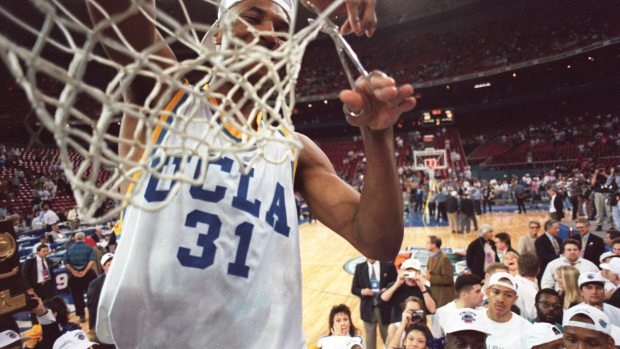

Source: http://philadelphia.cbslocal.com/2013/09/27/ea-sports-settles-college-likeness-case/ More...


UEFA’s tax-free Euro 2016 in France: State aid or no State aid?

Last week, the French newspaper Les Echos broke the story that UEFA (or better said its subsidiary) will be exempted from paying taxes in France on revenues derived from Euro 2016. At a time when International Sporting Federations, most notably FIFA, are facing heavy criticisms for their bidding procedures and the special treatment enjoyed by their officials, this tax exemption was not likely to go unnoticed. The French minister for sport, confronted with an angry public opinion, responded by stating that tax exemptions are common practice regarding international sporting events. The former French government agreed to this exemption. In fact, he stressed that without it “France would never have hosted the competition and the Euro 2016 would have gone elsewhere”. More...

Image Rights in Professional Basketball (Part I): The ‘in-n-out rimshot’ of the Basketball Arbitral Tribunal to enforce players’ image rights contracts. By Thalia Diathesopoulou

A warning addressed to fans of French teams featuring in the recently launched video game NBA 2K15: Hurry up! The last jump ball for Strasbourg and Nanterre in NBA 2K 15 may occur earlier than expected. The French Labour Union of Basketball (Syndicat National du Basket, SNB) is dissatisfied that Euroleague and 2K Games did not ask (nor paid) for its permission before including the two teams of Pro A in the NBA 2K15 edition. What is at issue? French basketball players’ image rights have been transferred to SNB, which intends to start proceedings before the US Courts against 2K Games requesting 120.000 euros for unauthorized use of the players’ image rights. SNB is clear: it is not about the money, but rather to defend the players’ rights.[1] Strasbourg and Nanterre risk to “warm up” the virtual bench if this litigation goes ahead. 
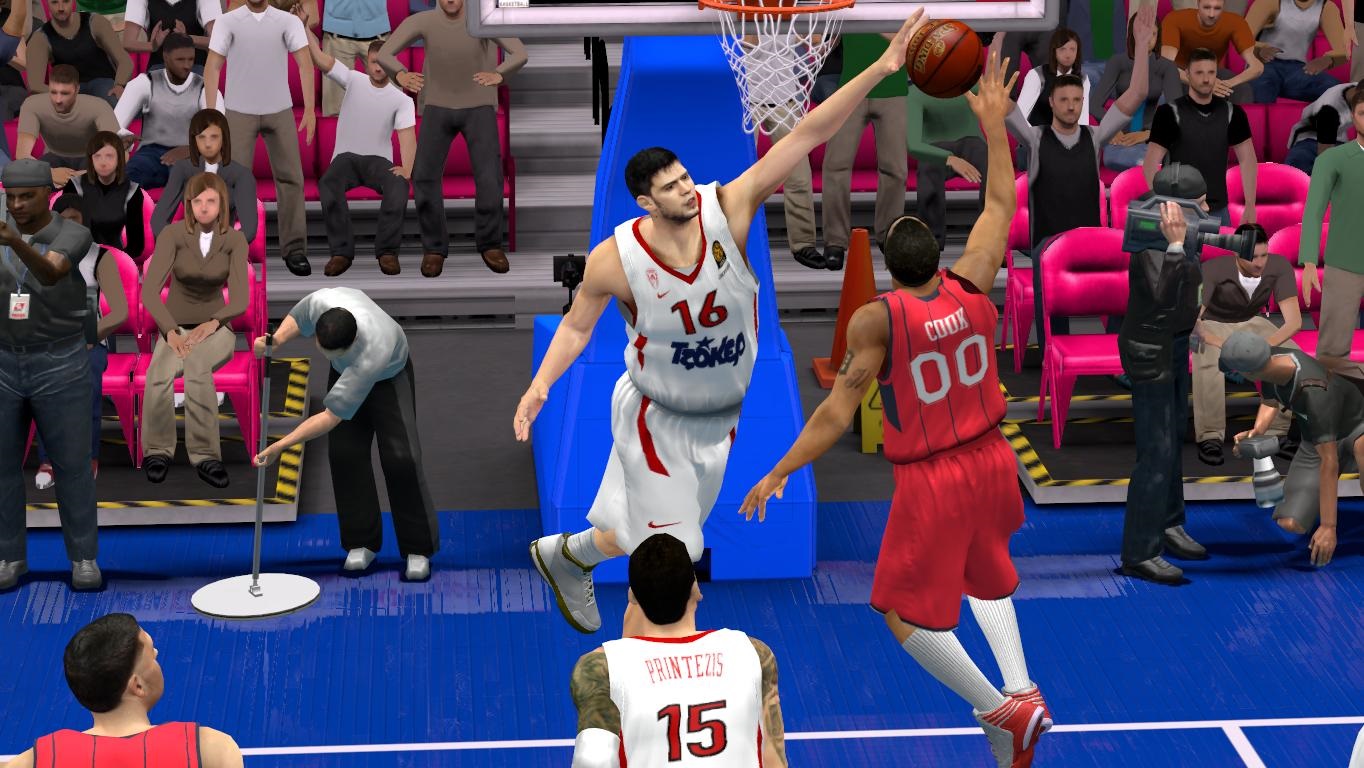
Source: http://forums.nba-live.com/viewtopic.php?f=149&t=88661&start=250 More...

Sport and EU Competition Law: uncharted territories - (II) Mandatory player release systems with no compensation for clubs. By Ben Van Rompuy

The European Commission’s competition decisions in the area of sport, which set out broad principles regarding the interface between sports-related activities and EU competition law, are widely publicized. As a result of the decentralization of EU competition law enforcement, however, enforcement activity has largely shifted to the national level. Since 2004, national competition authorities (NCAs) and national courts are empowered to fully apply the EU competition rules on anti-competitive agreements (Article 101 TFEU) and abuse of a dominant position (Article 102 TFEU).

Even though NCAs and national courts have addressed a series of interesting competition cases (notably dealing with the regulatory aspects of sport) during the last ten years, the academic literature has largely overlooked these developments. This is unfortunate since all stakeholders (sports organisations, clubs, practitioners, etc.) increasingly need to learn from pressing issues arising in national cases and enforcement decisions. In a series of blog posts we will explore these unknown territories of the application of EU competition law to sport.

In this second installment of this blog series, we discuss a recent judgment of the regional court (Landgericht) of Dortmund finding that the International Handball Federation (IHF)’s mandatory release system of players for matches of national teams without compensation infringes EU and German competition law.[1] More...

Sports Politics before the CAS II: Where does the freedom of speech of a Karate Official ends? By Thalia Diathesopoulou

On 6 October 2014, the CAS upheld the appeal filed by the former General Secretary of the World Karate Federation (WKF), George Yerolimpos, against the 6 February 2014 decision of the WKF Appeal Tribunal. With the award, the CAS confirmed a six-months membership suspension imposed upon the Appellant by the WKF Disciplinary Tribunal.[1] At a first glance, the case at issue seems to be an ordinary challenge of a disciplinary sanction imposed by a sports governing body. Nevertheless, this appeal lies at the heart of a highly acrimonious political fight for the leadership of the WKF, featuring two former ‘comrades’:  Mr Yerolimpos and Mr Espinos (current president of WKF). As the CAS puts it very lucidly, "this is a story about a power struggle within an international sporting body"[2], a story reminding the Saturn devouring his son myth.

This case, therefore, brings the dirty laundry of sports politics to the fore. Interestingly enough, this time the CAS does not hesitate to grapple with the political dimension of the case. More...

Sports Politics before the CAS: Early signs of a ‘constitutional’ role for CAS? By Thalia Diathesopoulou

It took almost six months, a record of 26 witnesses and a 68 pages final award for the CAS to put an end to a long-delayed, continuously acrimonious and highly controversial presidential election for the Football Association of Thailand (FAT). Worawi Makudi can sit easy and safe on the throne of the FAT for his fourth consecutive term, since the CAS has dismissed the appeal filed by the other contender, Virach Chanpanich.[1]

Interestingly enough, it is one of the rare times that the CAS Appeal Division has been called to adjudicate on the fairness and regularity of the electoral process of a sports governing body. Having been established as the supreme judge of sports disputes, by reviewing the electoral process of international and national sports federations the CAS adds to its functions a role akin to the one played by a constitutional court in national legal systems. It seems that members of international and national federations increasingly see the CAS as an ultimate guardian of fairness and validity of internal electoral proceedings. Are these features - without prejudice to the CAS role as an arbitral body- the early sign of the emergence of a Constitutional Court for Sport? More...